Automotive Remote Access Vulnerabilities: Real-World Hacks, Owner Protections, and What Comes Next

Real-world car hacks, proven owner protections, and the regulatory and tech trends reshaping automotive cybersecurity for connected vehicles.
Connected vehicles promise unprecedented convenience, remote start, over-the-air updates, real-time navigation, and autonomous driving features, but every new connection point is also a potential entry point for attackers. Over the past decade, researchers and malicious actors have demonstrated repeatedly that cars can be compromised remotely, sometimes while travelling at highway speed. This article covers the most consequential real-world car hacking incidents, practical steps owners can take today, and the technological and regulatory trends shaping automotive cybersecurity going forward.
Real-World Car Hacking Incidents
The Jeep Cherokee Hack That Changed an Industry (2015)
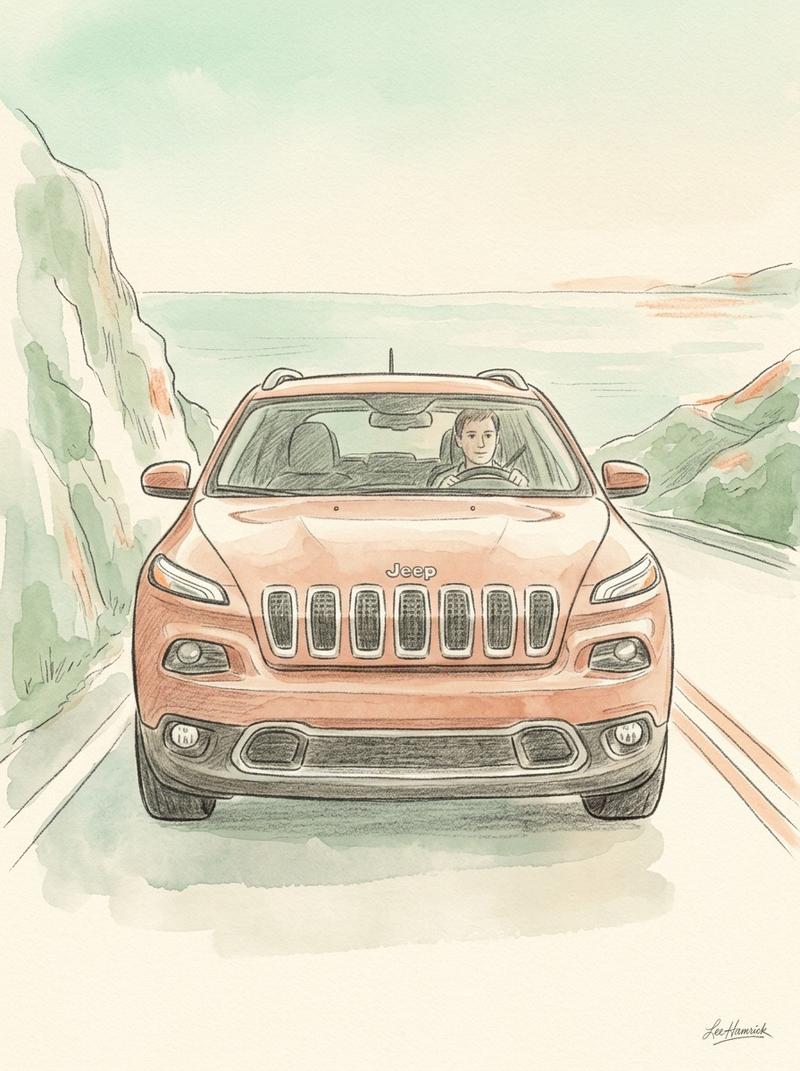
The clearest proof that remote vehicle compromise was a real, not theoretical, threat came in July 2015. White-hat hackers Charlie Miller and Chris Valasek exploited an open vulnerability in the Uconnect telematics system fitted to a 2014 Jeep Cherokee. Connecting over the public internet, they took control of the vehicle's critical functions while a journalist drove it on a St. Louis highway: they cut the engine, disabled the brakes, and toyed with the radio and windshield wipers, all from a laptop miles away.
The demonstration forced Fiat Chrysler to issue a safety recall covering 1.4 million vehicles. The incident sparked a significant conversation about car cybersecurity inside the auto industry, accelerating efforts that had previously received little urgency.
Nissan Leaf: A VIN Was All It Took (2016)
Researchers discovered a fundamental authentication flaw in the NissanConnect EV app for the Nissan Leaf. The app's API required no credential beyond the vehicle's VIN, a number that is legally required to be visible through the windshield. Anyone who could read a Leaf's VIN could, from anywhere in the world, issue commands to the car: turning the climate control on or off, and downloading detailed driving history including trip distances and battery usage.
Nissan responded by temporarily disabling the NissanConnect service entirely, then relaunching it with proper authentication. The driving controls were never exposed, but the privacy implications and the potential to silently drain a parked car's battery before a long journey were serious enough to demand urgent action.
Mitsubishi Outlander PHEV: Wi-Fi as a Weak Link (2016)
Most connected cars rely on cellular networks for their companion apps. The Mitsubishi Outlander PHEV took a different approach, using an in-vehicle Wi-Fi hotspot. Security researchers found the default Wi-Fi password was not only documented in the owner's manual but could be brute-forced within a matter of days using widely available tools.
Once on the vehicle's Wi-Fi network from a nearby location, researchers demonstrated they could toggle lights and air conditioning, tamper with charging schedules, and critically, disable the car's theft alarm. With the alarm silenced, a thief would face an easier path to unlocking the vehicle and accessing the OBD-II diagnostic port, a port that can be used to program a replacement key. Mitsubishi initially downplayed the issue before releasing a fix, advising owners in the interim to disable the Wi-Fi feature entirely.
Tesla Model S: Hacked from 12 Miles Away (2016)
Tesla vehicles have attracted disproportionate attention from security researchers, partly because Tesla actively encourages responsible disclosure and deploys fixes rapidly. In 2016, Tencent's Keen Security Lab demonstrated a multi-stage remote attack on a Tesla Model S. The team lured the vehicle's owner onto a malicious Wi-Fi hotspot, exploited a vulnerability in the car's web browser to gain access to the internal network, and from there issued unauthorized commands, unlocking doors, adjusting seats, and activating the brakes while the car was in motion, from 12 miles away.
Tesla responded within ten days by pushing an over-the-air software update that patched the browser vulnerability and added cryptographic code signing to prevent unauthorized firmware from being loaded. The company publicly thanked Keen Security Lab, underlining a proactive cybersecurity posture that has since become a model for the broader industry.
The Pattern Across All Four Incidents
These incidents followed a common pattern: an internet-facing or wirelessly accessible component (telematics unit, mobile API, Wi-Fi hotspot, browser) was compromised, and from there attackers pivoted to safety-critical systems. Each breach prompted meaningful improvements. Automakers learned that cybersecurity weaknesses carry the same regulatory and reputational weight as mechanical safety defects, and that rapid, transparent response matters.
Security Measures for Connected Car Owners
Automakers carry the primary responsibility for securing vehicles by design, but owners are not powerless. The following steps meaningfully reduce exposure.
Keep Vehicle Software Current
Software updates for cars function identically to patches for phones or laptops: they close known security holes. Many modern vehicles can receive updates over the air, while others require a dealership visit. Either way, apply updates promptly. An unpatched Uconnect system was the entry point for the Jeep Cherokee hack; the patch that followed demonstrated how quickly a software fix can close even a severe vulnerability.
Avoid Unsecured Networks
If your vehicle connects to the internet via Wi-Fi, avoid public or unsecured networks. Attackers sharing a network can intercept data or inject malicious traffic. Use your car's built-in cellular connection or a personal hotspot protected by a strong password. For additional protection on any network, a VPN adds a layer of encryption between the vehicle and its cloud services.
Secure Connected Accounts and Apps
Remote-start apps, vehicle-locating services, and charging management accounts all provide a path into your vehicle if compromised. Use strong, unique passwords for every connected vehicle account. Enable two-factor authentication wherever the manufacturer offers it. Change any default Wi-Fi passwords, the Mitsubishi Outlander compromise was made possible specifically because default credentials remained unchanged.
Be Selective About Third-Party Devices and Apps
OBD-II dongles for diagnostics or usage-based insurance programs plug directly into a port that connects to the vehicle's internal network. A poorly secured dongle is a persistent backdoor. Use only reputable, well-reviewed devices, disconnect them when not needed, and avoid plugging in unknown USB drives to the car's ports. Apply the same scrutiny to any third-party apps loaded onto an infotainment system.
Watch for Unusual Behaviour
Unexpected infotainment restarts, unrecognised Bluetooth or Wi-Fi pairings, and unexplained warning lights can all indicate that something is wrong. Use an OBD-II scanner periodically to check for anomalous error codes. Some vehicles log security events; review them if your car provides access. Familiarity with normal behaviour is the baseline that makes anomalies visible.
Protect Key Fobs Against Relay Attacks
Not every car hack involves remote internet access. Relay attacks use devices that amplify a key fob's signal, tricking the car into thinking the key is present when it may be inside your house. Storing keys in a Faraday bag or signal-blocking pouch when not in use breaks the relay attack entirely. Steering wheel locks and audible alarms remain useful physical deterrents alongside digital precautions.
Schedule Security Check-Ups
Ask your dealer or a qualified technician to scan the vehicle's electronic control units (ECUs) for software anomalies and confirm that all available patches have been applied. Think of it as running diagnostics on a computer: periodic professional review can catch subtle issues before they become serious problems.
Future Trends in Automotive Cybersecurity
Emerging Threats
According to Upstream Security's 2026 Global Automotive and Smart Mobility Cybersecurity Report, 92% of automotive attacks in 2025 were conducted remotely, meaning physical access to a car is no longer a prerequisite for attack. As vehicles gain vehicle-to-vehicle and vehicle-to-infrastructure communication capabilities, the attack surface grows further, an adversary could potentially target not just one car, but the infrastructure those cars depend on.
Large-scale coordinated attacks are a genuine concern. Keen Security Lab's 2016 and 2017 research targeted the Tesla Model S through a malicious Wi-Fi hotspot that exploited the in-car web browser and CAN bus. The vulnerability required the car to be physically near and connected to that hotspot. The attack vector was real and the patch came fast, but it illustrated how a single software component, a browser running on the infotainment stack, can serve as the entry point to safety-critical systems. Securing the full chain, from cloud service to CAN bus, remains the challenge.
Ransomware has already hit the automotive sector hard at the corporate level: in 2024, over 100 ransomware attacks targeted automotive manufacturers, fleets, and mobility services, disrupting operations and supply chains. Vehicle-level ransomware, locking a driver out of their car or disabling features until payment is made, has not yet occurred at scale, but security researchers are monitoring this vector closely.
Data privacy is also an escalating concern. Modern connected vehicles collect location history, driving behaviour, biometric data from in-cabin cameras, and charging or refuelling patterns. A breach exposing this information enables identity theft, targeted surveillance, and misuse of sensor data. Future attacks may prioritise data theft as much as vehicle control. For a deeper look at what your vehicle already knows about you, see our piece on forensic vehicle EDR examination.
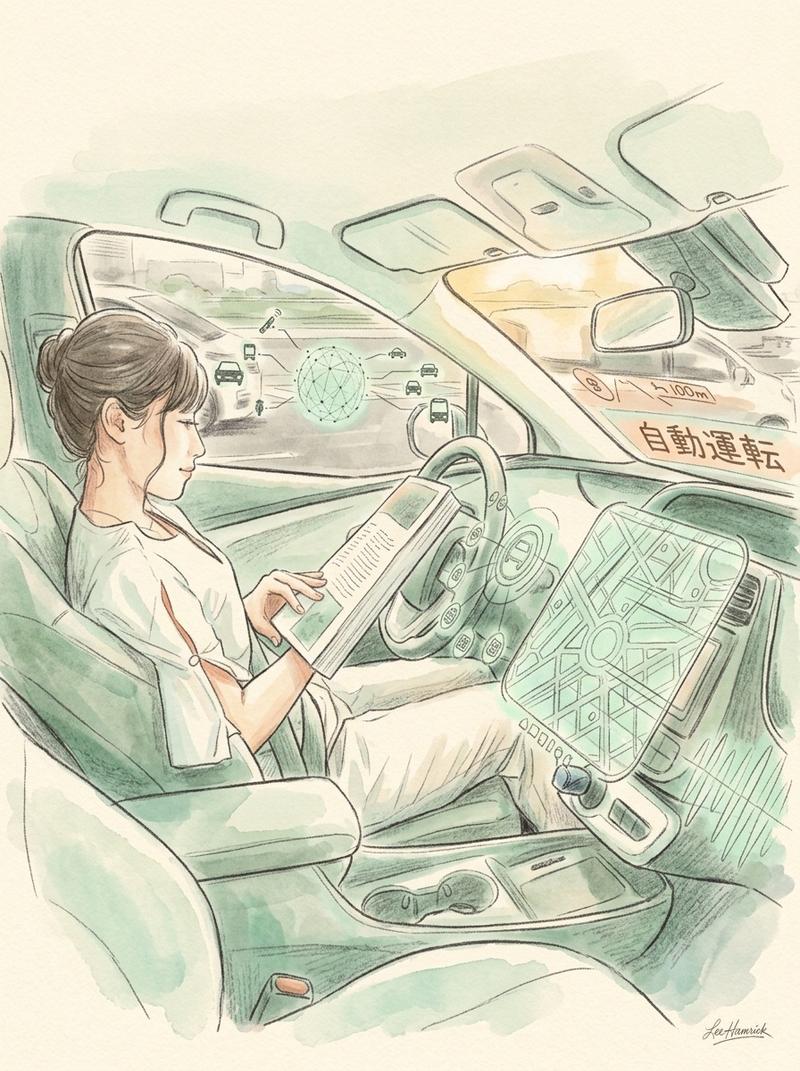
Autonomous driving systems introduce a further attack category: sensor spoofing. Researchers have demonstrated that LIDAR and camera systems can be deceived using projected false signals, fake obstacles or misleading road markings, that cause an autonomous vehicle to react inappropriately. Securing not just software and networks but a vehicle's physical perception of its environment is a challenge the industry is only beginning to address.
Technology Advances in Vehicle Security
In-vehicle intrusion detection systems now being developed work similarly to corporate network IDS tools: they monitor the CAN bus and other internal networks for anomalous commands, learn what normal vehicle communications look like, and flag or block out-of-specification instructions. Some vehicles already incorporate a secure gateway module that acts as a firewall between infotainment systems and safety-critical controls, ensuring that a compromised radio unit cannot inject commands to the brakes or steering.
Cryptographic authentication has become a standard response to demonstrated attacks. After the Keen Security Lab Tesla hack, the company implemented stronger code signing and integrity checks so that the vehicle rejects any firmware not properly signed by the manufacturer. Across the industry, manufacturers are extending this principle: secure boot processes, encrypted car-to-cloud communication, and verified OTA update pipelines. As one industry publication summarised the approach, "data encryption protects the vehicle's information, while secure management of software updates ensures improvements don't introduce new vulnerabilities."
AI and machine learning are beginning to appear in automotive security tooling on both sides of the problem. Defenders are deploying machine learning models that run in the vehicle or in the cloud, identifying attack patterns in real time. Driver behaviour analysis may also be used as a passive authentication factor, a vehicle detecting that it is being operated in an unusual way and requiring secondary verification. Attackers are likely to adopt AI-assisted vulnerability discovery as well, which makes the pace of defensive advancement critical.
OTA update frameworks are maturing rapidly. What once required a dealer visit can now be resolved in hours across millions of vehicles, closing vulnerability windows that previously stayed open for months. However, those update pipelines must themselves be hardened: a hijacked OTA channel is a way to push malicious code to an entire fleet. Manufacturers are designing update systems with layered safeguards including encryption, authentication, and rollback capability.
Regulation and Industry Collaboration
Following the 2015 Jeep Cherokee incident, major automakers formed the Automotive Information Sharing and Analysis Center (Auto-ISAC), a collective platform for sharing threat intelligence and best practices across manufacturers. When one company's research team identifies a serious vulnerability, that knowledge can be distributed across the industry before attackers exploit it elsewhere.
Bug bounty programmes have expanded steadily. Tesla was an early adopter, offering cash rewards and even vehicles to researchers who demonstrated severe exploits responsibly. General Motors, Ford, and Toyota have followed with their own programmes, channelling the skills of independent security researchers toward finding and closing vulnerabilities before criminals do.
Regulation has arrived in earnest in Europe. UNECE WP.29 regulations R155 and R156 require automakers to implement certified Cybersecurity Management Systems covering the vehicle's entire lifecycle. Automakers must demonstrate active detection of and response to incidents, and must implement secure software update mechanisms. The parallel international standard, ISO/SAE 21434, provides engineering-level guidance on integrating cybersecurity into every stage of vehicle design and production. The United States National Highway Traffic Safety Administration has published cybersecurity best-practice guidelines for automakers; while not yet mandatory, they reflect the direction regulatory pressure is moving.
The Road Ahead
Automotive cybersecurity is a continuous process, not a destination. The car industry is applying the same logic that the technology industry took decades to learn: security must be designed in from the start, tested aggressively, updated rapidly, and treated as an ongoing operational responsibility rather than a one-time engineering task.
For drivers, the goal is that most defences operate invisibly, the way anti-lock brakes and electronic stability control operate without demanding attention. But the incidents above show that owners who stay informed, update promptly, and practice sound digital hygiene provide meaningful protection where technology alone cannot cover every gap.
Key Takeaways
- Remote compromise is proven, not theoretical. The 2015 Jeep Cherokee hack, the 2016 Nissan Leaf API flaw, the Mitsubishi Outlander Wi-Fi weakness, and the Keen Security Lab Tesla attack all demonstrated real control over real vehicles by remote attackers.
- Software updates are the single most effective owner action. Most demonstrated vulnerabilities were closed by software patches; delaying updates leaves known holes open.
- Data privacy is now as important as vehicle control. Connected cars collect location, behaviour, and biometric data, a breach can enable surveillance and identity theft even if the car itself is never taken over.
- Regulation is tightening globally. UNECE WP.29 R155/R156 mandates certified cybersecurity management for new vehicles sold in the EU, with ISO/SAE 21434 guiding engineering practice internationally.
- Physical attacks still matter. Relay attacks on key fobs require no internet access and can be blocked by a Faraday bag or signal-blocking pouch, a reminder that digital and physical security measures complement each other.

Written by
Lee Hamrick