Bridging Theory and Practice: How Formula SAE Shapes Future Engineers
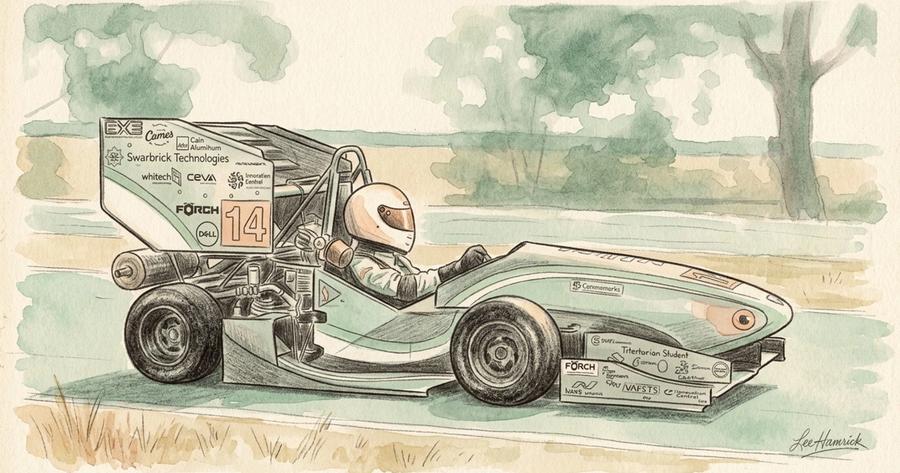
Formula SAE is a student design competition, organized by the Society of…
For engineering students, the gap between classroom theory and industry practice can feel impossibly wide. Formula SAE exists to close it. Organised by SAE International, the competition challenges university teams from around the world to design, build, and race a formula-style car from scratch — and in doing so, it hands students a compressed, high-stakes education that no lecture theatre can replicate. From chassis dynamics to cost reports, the skills developed through Formula SAE map directly onto what the automotive and motorsport industries actually demand.
What Formula SAE Actually Involves
Before unpacking why the competition matters, it helps to understand what participants are signing up for. Teams must conceive, engineer, fabricate, and validate a formula-style open-wheel car, then present it to a panel of judges who evaluate everything from suspension geometry to business case viability. Events are split between static disciplines — design, cost, and business presentation — and dynamic events including acceleration, skidpad, autocross, and endurance. Every element is scored, which means a team's engineering decisions carry measurable consequences.
Hands-On Experience With Real Engineering Complexity
Formula SAE gives students the chance to apply theoretical knowledge from their courses to practical, physical problems — and the feedback is immediate. A poorly calculated suspension pickup point doesn't just lose marks; it fails on the skidpad. Participants work through the entire vehicle development cycle: concept, design, analysis, manufacture, assembly, and testing. That full-loop exposure is rare at the undergraduate level and builds an intuitive understanding of automotive engineering processes that is difficult to acquire any other way.
Innovation Within Constraints
The competition rulebook is tight enough to keep designs comparable but open enough to reward creative thinking. Within those boundaries, teams have produced significant innovations in areas like aerodynamics, composite construction, and hybrid powertrain packaging. The constraints themselves are the point: professional engineering almost never involves a blank cheque and infinite time. Learning to develop novel solutions inside real limitations — material budgets, weight targets, packaging envelopes — is directly transferable to industry roles where adaptability is as valued as technical knowledge.
A Genuinely Multidisciplinary Environment
Formula SAE is not a mechanical engineering exercise with other disciplines watching from the sidelines. A competitive car demands competence across electrical systems, embedded software, control theory, materials science, and manufacturing engineering. Teams integrating electronic control units, data acquisition systems, or battery energy storage (as required by Formula SAE Electric) must coordinate across disciplinary boundaries the same way a professional development programme does. Students leave with both a deeper specialisation and a clearer understanding of how engineering disciplines depend on each other.
Project Management, Budgeting, and Teamwork
Running a Formula SAE programme is operationally demanding. Teams manage multi-thousand-dollar budgets, negotiate with suppliers and sponsors, hit fabrication deadlines, and coordinate the work of anywhere from ten to fifty members across different academic years and skill levels. The parallels to industry project management are not incidental — they are built into the competition's structure. Students develop scheduling discipline, resource allocation skills, and the ability to lead and collaborate within diverse teams, all of which are cited repeatedly by engineering employers as skills new graduates frequently lack.
Business Acumen and Technical Communication
One of the competition's more underappreciated components is the business presentation event, which requires teams to argue the commercial case for their vehicle as though pitching to a manufacturer. Students must understand market positioning, cost structures, and production feasibility, then communicate those ideas clearly to judges who may not have an engineering background. For engineers who will spend careers writing proposals, briefing executives, or defending design choices to clients, this kind of structured practice in translating technical work into business language is genuinely valuable.
Networking, Industry Access, and Career Pathways
Formula SAE events attract engineers and recruiters from across the automotive and motorsport sectors. The paddock at a major event is a live careers fair, with participants able to speak directly with professionals from OEMs, Tier 1 suppliers, and racing teams. Many alumni credit Formula SAE connections with landing their first internship or graduate role. The competition's credibility with hiring managers in the automotive industry is well established — experience on a Formula SAE team signals practical ability, project ownership, and the capacity to work under pressure.
Sustainability and Ethical Responsibility in Design
Increasingly, teams are expected to account for the environmental impact of their designs, from material choices to energy efficiency. Formula SAE Electric, the all-electric variant of the competition, pushes students directly into battery technology, power electronics, and energy management — areas central to the industry's current direction. Exposure to these challenges, alongside the expectation that engineering decisions carry ethical weight, helps develop graduates who can contribute meaningfully to the industry's transition rather than simply reacting to it.
Key Takeaways
- Formula SAE covers the full vehicle development cycle — concept through testing — giving students hands-on experience that classroom study alone cannot provide.
- The competition's multidisciplinary demands require coordination across mechanical, electrical, software, and materials engineering, mirroring real industry structures.
- Project management, budgeting, and supplier coordination are built into the programme, developing skills that engineering employers consistently identify as gaps in new graduates.
- The business presentation event builds technical communication and commercial awareness, preparing engineers to work effectively with non-technical stakeholders.
- Industry access, recruiter presence at events, and the competition's strong reputation with automotive employers make Formula SAE a credible career accelerator for participants.

Written by
Cory Kiesz