Salsa of Souls: Latin Influences Painting US Car Culture in Vibrant Hues
The United States, a melting pot of diverse cultures and ethnicities, has…
Walk through any major lowrider show in Los Angeles, San Antonio, or Albuquerque and you'll understand immediately that Latin American culture hasn't merely influenced US car culture — it has reshaped entire sections of it. From the hydraulic-lifted Impalas of East LA to the carnival-painted imports rolling through Miami's Calle Ocho, Latin aesthetics, community values, and mechanical ingenuity have produced a distinct automotive identity that millions of Americans now claim as their own. This piece traces those contributions: where they came from, what they look like, and why they matter.
Cuban Elegance: Chrome, Color, and Resilience
Cuban influences arrive with a particular aesthetic logic. Because the US trade embargo beginning in 1962 cut off access to new American cars, Cubans on the island became world-class specialists in maintaining and customizing mid-20th-century American automobiles — 1950s Chevrolets, Buicks, and Fords kept alive through ingenuity and improvisation. Cuban-American communities brought that ethos with them to cities like Miami and Union City, New Jersey.
The result is a style that prizes preservation over replacement. These builds emphasize glossy, immaculate bodywork, two-tone paint schemes drawing on Caribbean palettes — turquoise, coral, cream — and period-correct chrome details. The mechanical restoration is often just as serious as the visual presentation. A well-executed Cuban-influenced build tells you as much about mechanical competence as it does about cultural pride.
Brazilian and Puerto Rican Energy: Bold, Loud, Unapologetic
Where Cuban style tends toward restraint, the contributions from Brazil and Puerto Rico push in the opposite direction. Brazilian car culture — particularly the tuning scene centered in São Paulo, which has influenced Brazilian-American communities in cities like Newark and Orlando — favors aggressive body kits, neon underglow, and competition-grade sound systems. Brazilian-Americans have brought that sensibility into regional car show circuits, especially in the Northeast.
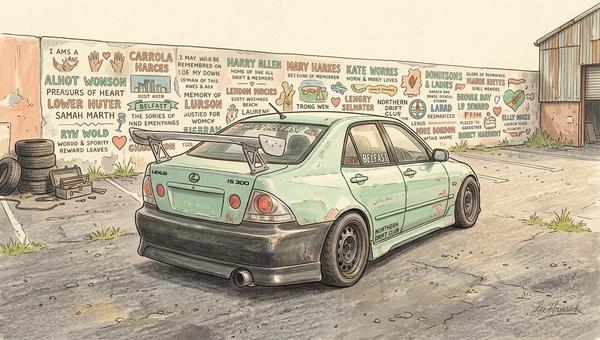
Puerto Rican influence, particularly visible in New York, New Jersey, and Chicago, draws on the island's tradition of vivid public art. Custom murals, flag-themed paint jobs, and bold graphic work transform vehicles into rolling declarations of identity. These builds are extravagant by design. The extravagance is the point — a direct visual statement of belonging and pride in a community that has had to assert its presence in American cities for generations.
Lowriders: Moving Canvases of Latin Heritage
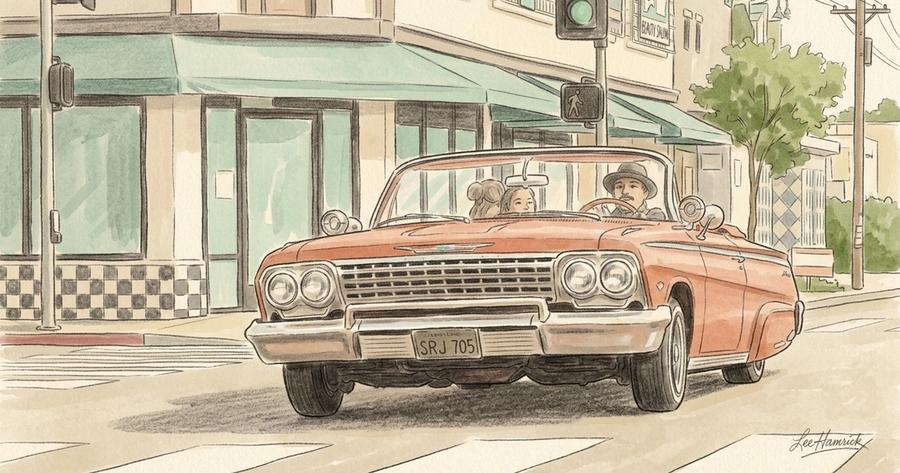
No discussion of Latin influence on US car culture is complete without a serious look at the lowrider. The tradition traces back to Chicano communities in Los Angeles and the Southwest in the late 1940s, when young Mexican-Americans began customizing cars as an act of cultural self-expression and, in part, as a deliberate counter to mainstream hot rod culture.
The classic lowrider — typically a 1960s or 1970s Chevrolet Impala, Cutlass, or Buick Riviera — is built low to the ground via hydraulic or air suspension systems that allow the car to hop, dance, and bounce on command. The bodywork is covered in hand-painted murals depicting everything from Aztec mythology to family portraits to Catholic iconography. The interiors feature tufted velvet upholstery, custom steering wheels, and elaborate dashboard embroidery. These are not quick builds. A serious lowrider represents hundreds or thousands of hours of skilled labor.
Organizations like the Imperials Car Club, founded in Los Angeles in 1959, helped codify the culture. Today, events like the annual lowrider shows at the National Hispanic Cultural Center in Albuquerque draw thousands of attendees and feature vehicles valued well into the six figures.
Community as Culture: The Car Meet as Gathering Place
Latin car culture is fundamentally communal. The car meet, in this context, is not simply a display — it functions more like a neighborhood festival. Extended families attend together. Food vendors set up alongside show vehicles. Live music runs through the afternoon. The social architecture mirrors the carnivalesque traditions of Latin American public life, where collective celebration is treated as serious cultural business.
These gatherings have become significant enough that mainstream automotive media now covers them regularly. The annual Lowrider Magazine Super Show, held in venues across California and the Southwest, has attracted crowds exceeding 50,000. That scale reflects genuine cultural weight, not a niche hobby.
Economic Impact: New Businesses, New Trades
The demand generated by Latin-influenced car culture has created measurable economic activity. Custom paint shops, hydraulic suspension specialists, upholstery studios, and sound system installers have built entire businesses serving this market. In cities with large Latin-American populations, these shops anchor commercial corridors and provide skilled trade employment.
The customization accessories market tied to Latin aesthetics — chrome accessories, religious and cultural hood ornaments, velvet upholstery kits — represents a specialized segment that major aftermarket suppliers now actively court. What began as community-driven craft has become a commercially significant category.
An Evolving Tradition
The Latin influence on US car culture is not static. Younger generations are blending lowrider traditions with JDM (Japanese domestic market) tuning aesthetics, electric vehicle platforms, and digital fabrication tools. Builders in their twenties are 3D-printing custom trim pieces and wrapping panels in digitally designed graphics while still maintaining the hydraulic setups and mural traditions of their parents and grandparents.
This cross-generational conversation — between tradition and new technology, between preservation and reinvention — is what keeps the culture alive and genuinely interesting to watch.
Key Takeaways
- Cuban-American car culture emphasizes preservation and customization of mid-20th-century American vehicles, shaped by decades of mechanical necessity under the embargo era.
- Brazilian and Puerto Rican influences bring bold visual energy to US car shows, particularly in Northeastern cities, through murals, graphic paint work, and high-output audio builds.
- The lowrider tradition, rooted in Chicano communities in LA and the Southwest from the late 1940s onward, combines hydraulic engineering with fine art — murals, velvet interiors, and custom chrome — into a single vehicle.
- Latin car culture events function as community gatherings, not just automotive shows, drawing on public celebration traditions that prioritize collective participation over individual display.
- The economic footprint is real: custom shops, upholstery studios, and aftermarket suppliers have built sustainable businesses serving a market that Latin-American car culture created.

Written by
Anna Buchanan