The 7th Generation Toyota Celica GT-S: A Cult Classic for the Ages

The seventh-generation Celica GT-S (2000–2006) was Toyota’s edgy, high-revving sports coupe that…
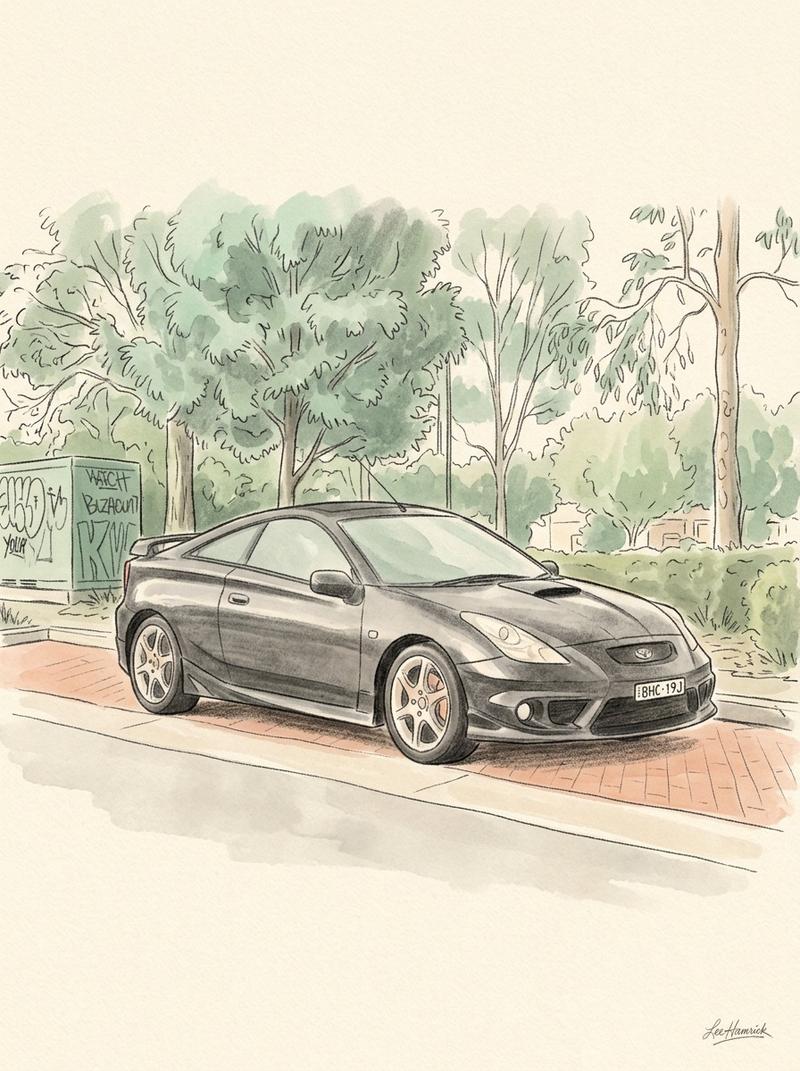
When Toyota pulled the wraps off the seventh-generation Celica in 1999, it wasn't just revealing a new sports coupe — it was making a statement. After years of drift toward comfort and compromise, Toyota had produced something genuinely sharp: a cab-forward, 2,467-lb front-driver with a Yamaha-tuned engine that didn't fully wake up until 6,200 rpm and screamed all the way to 8,200 before hitting the limiter. The 2000–2006 Celica GT-S arrived at the peak of the import tuner era, earned a devoted following, and then quietly exited when Toyota discontinued the nameplate in 2006 — leaving behind a car that has only grown more interesting with age. This article covers the GT-S's historical roots, how it compared to its fiercest rivals, what it's like to own one, its place in pop culture, and where values stand today.
Historical Context: How the 7th Gen GT-S Came to Be
From Pony Car Roots to Platform Drift
The Celica nameplate stretches back to 1970, when Toyota introduced a small rear-wheel-drive sports coupe inspired by American pony cars. For the first two decades, the formula held: lightweight body, available turbocharged all-wheel drive in later generations, and genuine performance credibility. The sixth-generation model (1994–1999) disrupted that. In North America especially, buyers got a heavier, softer coupe with no turbo AWD option. Enthusiasts at the time were blunt — the Celica had "lost the plot" by gaining weight without adding power.
Toyota's response was the T230 platform, developed under the internal banner of Project Genesis. The goal was a radical redesign that recaptured performance credentials while courting younger buyers.
Design and Engineering: Lighter, Lower, Sharper
Toyota's Calty design studio in California took inspiration not from previous Celicas but from the GT-One Le Mans racer. The result was a wedge-shaped, cab-forward body with angular lines that looked unlike anything else in the segment. Dimensionally, it was nearly as short as the original 1970 Celica but rode on the longest wheelbase in Celica history, pushing the wheels to the corners for a planted, purposeful stance.
Underneath, the T230 used a new front-wheel-drive platform with double-wishbone rear suspension. Toyota shed roughly 90 kg (198 lbs) compared to the outgoing model, dropping from approximately 2,720 lbs in the old GT-S to just 2,467 lbs in the new one. Even the entry-level GT with its 140 hp engine produced 130 bhp per ton — comparable to a classic 2.8L Ford Capri — while being faster, more fuel-efficient, and better equipped than the sixth-gen it replaced. Engineers even saved weight through unconventional choices: centrally-mounted power window switches shared between both doors, and an optional polymer plastic sunroof panel.
The 2ZZ-GE: Toyota's Answer to VTEC
The GT-S trim brought the headline act: a 1.8-litre 2ZZ-GE twin-cam engine co-developed with Yamaha. Its party piece was Toyota's VVTL-i system — Variable Valve Timing and Lift with intelligence — which held normal valve lift until approximately 6,200 rpm, then switched to a dramatically taller cam profile. The character shift was stark, the kind of thing you feel through the seat. North American buyers got 180 hp from the engine; JDM and European markets received 191 hp. Either way, it represented a massive leap from the previous US-market Celica's 135 hp.
The GT-S came exclusively with a close-ratio 6-speed manual or a sport-shift 4-speed automatic. Reviewers who drove early examples called it "lithe, agile" and praised it for offering "a truly interesting powertrain" — language that hadn't been applied to a Celica in years.
How It Compared: Celica GT-S vs. Integra Type R and RSX Type-S
Against the Honda Integra Type R
The late-1990s Integra Type R was the benchmark for front-wheel-drive performance cars. Honda extracted 195 hp from its 1.8-litre VTEC engine and delivered a car built with a single purpose: go fast on track. In direct testing, the Type R was quicker — 0–60 mph in approximately 6.2 seconds and a 14.8-second quarter-mile, against around 6.6 seconds and a 15.2-second quarter at 92 mph for the Celica GT-S. The Type R also came factory-equipped with a helical limited-slip differential and stripped cabin insulation, making it a more committed machine.
The Celica GT-S lacked a stock LSD and couldn't match the Type R's outright grip or acceleration. But it made a compelling case on livability. Its hatchback body offered genuinely usable cargo space, the cabin was quieter, and the ownership proposition was less demanding day-to-day. Reviewers acknowledged the Celica "wasn't as outright quick" but was "still fun to drive." In essence, the GT-S offered a Type R experience accessible to someone who also needed to commute on Monday morning.
Against the Acura RSX Type-S
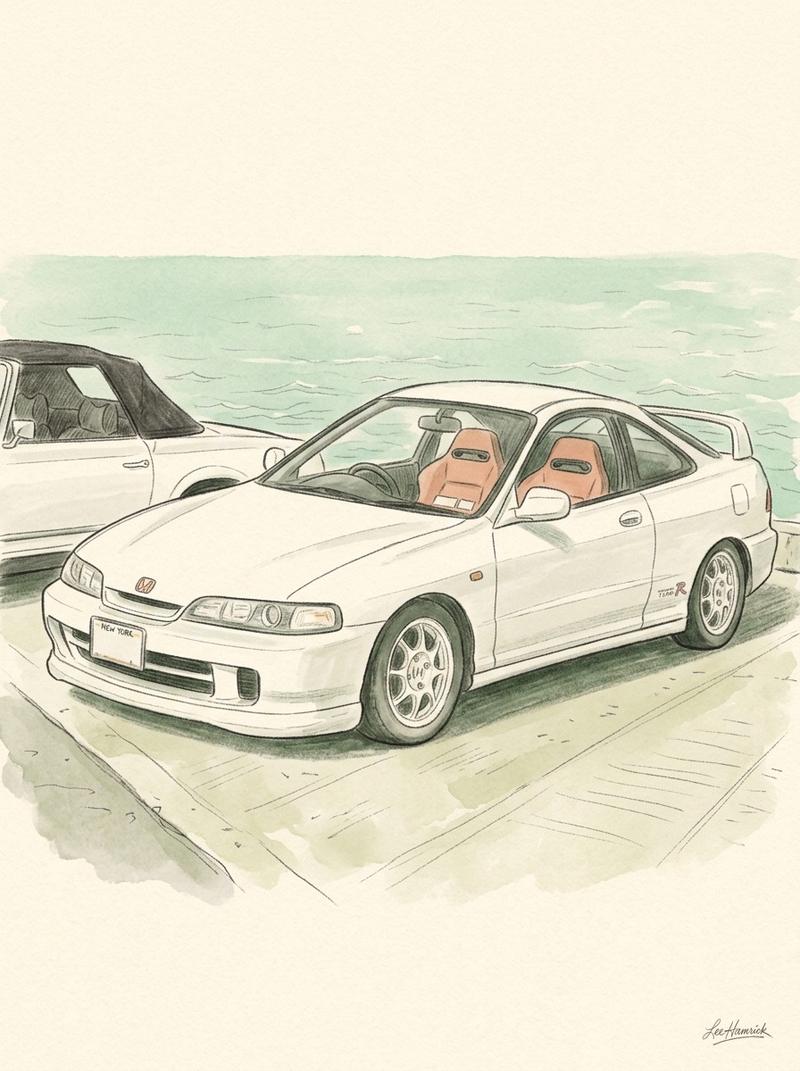
By 2002, the Integra's spiritual successor arrived in North America as the Acura RSX Type-S (sold as the Honda Integra DC5 in Japan). With a 2.0-litre i-VTEC engine producing 200 hp — bumped to 210 hp by 2005 — and a 6-speed manual, the RSX-S offered a broader power band than the Celica. Testers found the Acura's engine "more flexible than the Toyota's," noting that drivers didn't need to "work the lever so feverishly" to extract performance. Its 0–60 time of approximately 6.3 seconds edged the Celica, and its interior quality and refinement surpassed the Toyota's.
Where the Celica fought back was in the corners. Carrying 200–300 lbs less than the RSX, the GT-S was exceptional in dynamic testing. In a Car and Driver comparison, the Celica posted best-in-class braking — 166 feet from 70–0 mph — and recorded 0.88g on the skidpad. It also topped the RSX in the emergency lane-change test at 74.3 mph versus the Acura's 71.7 mph. One tester wrote "if there's a more athletic chassis in this class, we'd love to find it." The caveat was the narrow powerband: without keeping revs above 6,200 rpm, the VVTL-i lift never engaged and the GT-S felt merely ordinary.
Styling: No Middle Ground
Aesthetically, the Celica GT-S was the most polarizing of the three. The optional Action Package added a prominent rear wing and full ground-effects body kit, and the cockpit featured a sweeping windshield and low-slung seats that evoked a fighter jet. The Integra Type R was comparatively spartan — a functional coupe with modest spoilers prioritizing aerodynamics over drama. The RSX Type-S took a conservative middle path. For buyers who wanted their car to look as aggressive as it drove, the Celica had no competition from Honda or Acura.
Ownership Experience: Living with a Celica GT-S
The Reward on the Road
Long-term owners consistently describe the GT-S as one of the more engaging cars they've driven at any price point. The light weight and taut suspension produce handling that one enthusiast described as hugging "turns like nothing else." The steering is quick, the chassis communicative, and the overall feel is closer to a go-kart than most cars at this price point. Many owners report Celicas surpassing 150,000 miles with nothing more than routine maintenance — at its core, the 2ZZ-GE is still a Toyota engine, and Toyota's reliability reputation is well-earned here.
Fuel economy is a practical bonus: the small 1.8-litre engine returns low-to-mid 30s mpg on the highway, and consumables like brakes and clutch components are affordable and shared with other Toyota platforms.
Known Issues and Maintenance Specifics
The 2ZZ-GE does have two well-documented quirks that every prospective owner should understand.
The first is the lift bolt issue. Small bolts activating the high-lift cam lobes were prone to wear or shearing on early models, preventing the VVTL-i system from engaging. Toyota addressed this with updated hardened bolts around 2003; many owners replace these proactively as preventative maintenance regardless of vehicle age.
The second is the money-shift risk. The 6-speed's short throws make it easy to accidentally drop from 3rd to 2nd at high rpm instead of moving to 4th. Because the 2ZZ-GE is an interference engine, a severe over-rev can bend valves or, at the extreme, damage the oil pump if the engine exceeds approximately 8,200 rpm. Toyota took the issue seriously enough to lower the manual gearbox's rev limiter from 8,350 rpm to 7,800 rpm in 2002. A short-throw shifter kit or simply building the gear-change habit deliberately is advisable.
Other considerations are standard for a high-mileage sports car: oil consumption under hard driving (check frequently), worn suspension bushings, and aging engine mounts. The engine uses a timing chain rather than a belt, which removes one significant service cost.
Modification Potential
The GT-S is well-supported in the aftermarket. Toyota's TRD division offered everything from lowering springs and sway bars to a quicker shifter. A cold air intake combined with a high-flow exhaust and ECU tune can push power close to 200 hp. With basic suspension upgrades and a set of sticky tires, the GT-S can exceed 1.0g on the skidpad — remarkable for a front-wheel-drive car of this era. The caveat: unmodified examples are becoming genuinely harder to find, which has implications for buyers seeking a clean stock car for collection or daily use.
Pop Culture Influence: Gaming, Tuner Culture, and Beyond
The Right Car at the Right Moment
The GT-S launched in 2000 and found itself immediately absorbed into the exploding import tuner scene, catalyzed by The Fast and the Furious in 2001 and the simultaneous rise of car-customization video games. The Celica was a natural fit: dramatic looks, a mod-friendly platform, and an affordable price. Toyota leaned into this directly, offering the Action Package appearance kit through the dealer network — a factory acknowledgment of how closely the Celica's identity aligned with tuner culture.
Need for Speed and Gran Turismo
In gaming, the seventh-gen Celica achieved the kind of exposure marketing budgets can't buy. Need for Speed: Underground (2003) and Underground 2 — titles that collectively sold millions of copies — featured the GT-S as a selectable, fully customizable vehicle. A generation of young car enthusiasts built their first virtual GT-S in those games before ever sitting in a real one. As one journalist recalled: "I would go home, fire up Need for Speed: Underground, buy a Celica GT-S, and mod out with distasteful mods… I thought that was the coolest thing ever." The Celica also appeared in Gran Turismo 3 and 4, often in TRD Sports M or SS-II specification, and in Forza Motorsport, ensuring it remained part of the car gaming conversation throughout the mid-2000s.
Motorsport Credibility
Beyond screens and car park shows, the Celica had genuine competition results to its name. A race-prepared Celica won the 2003 Bathurst 24 Hour in Australia, and Toyota fielded Celica-bodied funny cars in NHRA sport compact drag racing. These achievements filtered through enthusiast media and reinforced the GT-S's performance credentials in a market where perception and results both mattered.
Market Trends: What a Celica GT-S Is Worth Today
Still Affordable — For Now
For most of the 2010s, seventh-gen Celicas sat in the used-car bargain bin, overlooked in favour of more famous Japanese nameplates. That is changing. As of the early 2020s, decent GT-S examples were listed in the $6,000–$8,000 range, a fraction of what a clean Integra Type R commands — those now routinely clear $25,000 at auction. Publications including MotorBiscuit have pointed directly at this gap, framing the GT-S as the practical answer for anyone priced out of the Type R market.
Values Creeping Upward
Clean, unmodified GT-S examples — particularly 6-speed manual cars — are increasingly sought after. The modification-heavy ownership history of many examples means low-mileage, stock cars are genuinely rare. Hemmings has noted a broad upswing across all Celica generations as '90s and early-2000s Japanese cars attract collector interest. Rare-option examples with TRD components or unusual factory colour combinations are beginning to carry premiums at specialist dealers.
Where It Sits in the Community
Online communities remain active. Forums like NewCelica.org and the r/Celica subreddit maintain steady membership, with owners sharing restoration projects and maintenance guides. The Celica's 20th anniversary in 2020 generated genuine nostalgia coverage, and Toyota UK's official magazine ran a reader-tribute feature for "15 years of the seventh-gen Celica" as far back as 2014. Many former owners who sold their GT-S describe eventual regret — and some buy a second one.
The broader significance is straightforward: after 2006, Toyota had no direct Celica replacement. The Scion FR-S and Toyota 86 arrived later as rear-wheel-drive cars with a completely different character. The GT-S is the end of a line, and end-of-line models tend to appreciate once that significance is recognised.
Key Takeaways
- The 7th-gen Celica GT-S shed roughly 90 kg over its predecessor and paired that lighter chassis with a 180 hp (191 hp JDM/EU) Yamaha-tuned 2ZZ-GE engine, producing a power-to-weight ratio that rivalled dedicated performance cars of its era.
- In comparative testing against the Integra Type R and RSX Type-S, the Celica GT-S led its class in braking (166 feet from 70–0 mph) and skidpad grip (0.88g), while conceding straight-line pace due to its narrow, high-rpm powerband.
- Two specific maintenance items demand attention: the lift bolt wear issue on pre-2003 cars, and the money-shift risk inherent to the short-throw 6-speed — both manageable with awareness and preventative parts.
- The GT-S achieved cultural reach through Need for Speed: Underground (2003), Gran Turismo 3 and 4, and the peak years of the import tuner scene, building a cross-generational following that sustains its community today.
- With clean examples still available for $6,000–$8,000 while comparable Integra Type Rs exceed $25,000, the Celica GT-S remains one of the strongest value propositions in the high-revving Japanese sports car segment — though that window may not stay open much longer.

Written by
John Castro