What Is a Modern-Day Hotrod?

When you think of a hotrod, images of classic cars with massive…
The word "hotrod" conjures a specific image: a chopped '32 Ford coupe, a flathead V8 bored out past the factory spec, chrome headers snaking toward the ground. That era defined the term, but it doesn't own it. The modern-day hotrod has moved well beyond the bonneville salt flats and postwar garages of California's San Fernando Valley into something broader, faster, and more technically sophisticated — without losing the original spirit. If you want to understand what a hotrod actually means in 2024, the answer starts with performance and ends with individuality, regardless of what's under the hood.
Performance First: Power, Handling, and the Full Package
The Engine Is Still the Heart — Just a Different One
The engine has always defined the hotrod, and that hasn't changed. What has changed is the toolkit. Turbocharging, supercharging, and even hybrid or electric powertrains are now legitimate parts of the conversation. A Mustang or Camaro making 1,000 horsepower from a single large-frame turbo is a common sight at weekend track days, with many of those cars still doing grocery runs during the week. Daily drivability alongside serious power output was a near-impossible combination in the 1950s. Today, it's a baseline expectation for serious builders.
Straight-Line Speed Is No Longer Enough
Modern hotrodders care about the full performance picture. The classic dragster ideal — maximum acceleration in a straight line, everything else secondary — has given way to a more demanding standard. Today's builders want their cars to corner, brake, and handle under sustained load. That means coilover suspension upgrades, upgraded brake packages, lightweight materials like carbon fibre and aluminium subframes, and aerodynamic bodywork that actually generates downforce. If a build can't hold its own through a series of tight corners at a track day, many in the community won't consider it finished.
Technology Rewriting the Rules
ECU Tuning and Data Logging
Technology has fundamentally reshaped what a backyard builder can achieve. Custom ECU (engine control unit) tuning, data logging, and real-time diagnostics give enthusiasts a level of control that professional race teams didn't have twenty years ago. A builder in their driveway can now adjust fuel maps, ignition timing, and boost pressure with precision, then verify the results with a data log from their next track session. The gap between grassroots hotrodding and professional motorsport engineering has narrowed considerably.
Tesla Swaps and Electric Hotrodding
Electric technology has opened a new frontier. Tesla swaps — transplanting Tesla electric motors and battery packs into older or less performance-oriented vehicles — are becoming increasingly common. The appeal is straightforward: instant torque, massive power outputs, and no combustion system to tune. Builders have dropped Tesla drivetrains into everything from classic pickup trucks to lightweight European sports cars. This shift confirms that modern hotrodding is not defined by fuel type. It's defined by the pursuit of the best possible performance from whatever technology is available.
Customization and Style: Function Before Flash
The spirit of personal expression remains central to hotrodding, but the aesthetic philosophy has shifted. Two camps dominate the modern scene. The first is the sleeper: a car that looks entirely unremarkable on the outside — faded paint, stock body panels, unassuming wheels — while hiding serious mechanical work underneath. The second is the full visual build: aggressive aerodynamic kits, custom widebody panels, bold colour choices, and bespoke wheel designs.
What separates modern hotrod aesthetics from the show-car culture of earlier decades is the emphasis on function. Aerodynamic kits are no longer purely decorative. Front splitters, rear diffusers, and dive planes are sized and positioned to generate measurable downforce at speed. Wheel and tyre combinations are selected for grip and weight, not just appearance. Looking good and going fast are no longer competing priorities — they're expected to coexist.
Community, Culture, and the Proving Ground
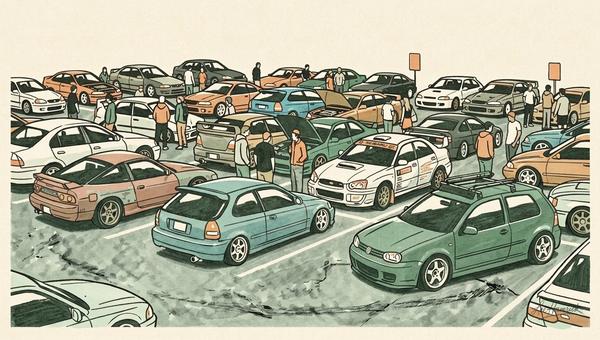
Modern hotrod culture is built on community in a way that the isolated garage builders of the 1950s couldn't have anticipated. Car meets, dedicated online forums, and social media groups connect enthusiasts across cities and countries. Track days have become the central proving ground, where builds are tested under real conditions and reputations are earned based on lap times, not show-car points.
The culture is also genuinely global. European tuners, Japanese import builders, and American muscle car enthusiasts all share space in this world, borrowing techniques and ideas from each other. A builder in New Zealand might be running a turbocharged Japanese engine in an American platform with European suspension geometry. That cross-pollination is one of the defining characteristics of the modern scene.
The Future: Hotrodding in an Electric Era
As electric vehicles move toward mainstream adoption and autonomous driving technology advances, questions arise about whether hotrodding has a future. The evidence suggests it does. The core impulse — modify, improve, personalise, and push limits — doesn't depend on a combustion engine or a carburettor. Hotrodders are already finding ways to extract more performance from hybrid platforms, swap electric drivetrains into classic bodies, and adapt new technology to their own purposes.
The modern hotrod isn't bound to a specific era, brand, or fuel source. It's a mindset: identify what the car can do, then work out how to make it do more. Whether the result is pointed at a drag strip, a road course, or a weekend canyon run, the objective is the same as it was in 1948 — build something faster, better, and more yours than anything that came from the factory.
Key Takeaways
- A modern hotrod prioritises the full performance package: engine power, suspension handling, braking, and aerodynamics, not straight-line speed alone.
- Turbocharging, supercharging, and electric powertrains (including Tesla swaps) are all accepted tools in contemporary hotrod builds.
- Custom ECU tuning and data logging have given grassroots builders access to precision previously reserved for professional motorsport teams.
- Aesthetic choices in modern hotrodding are increasingly function-driven: aerodynamic kits, wheel selections, and bodywork are chosen for performance benefit, not just visual impact.
- The modern hotrod community is global, drawing from European, Japanese, and American automotive traditions, with track days serving as the primary proving ground.

Written by
Zach Bronstein