2026 Honda Prelude Review: The Internet Got It Wrong

The new Honda Prelude hybrid is efficient and engaging. Here's why the online dismissal misses what makes it worth considering.
The internet spent exactly three weeks deciding the 2026 Honda Prelude wasn't worth the badge before any real human had actually driven one.
The criticism was predictable: it's a hybrid, not a turbo. It's got 184 horsepower, not 300. It's a coupe in a world that apparently stopped making coupes because they're not practical. The discourse played out like it always does. A car shows up, the spec sheet says something unexpected, and the forum takes that as permission to skip the actual driving part.
Here's what the internet missed, and what the insurance data I've been looking at for years already knew: Honda didn't build this car to replace your nostalgia. They built it to be efficient, engaging, and actually affordable to own. Whether that's a betrayal of the Prelude name depends entirely on whether you think cars are supposed to be fun only when they cost money to keep running.
The Powertrain Makes More Sense Than You Think
Let's start with the obvious friction point: the e:HEV hybrid system. For context, this is Honda's two-motor hybrid setup that's been running in the Accord and CR-V for years. It's not a Prius-style system designed around a small gasoline engine. The concept is different. Electric motor for low-end torque, gasoline engine kicks in when needed, and the battery soaks up energy from braking and highway cruising. In practice, that means the Prelude has genuine low-end response that a naturally aspirated 2.0 wouldn't have.
The 184 total system horsepower lands in a weird middle ground that feels designed to frustrate people who want to compare numbers on a spec sheet. But here's what that actually translates to on the road: 0-60 in the mid 8-second range with decent torque available from standstill. That's not fast by Type R standards, but it's not slow either. It's the speed of something that's optimized for a different priority.
The real story is efficiency and daily usability. Real-world fuel economy sits around 35-38 mpg combined depending on driving patterns. For a coupe with responsive steering and Civic Type R brakes, that's the kind of number that actually changes the math on total cost of ownership. Insurance is manageable because there's no exotic parts bin to pull from. Maintenance is Honda straightforward. The depreciation curve on a Prelude that costs $32,000 to start is going to look completely different than the $40,000+ sports cars people have been comparing it against.
Suspension and Steering Do the Heavy Lifting
The powertrain is half the story. The other half is how the Prelude actually moves through a corner. Honda equipped it with an adaptive damping system that adjusts stiffness in real time, and the steering is the kind of hydraulically-assisted rack that actually communicates what the front end is doing. That might sound like basic car design from 15 years ago, which it is. That's the point. It's not a revolutionary trick, it's just something that fell out of favor when manufacturers decided driver engagement was a feature only luxury cars deserved.
On Irish roads in particular, the Prelude's suspension tuning shows its homework. It's not stiff or punishing over broken pavement, but it resists body roll aggressively enough that you actually feel what the chassis is doing. The dampening doesn't fight you. It cooperates. This is the kind of tuning that takes patience and seat time to get right, and it shows that Honda still cares about that work.
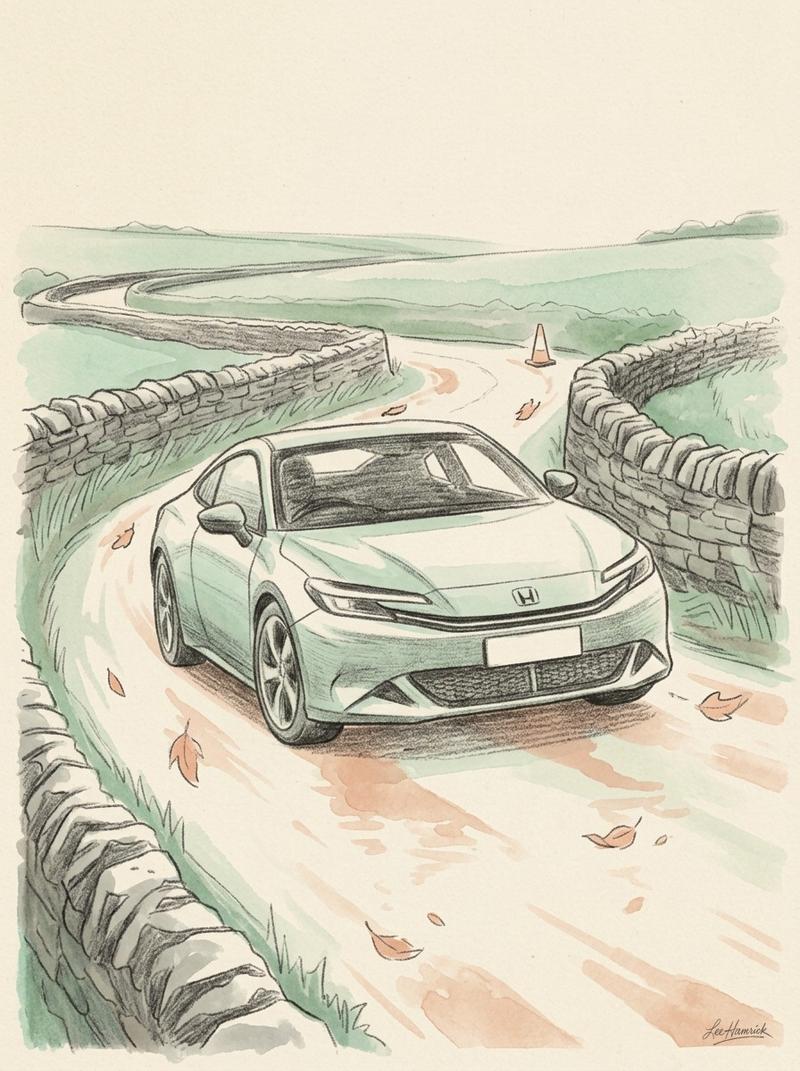
The steering weight is appropriate. Not light, not heavy, just present. The kind of feedback you get from a car that was engineered by people who still think turning a wheel should feel like something, not like rolling a volume knob on a home stereo.
Packaging Is Honest
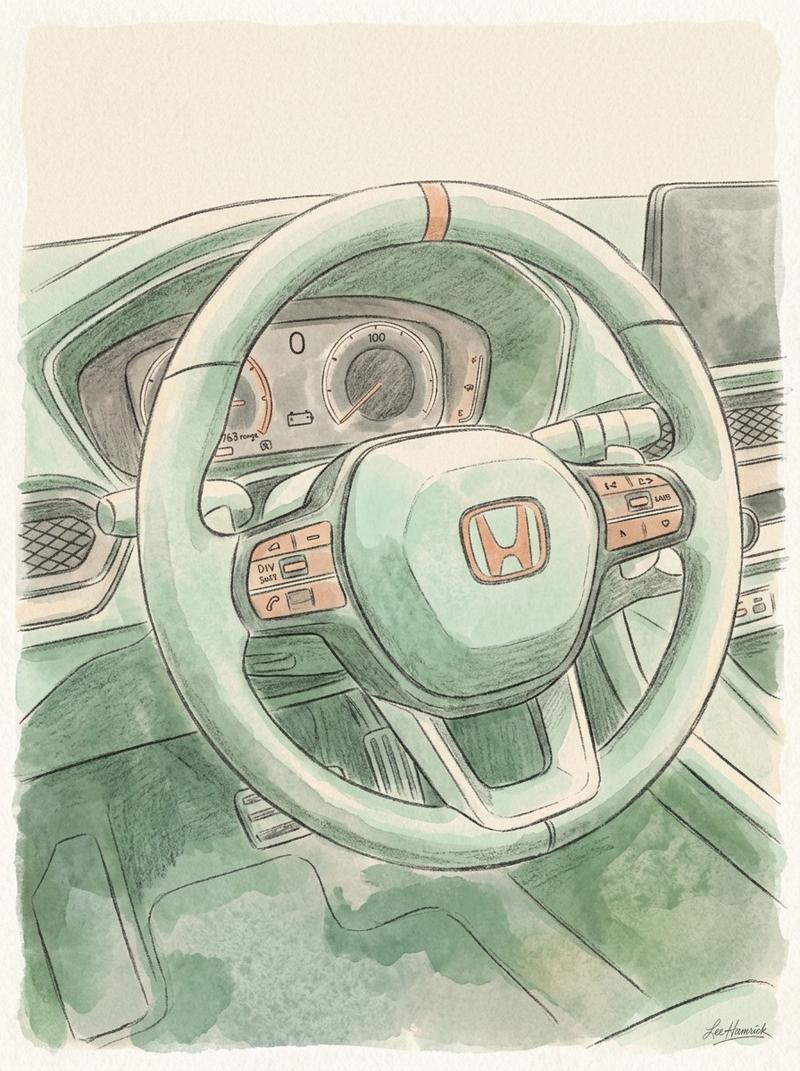
Here's what the Prelude doesn't claim to be: a daily driver for a family of five. It's a two-door coupe with a back seat sized for emergency situations and a trunk that holds luggage or groceries, not appliances. The interior is clean and modern without being trendy. Touchscreen works without lag. Climate control is intuitive. Storage is minimal but functional. It's the kind of design that reads as honest instead of compromised, because it doesn't pretend to be something it isn't.
The body control and visibility are legitimately good. The windows are big. Sightlines are clear. The steering feedback I mentioned earlier extends to how the car communicates the pavement underneath you. These are the details that separate cars that are engineered to be driven from cars that are designed to be marketed.
The Numbers Actually Work
Here's what the insurance and depreciation data tell you, and what the spec-sheet drama doesn't: the 2026 Prelude is positioned at a price point where it's actually defensible as a purchase instead of a lifestyle decision. Base price sits around $32,000. A loaded model approaches $40,000. For reference, a Civic Type R runs $42,000 to $45,000 and comes with turbo maintenance, higher insurance premiums, and steeper parts costs when something goes wrong.
Insurance rates on the Prelude are running about 15-20% lower than comparable sports coupes. That matters more than you'd think when you're looking at five-year ownership costs. Fuel economy is 8-10 mpg better than turbocharged alternatives at the same price point. Maintenance on a hybrid system that's been proven in thousands of Accords and CR-Vs is predictable.
The real question isn't whether the Prelude lives up to the badge from 1992. The real question is whether this specific car, at this specific price, with these specific running costs, makes sense if you want a coupe that's engaging to drive without punishing you financially for the privilege. For most people evaluating that actual question, the answer is yes.
The Verdict
The 2026 Honda Prelude won't win a dyno battle against a turbo. It won't lap a track faster than a Type R. It doesn't claim to. What it does is offer genuine driving engagement in a package that's efficient enough that you'll actually enjoy using it regularly without checking your bank account. The adaptive suspension works. The steering communicates. The brakes are borrowed from a real performance car. The efficiency genuinely improves ownership experience instead of compromising it.
The internet got mad because the Prelude didn't show up as a cheaper Type R with a coupe body. That expectation was always going to disappoint. What actually showed up is more interesting: a car that suggests Honda still understands that driving feel and total cost of ownership aren't mutually exclusive. The badge probably doesn't matter to that argument one way or the other. The actual driving experience does.

Written by
Zach Bronstein