This 8.1L Big Block C8 Corvette is the Displacement Answer Nobody Asked For

A custom 8.1L big block shoehorned into a C8 mid-engine Corvette after 3.5 years of engineering. Here's why it actually works.
Someone took a C8 Corvette, the most technologically sophisticated American sports car ever made, and swapped its 5.5L flat-plane V8 for an 8.1L pushrod big block. And then they made it work on the street.
This isn't a concept car. It's not vaporware. Three and a half years of engineering, custom fabrication, direct injection, variable valve timing, and enough custom parts to fill a machine shop have produced a car that's legitimately drivable. The engine is in a C8 frame. It turns on. It idles. It makes power on the freeway. Full stop, this is wild.
Let's talk about why this is actually impressive and not just dumb.
The Displacement Obsession Makes Sense Here
Big blocks don't fit in mid-engine compartments. The C8 was designed around the LT2, a 5.5L naturally aspirated V8 that makes 495 hp and 470 lb-ft of torque. It's tight. It's efficient. It's the right tool for a modern supercar that needs to be streetable, reliable, and fast.
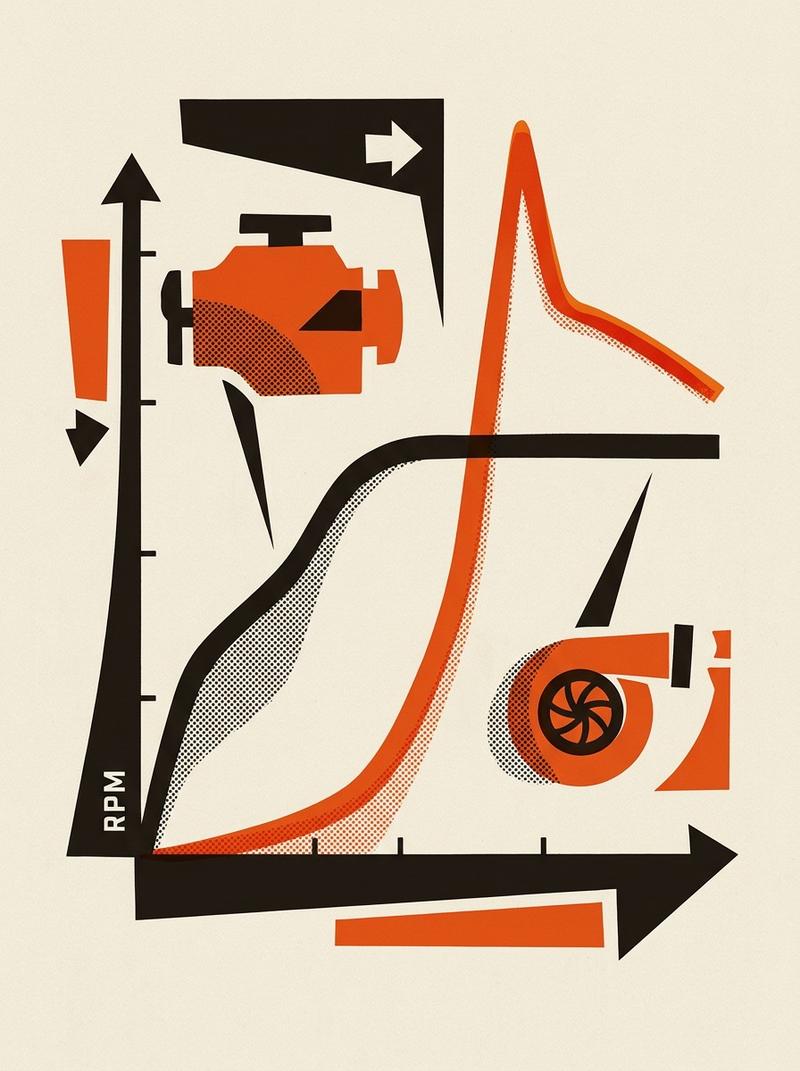
So why cram an 8.1L into it? Because displacement has a physics advantage that turbocharging and supercharging can never fully replicate: low-end torque without boost lag, instant throttle response, and no artificial pressure in the cylinder. An 8.1L naturally aspirated engine will make staggering amounts of torque just by existing.
The numbers matter here. A stock 8.1L LS9 (which is what this almost certainly started as or is modeled after) produces 638 hp and 630 lb-ft. But modify it, port it, bolt on direct injection, tune the variable valve timing, and you're looking at a fundamental shift in what this car can do off the line.
Direct Injection and VVT Are the Secret Sauce
This is where the engineering gets interesting. A pushrod big block from the 1990s shouldn't work in a modern application. They're archaic. They lack the precision of an overhead-cam design. They can't breathe as efficiently. They belong in a truck or a dragster, not a car that needs to idle at a stoplight without sounding like a concrete mixer.
Direct injection changes everything. Instead of fuel mixing in the intake, it's sprayed directly into the combustion chamber. This means the engine can run leaner, cooler, and more efficiently. Variable valve timing adds another layer of sophistication, allowing the cam profiles to optimize for both idle quality and peak power output.
The result is an 8.1L engine that can probably idle at 600 RPM, pass emissions (probably not legally, but theoretically), and make peak torque at 4000 RPM instead of 6000. In a mid-engine car that weighs around 3400 pounds, that's a recipe for apocalyptic acceleration off the line.
The Mid-Engine Problem
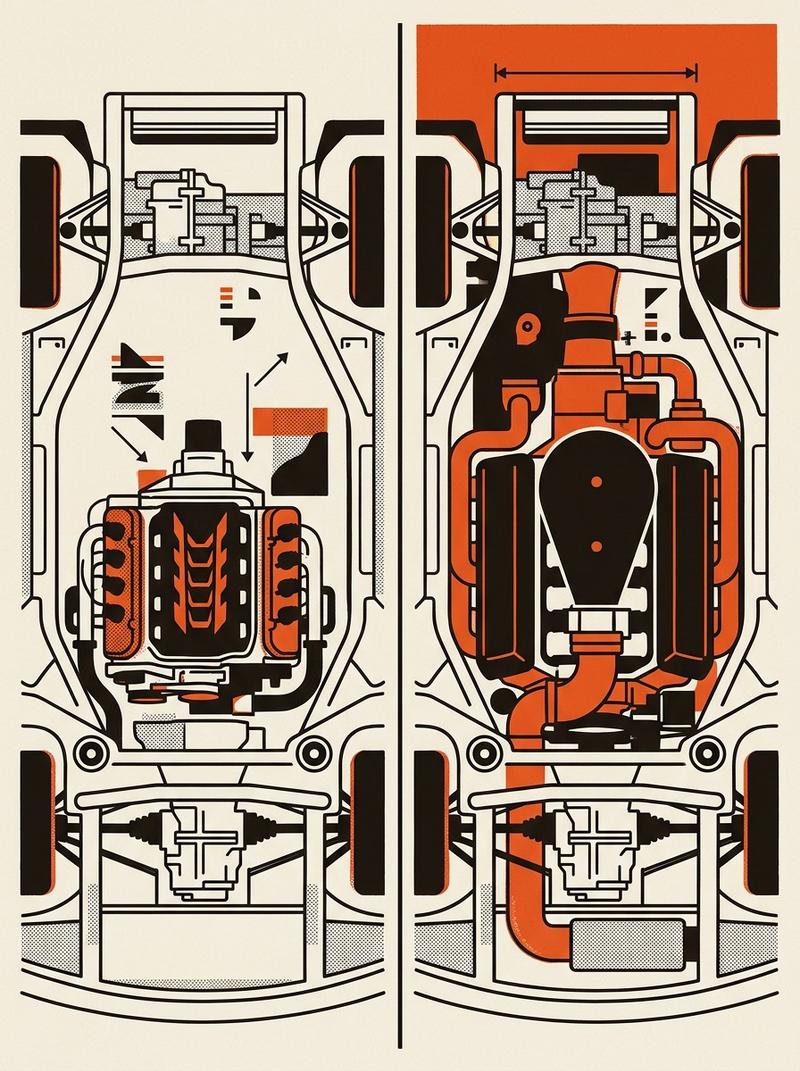
Here's the constraint that makes this build actually clever: mid-engine packaging is unforgiving. You have maybe 24 inches of depth to work with behind the driver. An engine that's too tall, too wide, or too deep gets binned. The original LT2 fits because Chevrolet engineered every cubic millimeter of the C8 around it.
A big block is taller and wider than a small block. Getting it to fit, getting it to actually mount to the existing subframe, and doing it all while maintaining structural rigidity probably took a year of CAD alone. Then you have to route cooling, wiring, exhaust, and fuel lines through spaces that weren't designed for them.
The fact that this thing can actually be driven on public roads suggests whoever built this understands mid-engine architecture at a level most builders never reach.
The Real Question: Why?
Because it's possible. Because displacement is honest. Because a turbo C8 with 700 hp will never feel as visceral as a naturally aspirated 8.1L with 650 hp that hits you instantly at 2000 RPM and doesn't stop pulling until redline.
The C8 is fast. It's incredibly fast. The LT2 is a masterpiece. But it's also a computer managing boost, turbo lag, intercooler efficiency, and a thousand variables in real time. A big block big displacement engine with direct injection is simpler in a lot of ways, even if it's technically more complex.
This build is fundamentally about proving that old-school displacement physics still matter, even in the era of forced induction and electrification. And on a freeway, where you're not hitting 8000 RPM redlines and you're just living in that 3000 to 5000 RPM window where the engine is making full steam, a big block is actually the smarter choice.
The Numbers That Matter
We don't have dyno sheets yet. We don't have 0-60 times. We don't have trap speeds. But based on stock 8.1L specifications with direct injection and variable valve timing added, we're probably looking at something in the 650 to 700 hp range and 700 plus lb-ft of torque.
A stock C8 Z06 makes 670 hp and 470 lb-ft. This engine will make equal or more power with a torque curve that's 250 pounds stronger across the band. The weight distribution won't change (engine is still mid-mounted). The aerodynamics are identical. But the acceleration off the line will be measurably, objectively better.
That's not opinion. That's physics.
The Freeway Test Proves It Works
Getting this car on public roads means it idles acceptably, the cooling system works, the fuel injection is tuned, the transmission (presumably still a PDK or the stock auto) hooks up properly, and the structural integrity of the chassis holds under load. Those are not small engineering problems. Those are the difference between a car that exists and a car that actually works.
The freeway drive test is the ultimate real-world validation. Not a dyno pull where everything is controlled. Not a parking lot burnout. An actual, sustained freeway run where the car has to maintain highway speeds, manage heat, keep the electrical system happy, and not set itself on fire.
This build just passed that test. That puts it in a very exclusive category: the theoretical made physical and functional.
The Displacement vs. Efficiency Argument Isn't Over
Everyone's talking about turbocharging, supercharging, electrification, and lighter materials as the future of power. And they're right, mostly. But this build is a reminder that displacement still works, especially if you do it with modern fuel injection and variable valve timing.
An 8.1L big block that makes 700 hp naturally aspirated will accelerate faster in real-world driving (0 to 60 mph, 40 to 80 mph, stoplight to stoplight) than a turbocharged 4.0L that makes 700 hp with 30 pounds of boost. The big block doesn't wait for boost to come in. It makes its power instantly and holds it across the entire rev range.
That's not sentiment. That's thermodynamics. And this car is proof that you can wrap those thermodynamics in a Corvette chassis and make it work on the street.
Three and a half years is a long time to spend on an engine swap. But if you're going to spend that time, and you're going to do it right, this is the result: a car that shouldn't exist, engineered with enough rigor that it does, and finally, finally proving on the freeway that displacement, when done correctly with modern fuel systems and variable cam timing, still reigns.

Written by
Ben Eckels