Everyone Builds LS Swaps. Amy Built a Supercharged 202 Instead.
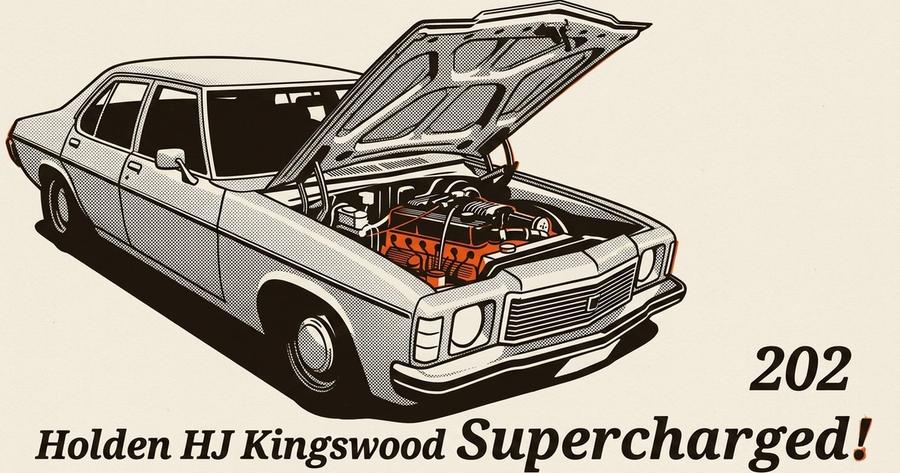
Amy's supercharged Holden 202 HJ Kingswood is the Aussie six-cylinder sleeper that proves you don't need a V8 to build something worth talking about.
The easy answer is always the LS. Cheap, plentiful, makes stupid power, bolts into nearly anything. It's become so common in Australian street machine builds that seeing one under the bonnet barely registers anymore. You see the Kingswood shell, you assume V8, you move on. That's exactly what makes Amy's HJ so disarming.
She kept the 202. The Holden red motor. The engine most builders yank out on day one and roll to the corner of the garage before the Gumtree listing even goes live. Instead of treating the inline-six as a placeholder, Amy built around it, on top of it, and turned it into the centrepiece of a car that runs rings around expectations.
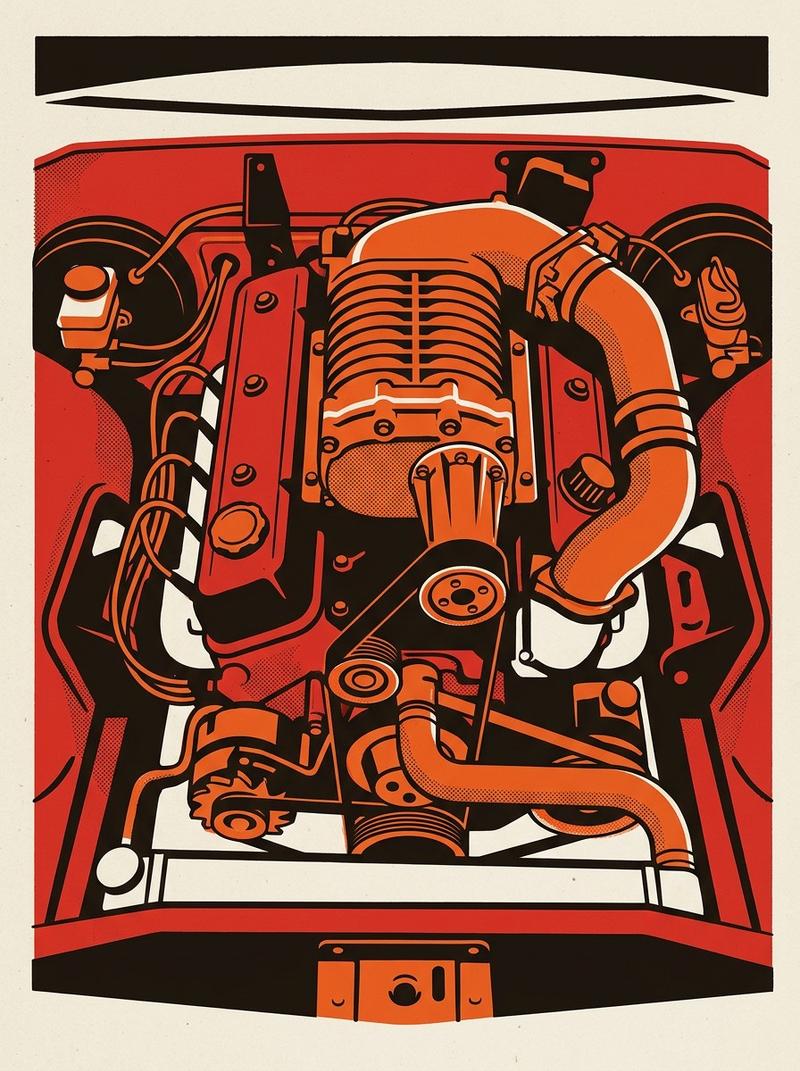
The Holden 202 has a complicated reputation. It powered a generation of Australian family cars through the seventies and into the eighties, and it did so reliably, quietly, and without much drama. That dependability made it easy to dismiss as agricultural. What tends to get overlooked is that the architecture is fundamentally sound, the block is tough, and with the right modifications, it responds. Amy clearly knew that. The result is a supercharged six that sits in the engine bay of an HJ Kingswood and does not look like it belongs in a museum piece.
Forced induction on a six-cylinder street car is not a new idea, but it is a deliberate one. A supercharger changes the character of an engine differently than a turbo does. The power is right there, no lag, no waiting, just immediate torque multiplication that makes a street car feel responsive in a way that genuinely matters when you're threading through traffic or cracking the throttle on a country road. On an old inline-six, that kind of immediate shove is a genuine surprise if you don't know what's sitting under the bonnet. Which is the whole point of building a sleeper.
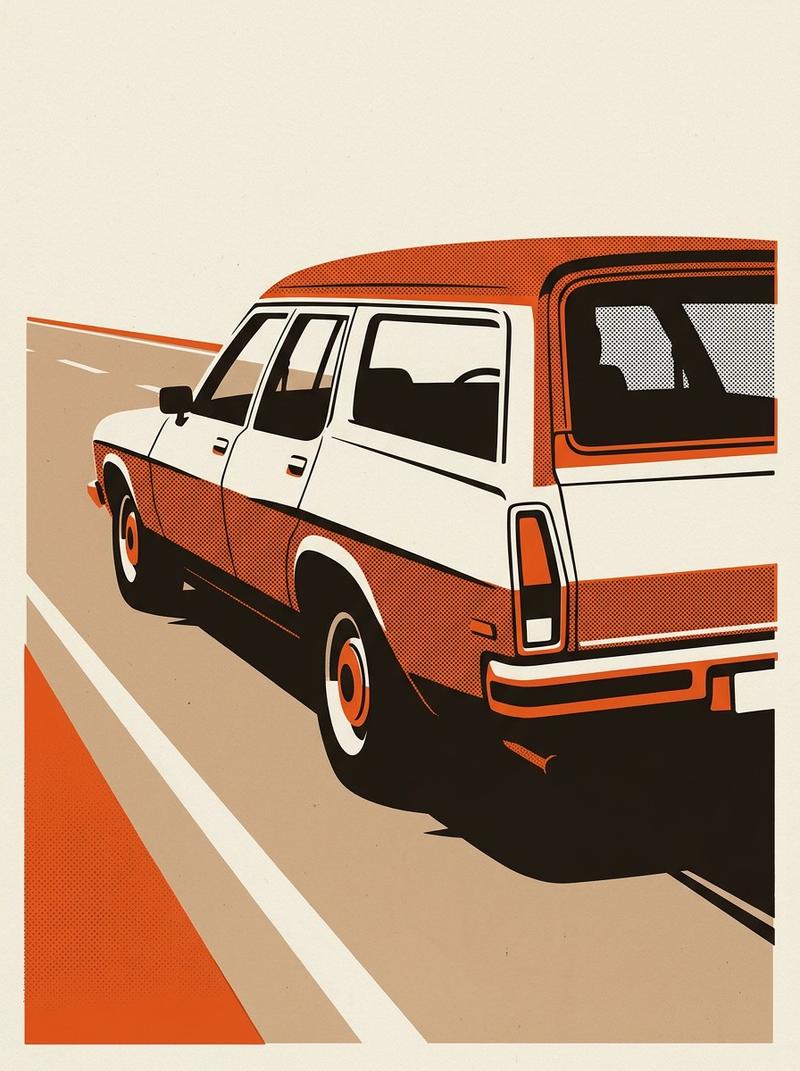
The HJ Kingswood body does its part. These cars look exactly like what they were: honest, utilitarian Australian family transport from the mid-seventies. Broad, boxy, unhurried. Nobody looks at a Kingswood and thinks weapon. That gap between appearance and reality is the entire foundation of a good sleeper build, and the HJ wears it naturally without any help from the builder. Amy didn't need to tone it down or hide anything. The car just looks like a Kingswood, and that's enough.
What separates a build like this from a simple novelty is the intent behind it. A lot of unusual engine choices in classic cars are about being different for its own sake, and you can feel that when you look at them. There's a self-consciousness to it. Amy's Kingswood doesn't read that way. Keeping the Holden six feels principled rather than contrarian. There's a lineage being respected here, a piece of Australian automotive history that deserves more than a skip bin farewell every time someone decides to modernise an old Holden. The red motor built this country's roads in a very real sense, and someone decided it was worth preserving in a form that can still make a point.
The sleeper label gets thrown around loosely, but it actually means something specific. It means the car has to be driven, used, taken out into the world where unsuspecting people can form the wrong impression and then be corrected at speed. A sleeper that sits in a show and wins trophies is just a show car with a secret. Amy's HJ is described as built to be driven, and that framing matters. It means the supercharged 202 has to be reliable, streetable, and ready to go whenever. That's a harder brief than pure power numbers, and it shapes every decision you make during a build.
Modern reliability in an old Holden is not a given. These cars are approaching fifty years old. Keeping the original engine family while bringing the supporting systems up to a standard where you can actually depend on the car daily takes real work and real knowledge. It's not glamorous work. It doesn't photograph as well as a set of polished valve covers or a chrome intake, but it's the difference between a car you drive and a car you trailer.
There's a broader conversation happening in Australian car culture right now about what these old Holdens are worth, what they represent, and what happens to them as the generation that grew up with them gets older and the cars get rarer. The LS swap argument is partly economic and partly practical, and those are legitimate reasons. But there's something lost every time another red motor gets pulled in favour of something that could have come out of any number of other cars. Amy's build is a small, loud argument for a different approach, one that asks what the original package can actually do before deciding it isn't enough.
The supercharged Holden 202 HJ Kingswood is the kind of car that rewards people who pay attention. You have to know enough to look at the engine bay and understand what you're seeing. You have to know enough to hear what the blower is doing and recognise it. For everyone else, it's just an old Kingswood. That's the joke, and it never gets old.

Written by
Jay Corman