Is a Budget LS Swap Still Possible? Building the Ultimate Sleeper Nova for $10K
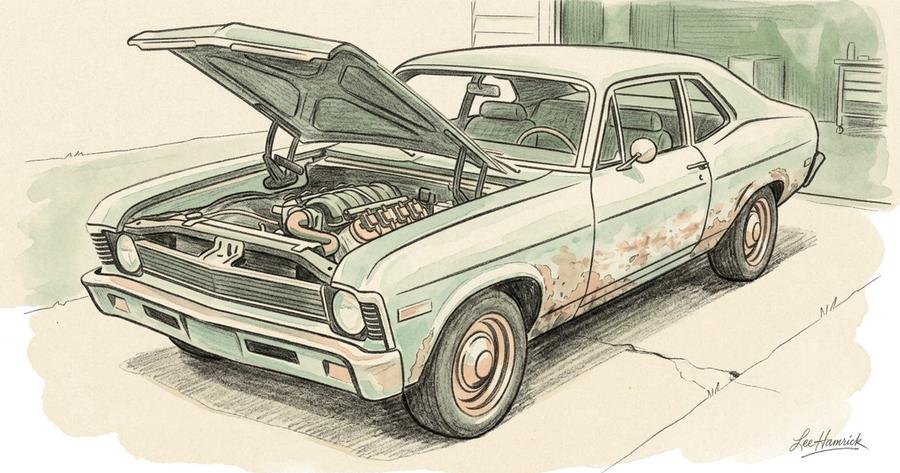
Can you LS swap a 1972 Chevy Nova barn find for $10,000 and take it to LS Fest? We break down what it actually takes to pull this off.
There is a version of the LS swap story that gets told over and over in YouTube thumbnails and forum threads: cheap junkyard LQ4, a set of headers, some creative bracket work, and you're out the door with a car that embarrasses things costing three times as much. Then reality shows up. The reality is rusted subframes, shot wiring, brake lines that crumble when you look at them, and a parts list that keeps growing every single weekend in the driveway. So when a build team pulls a 1972 Chevy Nova out of the actual earth, literally digging soil out of the interior, and commits to doing a full LS swap on a $10,000 total budget, the question stops being "can you do it" and starts being "how badly do you want to."
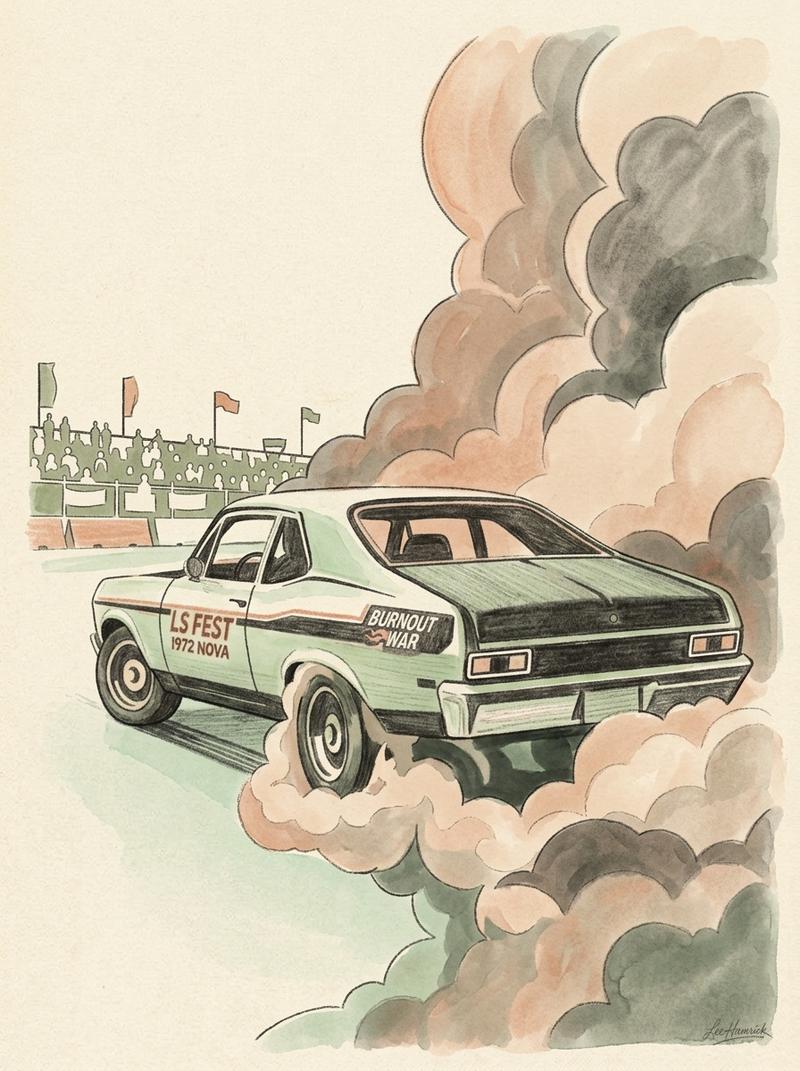
The Nova in question started its second life as a $5,000 muscle car project, a rotted barn find dragged back from the dead and made to run. That alone would be enough for most people. But the crew behind this build wanted more, specifically an LS, and they wanted to prove the concept in the most public way possible: by taking the finished car to LS Fest and doing a burnout in front of the people who would know immediately if the swap was garbage. That is either confidence or a very specific kind of optimism. Either way, it is exactly the kind of goal that makes a build worth following.
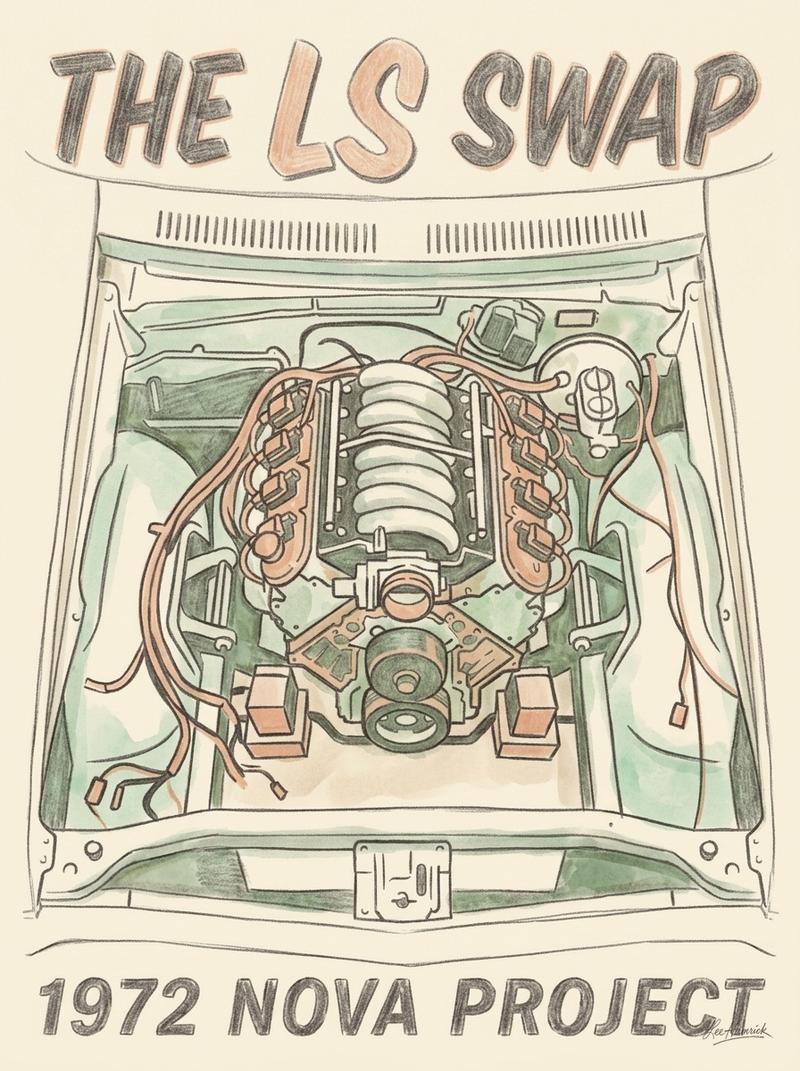
The 1972 Nova is genuinely one of the best canvases for this kind of project. The third-generation Nova sits on a compact body with a front subframe that has been swapped, stuffed, and turbocharged by enthusiasts for decades. Factory dimensions are friendly to engine swaps, the firewall has room to work with, and the aftermarket for LS conversions into these bodies is mature enough that motor mounts, headers, and transmission crossmembers are not custom fabrication jobs. You are buying off-the-shelf solutions, which matters a great deal when the total budget for the entire car, not just the drivetrain, is ten thousand dollars.
The LS engine family is what makes any of this remotely possible at that price point. Junkyard LS motors, particularly the iron-block truck variants pulled from Silverados and Suburbans, have been the working enthusiast's answer to cheap horsepower for years. A used LQ4 or LQ9 can often be sourced for somewhere between $400 and $900 depending on mileage, location, and how patient you are willing to be on Facebook Marketplace. They are not glamorous. They are heavy. But they run, they respond well to basic bolt-ons, and they have enough displacement to make real power without touching internals. For a car whose entire existence is built around doing a competitive burnout at LS Fest, that is not a compromise. That is the correct answer.
The challenge is everything around the engine. A $600 motor is only cheap until you add up the cost of making it actually work in a car it was never designed to live in. Wiring is the part that breaks most budgets and most spirits. Factory truck harnesses are long, complex, and not exactly designed to drop cleanly into a 1972 compact. Standalone harness kits simplify the process but cost money. A used harness that someone else has already trimmed and sorted is the budget move, though it comes with its own kind of risk. Then there is the transmission, the driveshaft, the motor mounts, the headers, the cooling system, the fuel system, and whatever the Nova's original floor and firewall look like after years buried in the ground.
That last part matters more than the engine choice. A barn find that has been sitting in soil is not just cosmetically rough. Water wicks up through floors. Floor pans rust from both sides. The firewall can be soft in spots that only reveal themselves when you start pulling trim and insulation. Before a single LS bolt gets torqued, whoever is doing this build has to make peace with the structural condition of a car that was literally being reclaimed by the earth. Rust repair is not exciting to watch and it is not cheap to do correctly, which means on a strict budget it often gets done just well enough to pass a quick inspection rather than truly right. That is a tension every budget build lives with. If you want a broader look at what these projects really cost in time and decision-making, our Track Car Buyer's Guide covers the same math from a different angle.
LS Fest as the proving ground is a smart choice for this kind of project. The event celebrates exactly the engine family going into this car, and the burnout competition is the most democratic form of automotive spectacle there is. You do not need suspension tuning, alignment specs, or a co-driver. You need rear tires, enough power to overwhelm them, and a driver willing to hold it. A fresh LS swap in a lightweight early Nova, even with a modest state of tune, can generate exactly the kind of tire smoke that makes an impression. The sleeper angle is real: nobody at a glance expects a rotted-out Nova to be running a modern fuel-injected V8 with a tune.
Whether $10,000 total is actually enough to get there in competitive shape depends on what you are willing to live with. If the goal is a car that looks finished, drives reliably on a highway, and could pass for a clean build on a normal day, that budget is probably short. If the goal is a car that starts, stops, turns reasonably well, and can do a burnout on command for a specific event, ten grand spent by someone who does their own labor and sources parts aggressively is genuinely doable. The key word is labor. Every hour of work you do yourself is money that stays in the parts budget. This is the fundamental math of every budget build that actually gets finished. For a sense of what that looks like with a different platform and a different kind of ambition, the Mercedes V8 Ford Capri build is forty videos of exactly the same lesson.
The Nova is the right car for it. The LS is the right engine for it. And the burnout competition is the right way to validate both. There is something deeply satisfying about a car that cost less than a decent used daily driver humiliating itself at an event dedicated to the exact engine it is running. If this build gets to the line at LS Fest and lays down a real burnout, it will have answered the original question as clearly as it can be answered: yes, a budget LS swap is still possible. You just have to want it enough to keep digging.

Written by
Cory Kiesz