The Genius Marketing Behind Toyota's Two Wild Camry Builds
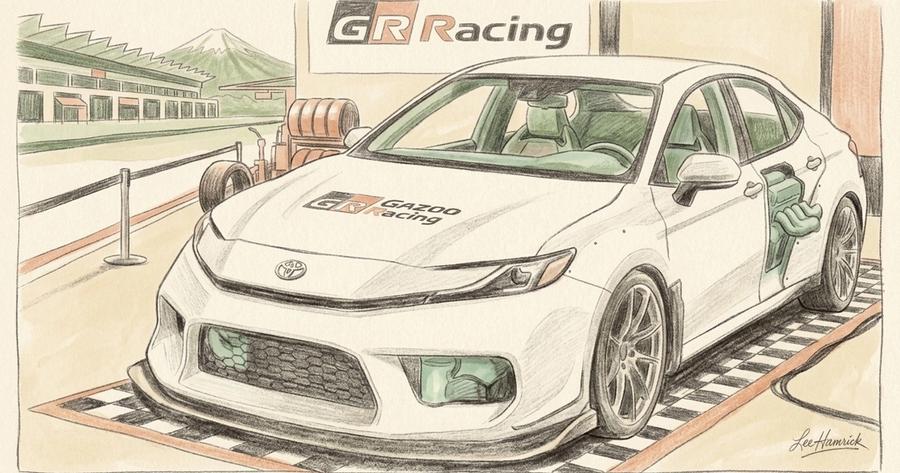
Toyota built two race-ready Camrys for the Super Taikyu 24-Hour at Fuji, including a twin-engine, seven-cylinder monster with around 700 horsepower.
Nobody was sitting around asking Toyota to do something insane with the Camry. It is the most reliably sensible car in America, the one your accountant drives, the one rental fleets buy by the thousand. And yet at the Super Taikyu 24-Hour race at Fuji Speedway, Toyota showed up with two of the most deranged Camry builds anyone has ever seen. That is the whole point.
Gazoo Racing's entry was the headline act. Their Camry runs two engines and seven cylinders total. Up front, a 1.6-liter turbocharged three-cylinder borrowed from the GR Yaris drives the front wheels. Behind where the back seats used to be, a brand-new 2.0-liter turbocharged four-cylinder handles the rears. Combined output lands somewhere around 700 horsepower. That is not a Camry anymore in any practical sense. It is a Camry-shaped physics experiment, and it is brilliant.
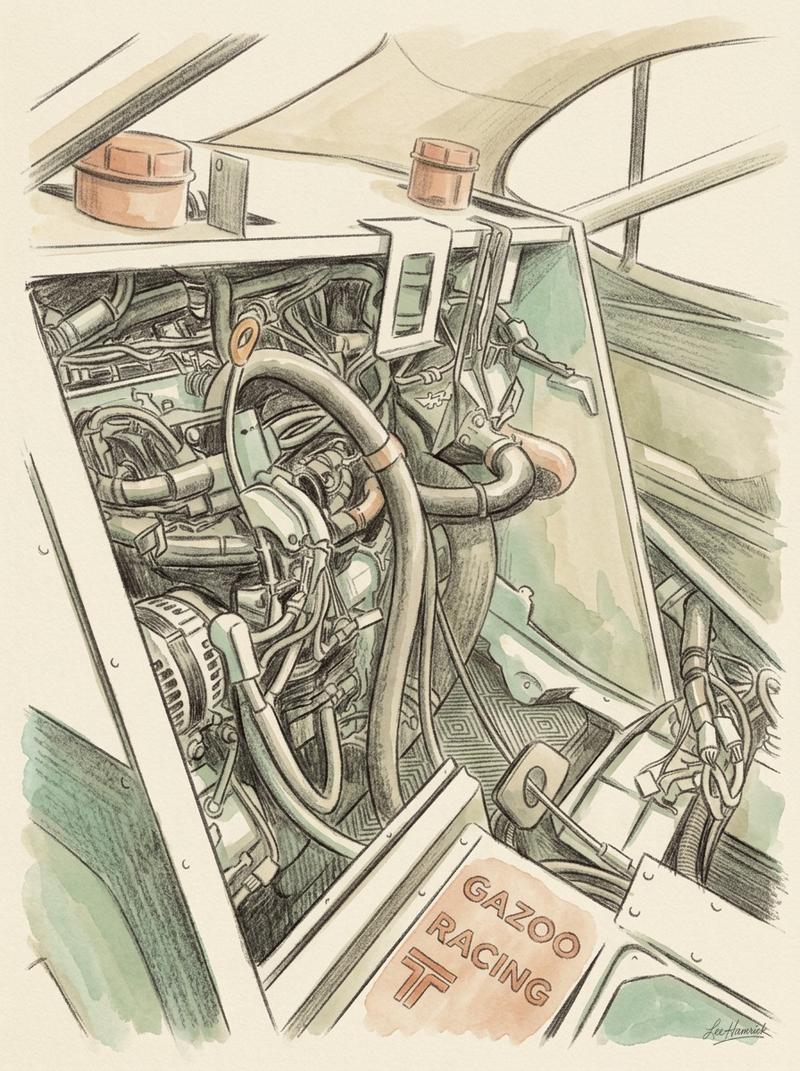
The decision to use the GR Yaris engine is worth pausing on. That motor has become something of a cult object among enthusiasts since the GR Yaris launched. It is a tiny, highly strung piece of engineering that exists almost entirely because Toyota wanted to homologate a rally car. Dropping it into a Camry race build is the kind of cross-pollination that only makes sense if your goal is to generate conversation, and it absolutely works. You are suddenly talking about the GR Yaris and the Camry at the same time, and both come out looking more interesting for it.
What Toyota understands, and what a lot of other manufacturers have fumbled over the years, is that motorsport spending only pays off when it connects back to something people can actually buy or aspire to own. Racing a purpose-built prototype is impressive but abstract. Racing a recognizable production silhouette with a grille and a nameplate that people see in every parking lot in the country is a different kind of storytelling. It makes the road car feel like it has a secret life.
This is the same logic that made the original Nurburgring lap record chasing so effective as a marketing tool, and why the Civic Type R's lap times still show up in Honda's brochures. The connection between the race car and the showroom car does not have to be literal. It just has to be emotionally plausible. When Toyota sends a Camry to race for 24 hours, they are not suggesting you could extract 700 horsepower from yours. They are suggesting that the Camry nameplate belongs in a conversation about performance, and that is a very different and much harder thing to pull off.
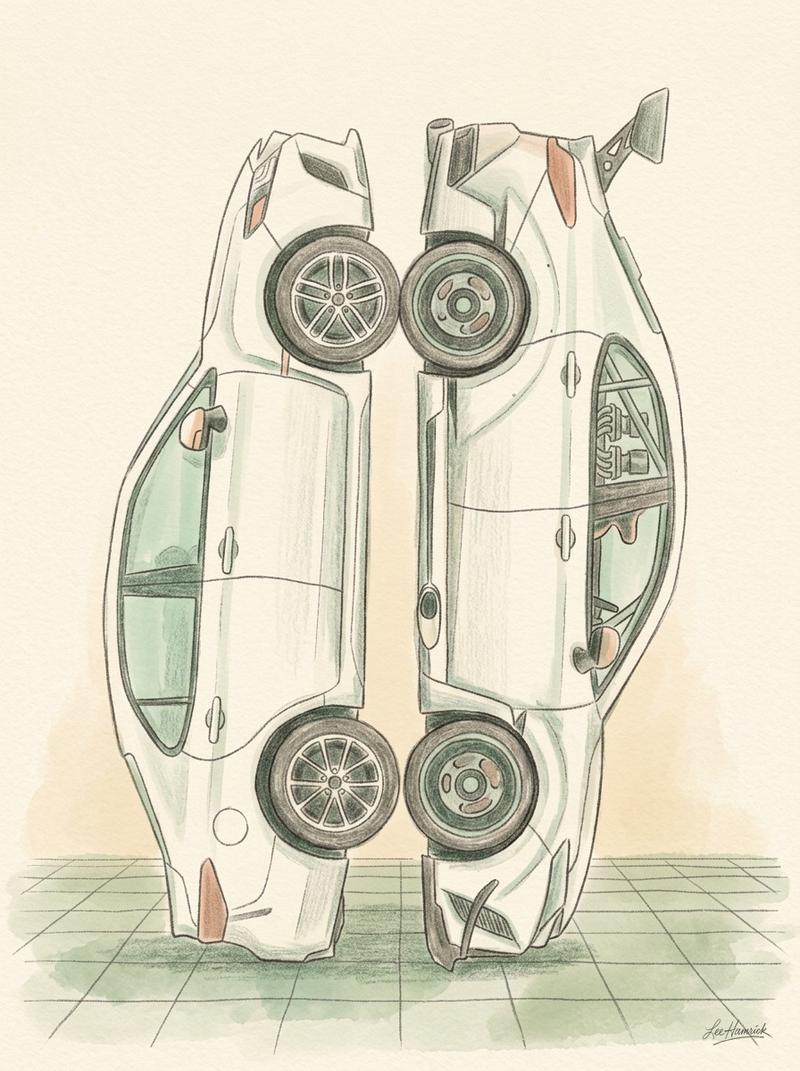
The two-team format at Fuji adds another layer to this. Having Gazoo Racing and a second Toyota team run different Camry builds head to head means the race itself becomes a comparison test, a technical argument played out on track rather than in a press release. It gives journalists and fans something to actually analyze. Which philosophy wins, the twin-engine all-wheel-drive experiment or whatever the other team brought? That kind of internal competition is what gave Can-Am and Group B their mythos. Teams fighting each other with different engineering solutions under the same banner is inherently more interesting than a parade.
There is also something worth noting about timing here. Toyota has been pushing the Camry nameplate harder than ever in the US recently, and the current generation made a genuine run at sportier styling and a more driver-focused identity compared to its predecessors. A twin-engine, 700-horsepower racing version does not hurt that narrative at all. It is an extreme proof of concept for something the road car is already trying to say about itself.
For enthusiasts specifically, this kind of build earns real credibility in a way that a slick ad campaign never could. Racing at Fuji for 24 hours with a dual-engine Camry is the kind of thing that gets shared on forums and argued about in paddocks. It generates the exact kind of organic enthusiasm that no marketing budget can manufacture directly. You have to actually do something worth talking about, and Toyota did.
Whether either car is ultimately fast enough to matter in the overall results is almost secondary. The image of a Camry with two engines and seven cylinders screaming around Fuji at night is the product. That image travels. It attaches itself to the nameplate. And the next time someone drives a perfectly sensible rental Camry on the highway and thinks about how boring it is, there is now a small, persistent piece of evidence that somewhere out there, a version of that car was doing something completely unhinged. That is worth more than any amount of television advertising.

Written by
Christian Kiesz