The 1970 Pontiac Bonneville: When Pontiac Decided Subtle Was for Cowards

The 1970 Pontiac Bonneville abandoned finesse for full-throttle aggression. A full-size muscle car that rewrote the rules.
Look, I'm just going to say it: the 1970 Pontiac Bonneville is one of those cars that either speaks to your soul or makes you wonder if Pontiac's design team had been drinking since lunch. There's no middle ground. You either get why this thing exists, or you don't.
The 1969 redesign gave Pontiac a smooth, horizontal aesthetic that played nicely with the curves and swoops of the late '60s. Clean lines. Elegant proportions. The kind of thing that won you design awards at country clubs. Then 1970 rolled around and Pontiac basically said "screw that noise" and built a Bonneville that looked like it wanted to pick a fight with literally everything else on the road.
The front end tells the whole story. Instead of the split grille from the year before, Pontiac went with a single massive aperture flanked by a pair of aggressive horizontal intake slots. It's not gentle. It's not apologetic. It's a shark's mouth that happened to land on four wheels. The hood is a landscape of ridges and creases, sculpted in a way that makes you believe this car is tensing its muscles even when parked.
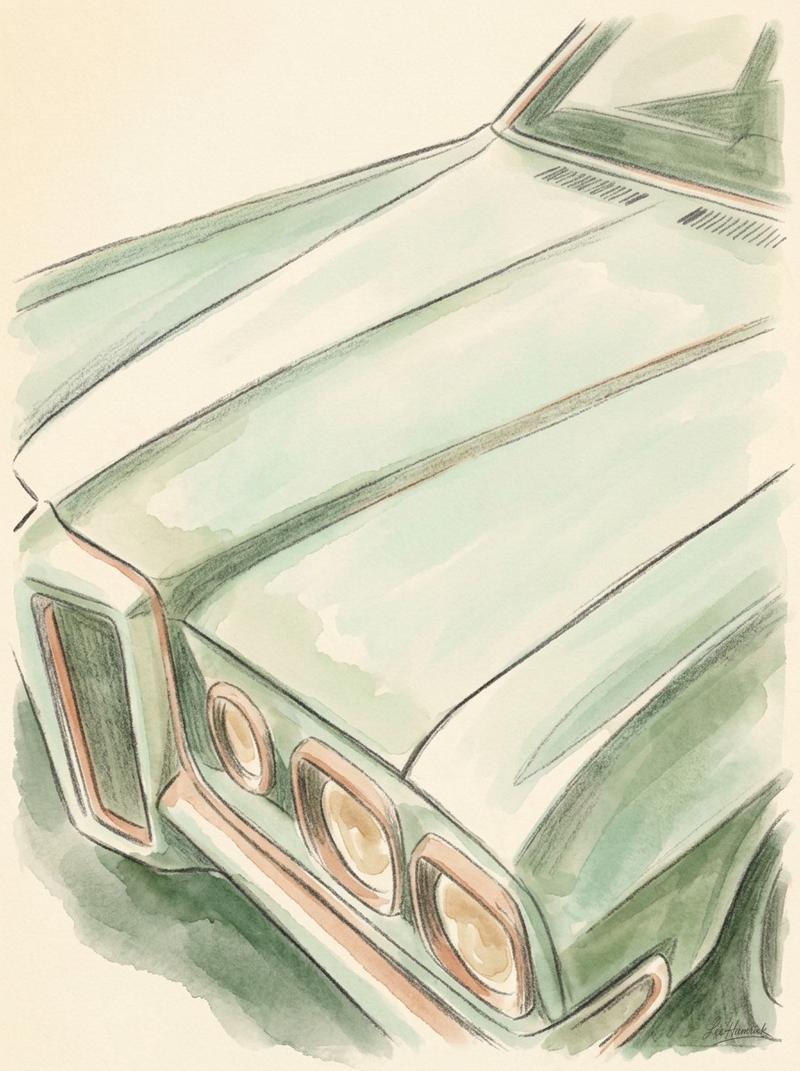
The side profile is where things get genuinely controversial. The Bonneville for 1970 stretched longer and sat lower than its predecessor, with a body that seemed to defy the squared-off trend that was starting to dominate Detroit. Instead, Pontiac committed fully to curves and drama. The beltline runs horizontal and aggressive, and the entire car has this sense of forward momentum even when it's standing still. It's 18 feet of pure automotive machismo, and if you think that's overwrought, you're probably not the target customer.
The interior? Honest conversation: the 1970 Bonneville's cabin isn't about luxury in the way a Cadillac Eldorado is luxury. It's about functionality wrapped in a philosophy. The dashboard is straightforward. The seating is bench-row wide and comfortable. The steering wheel is the size of a ship's wheel because Pontiac understood that you're piloting something substantial here, and you'd better be able to feel what it's doing. Air conditioning worked. The radio was simple. Everything did what it was supposed to do without pretense.
Here's what matters though: the powertrain. A 1970 Bonneville came standard with a 400-cubic-inch V8. Optionally, you could get the 455 that made 370 horsepower and 500 pound-feet of torque. That's not a typo. Five hundred. In 1970, when the OPEC embargo hadn't happened yet and nobody was thinking about emissions for another five years, Pontiac built an engine that didn't care about fuel economy, didn't worry about efficiency, and existed for one purpose: move this 4,200-pound full-size sedan from zero to stupid in less time than you'd think reasonable.
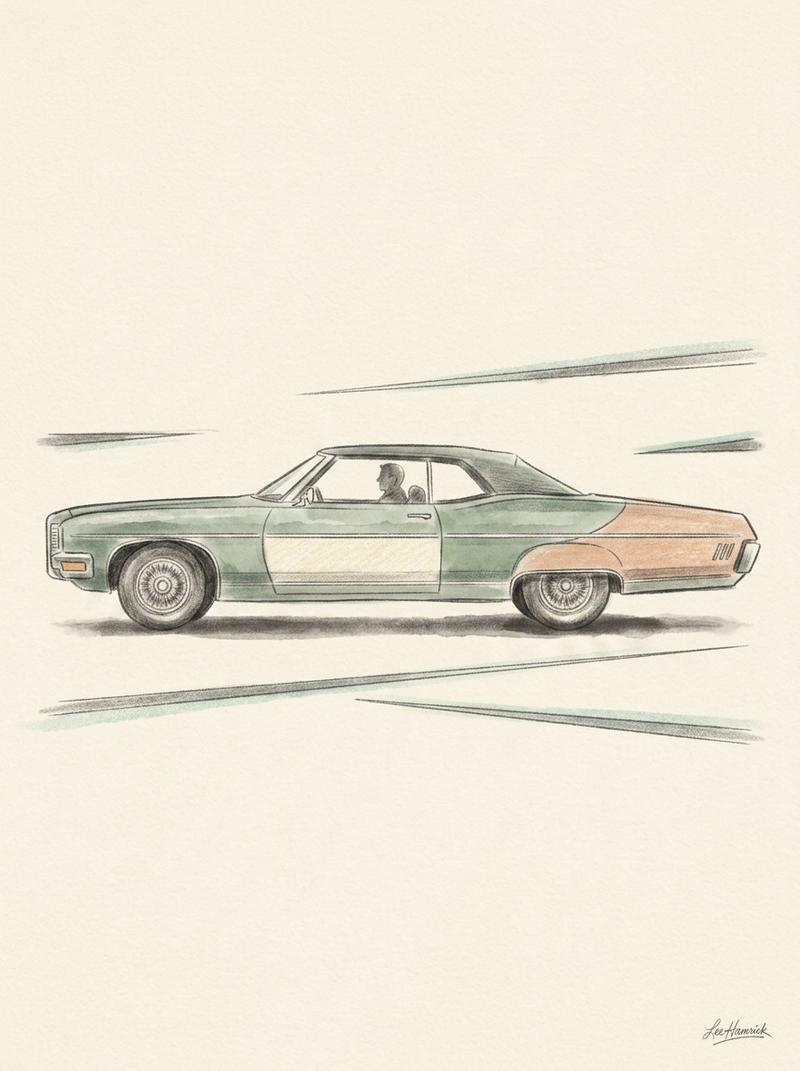
The 455 paired with the automatic transmission was a combination that would embarrass sports cars. The Bonneville didn't just accelerate. It accelerated with this grinding, purposeful authority that made you understand why muscle cars earned their name. The suspension was soft by modern standards, the handling was more "manageable" than "precise," but that wasn't the point. The point was that you could take a car that weighed as much as a battleship, stuff a 455 under the hood, and it would still outrun almost everything else you'd encounter on a 1970 freeway.
The brakes were drums in the rear and discs in the front. By today's standards, stopping this thing required planning. You couldn't just stab the pedal and expect miracles. You had to think ahead, anticipate, and treat the brake pedal with respect. That feedback between driver and machine? That's something modern power-assisted hydraulic systems completely eliminated.
What kills me about the 1970 Bonneville is that it represents a very specific moment in American automotive history. This was the last gasp of an era before regulations, insurance premiums, and fuel crisis fundamentally changed what a full-size American car could be. Pontiac built the Bonneville as if the party would never end. As if gasoline would always be cheap. As if nobody would ever ask questions about emissions or safety or whether it made sense to build a car that got 9 miles per gallon.
The design language is uncompromising. It doesn't ask for approval. It doesn't hedge its bets with half-measures. This is a car that commits to its vision completely, for better or worse. Some people see that and feel liberated. Others see it and think Pontiac collectively lost its mind. I'm not here to convince you which camp you should be in. But I'll tell you this: the 1970 Bonneville doesn't apologize, and neither should you if you love it.
Finding one today is harder than it should be. The market has gotten precious about full-size Pontiacs from this era, which is weird because they spent fifty years being treated like used-car lot fodder. Now the enthusiasts have discovered them, and suddenly everyone wants a clean example with documentation. The good news is they're still cheaper than equivalent muscle cars, partly because they don't have the brand cachet of a Chevelle or Road Runner, and partly because people are still figuring out whether they actually like this design or not.
If you find one with the 455, matching numbers, and an original interior that hasn't been destroyed by time and neglect, stop negotiating and buy it. These cars are going nowhere but up in value, because eventually the automotive world catches up and realizes that the weird, controversial design choices of one era become the treasured artifacts of another. For a sense of just how lively the collector market for cars like this has become, Cars and Bids vs. Bring a Trailer is worth a read before you start bidding.
The 1970 Pontiac Bonneville is weird. It's dramatic. It's unapologetic. It's everything a full-size American car should have been in the moment before the world decided cars needed to be sensible. That's exactly why it matters.

Written by
Vince Russell