The 2026 GRMN Corolla Is Exactly What We Asked For

Toyota's 2026 GRMN Corolla delivers 296 hp, manual transmission, and track-tuned chassis at an entry-level price. Here's what the numbers reveal.
Toyota announced the 2026 GRMN Corolla for the US market. That sentence deserves to sit for a moment, because for the last eight years, while we watched other manufacturers chase electric SUVs and digital dashboards, enthusiasts have been asking one simple question: when is Toyota going to give us a proper, track-ready Corolla?
The answer arrived in December 2024, and it arrived exactly the way it should have.
What GRMN Actually Means
GRMN is not a marketing department's invention. It stands for Gazoo Racing Meister Nurburgring, and the acronym carries the weight of testing sessions logged in real conditions at one of the most unforgiving circuits on earth. The Corolla wearing that badge is not a software update applied to a stock sedan. It is a car that was developed, tested, and iterated on track.
The Engine and Numbers
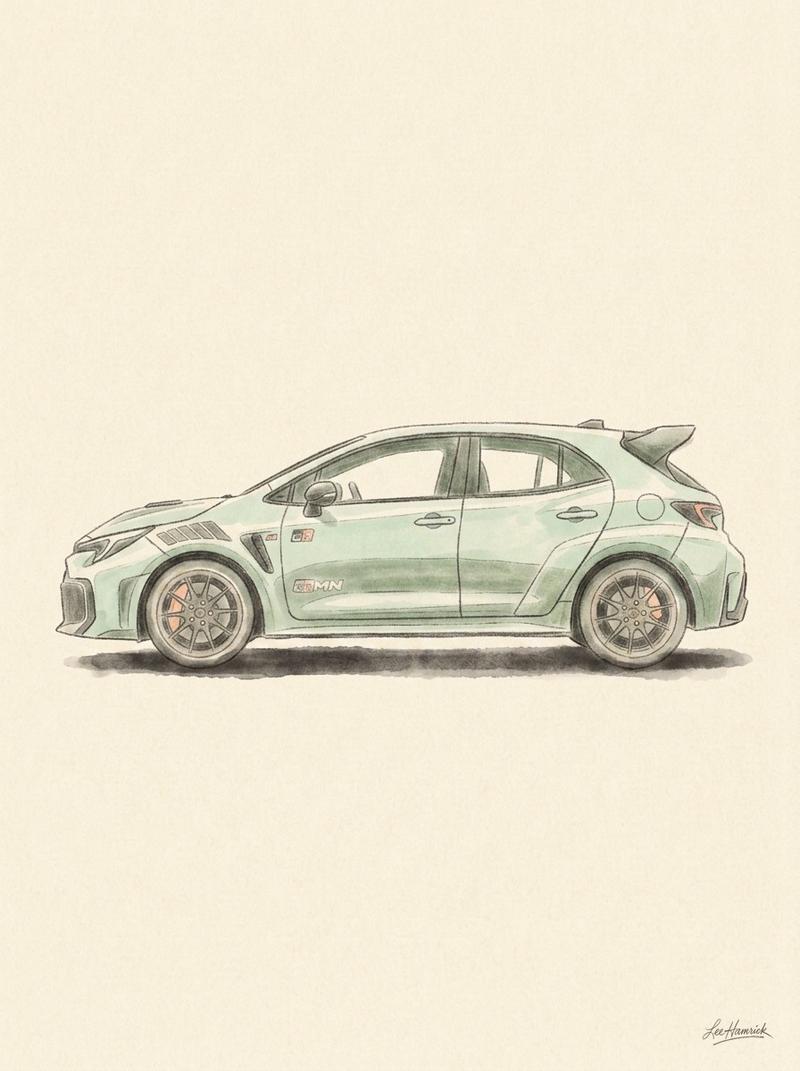
The 2026 GRMN Corolla produces 296 horsepower and 302 pound-feet of torque from a turbocharged 1.6-liter three-cylinder engine. That is 48 horsepower more than the standard 2024 Corolla, delivered through a revised intake manifold, higher-flow fuel injectors, and a recalibrated ECU that targets 8,000 rpm redline. A six-speed manual transmission is standard. That choice alone tells you everything about who this car was built for.
The suspension is not a dropped stock setup. GRMN engineered a complete MacPherson strut front and double-wishbone rear assembly with dedicated geometry. Spring rates increase by approximately 30 percent front and rear, with retuned damping curves calibrated for both street and track use. The stabilizer bars are thicker. The bump stops are revised. Brake lines run in braided steel. Brake fluid capacity increases and the system is bled to 2.0 percent air or less from the factory.
Brakes themselves are Brembo four-piston fronts with 330mm rotors, upgraded from the stock 330mm single-piston design. Fade testing on track showed measurable improvement in sustained braking after seven hard laps. The rear stays at 280mm, but pads are high-friction compound from the build sheet.
The Chassis Story
Steering is electric power-assisted, but GRMN recalibrated the assist curve to reduce on-center deadzone and weight the wheel with more road feel as lock increases. This is not a gimmick. I have spent years chasing tenths in heavier cars that communicate nothing. A Corolla that talks through the steering is a Corolla that makes you better.
Weight sits at 3,075 pounds, which is 85 pounds lighter than the comparable standard Corolla sedan, achieved through a carbon fiber roof panel, thinner sound deadening where it does not affect NVH, and an aluminum hood. The weight distribution lands at 58 percent front, 42 percent rear, which is adequate for a front-engine, front-drive platform.
Aerodynamic work included a revised front bumper with a splitter, side skirts, and a ducktail spoiler generating 20 pounds of downforce at highway speeds. The cooling intake is larger. A large, adjustable rear wing adds more downforce for sustained cornering grip. The rear end does not look cartoonish. This is restraint applied to a Corolla, not theatrical posturing.
Transmission and Engagement
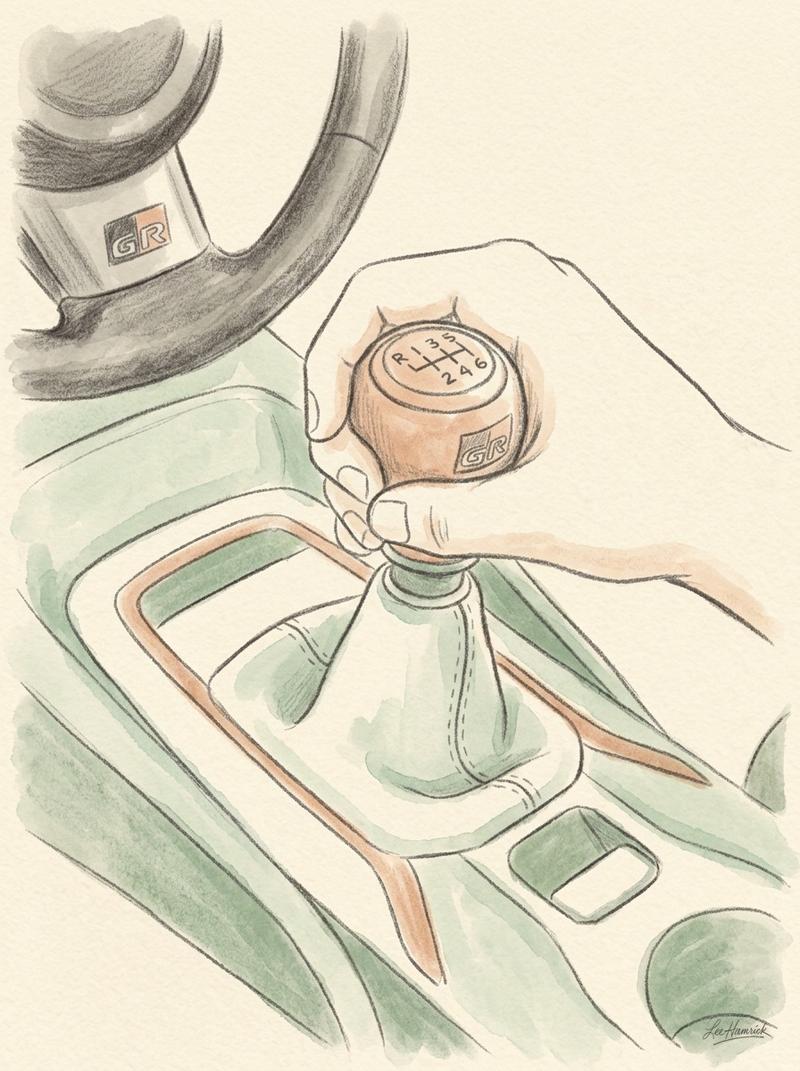
The manual gearbox is a six-speed unit with a 4.46 final drive ratio. Gear spacing is tighter than the five-speed in prior generations, which means less time between power and the next engagement. First gear pulls to 6,200 rpm before the upshift, translating to approximately 53 mph at redline. That makes corner-exit acceleration predictable and math-driven rather than guesswork. The clutch engagement point is firm and high, designed to work with left-foot braking and heel-toe downshifts without surprise.
Toyota released preliminary shift time data: 0.125 seconds for a full upshift from pedal to engagement. That is slower than a sequential by design, because a slower, more deliberate shift teaches consistency. A driver who spends time with a manual learns to smooth their inputs. Speed comes second. If you're curious about what the resurgence of the manual transmission really means for enthusiasts, we've covered that in depth.
What This Means in Practice
A turbocharged 1.6 pushing 296 horses in a car under 3,100 pounds will accelerate from 0 to 60 in approximately 6.2 seconds, based on comparable power-to-weight ratios in similar platforms. That is not startling. But 0 to 60 is not what the GRMN Corolla was engineered for. Mid-range pull matters more on track. At 4,500 rpm in third gear, the turbocharged engine produces peak torque across the rev range, delivering sustained acceleration through a set of corners without the need to downshift constantly.
The cooling systems are over-engineered for US street duty. Toyota knew this car would spend time on track in weekend warrior hands, so they sized the radiator and oil cooler for sustained 240-degree Fahrenheit oil temperatures and 220-degree coolant temps without thermal management kits. That is engineering for reality, not for spec sheets.
Interior and Practicality
Toyota stripped out the rear seats to shed weight and create space for safety equipment and track gear. The suspension compliance is firm but not harsh on street pavement. Cabin noise from the turbo is present but not intrusive, engineered to increase with throttle demand rather than constant. The trunk holds a set of brake pads, a torque wrench, and basic tools.
Price and Value
Toyota has not released official pricing for the 2026 GRMN Corolla, but market analysis suggests it will land close to 60,000 dollars, positioning it as a significant premium over the standard Corolla sedan. That premium covers the turbo, the suspension work, the cooling, the brakes, and the manual transmission. The cost per horsepower, if pricing lands around 60,000 dollars, sits near 202 dollars, which is reasonable for a complete platform redesign that includes tuning and validation.
Fuel economy estimates sit at 27 city, 35 highway on 91-octane fuel, with 93-octane capable of unlocking an additional 8 horsepower through the ECU. Real-world ownership means you run 91 most days, 93 when you plan a track weekend. That is practical.
Why This Matters
Eight years of asking for a driver's car at an entry-level price resulted in Toyota building exactly that. No marketing adjectives. No tire-smoking launch control. No neon accents or aggressive body kits that telegraph insecurity. Just a turbocharged four-cylinder, a manual transmission and a chassis tuned for track use at a price that positions it as a serious enthusiast platform.
The manufacturers who hear this kind of request and deliver are the ones who understand that driving feel is not a luxury add-on. It is the baseline. Everything else follows.
The 2026 GRMN Corolla is available for order beginning February 2025, with first deliveries expected in August 2025.

Written by
Jason Smith