Hellcat vs C8 Corvette: Two Very Different Answers to the Same Question

Dodge Challenger Hellcat vs Chevy C8 Corvette: two American performance cars with radically different philosophies, both quick, neither wrong.
The Dodge Challenger Hellcat weighs roughly 4,400 pounds and makes 717 horsepower from a supercharged 6.2-liter V8. The C8 Corvette Stingray weighs around 3,400 pounds and makes 490 horsepower from a naturally aspirated mid-mounted 6.2-liter V8. One of these is a muscle car that somehow became a supercar by the sheer force of its displacement. The other is an actual supercar wearing an American price tag. The fact that people argue about which one is faster tells you something interesting about how Americans think about performance.
Both are legitimate. Both are entertaining. And depending on the specific version, the specific road, and the specific driver, either one can win. That nuance tends to get lost whenever this comparison shows up online, usually attached to a drag strip video where someone cherry-picks the result that supports what they already believed. This piece is an attempt to be more useful than that.
What Each Car Is Actually Doing
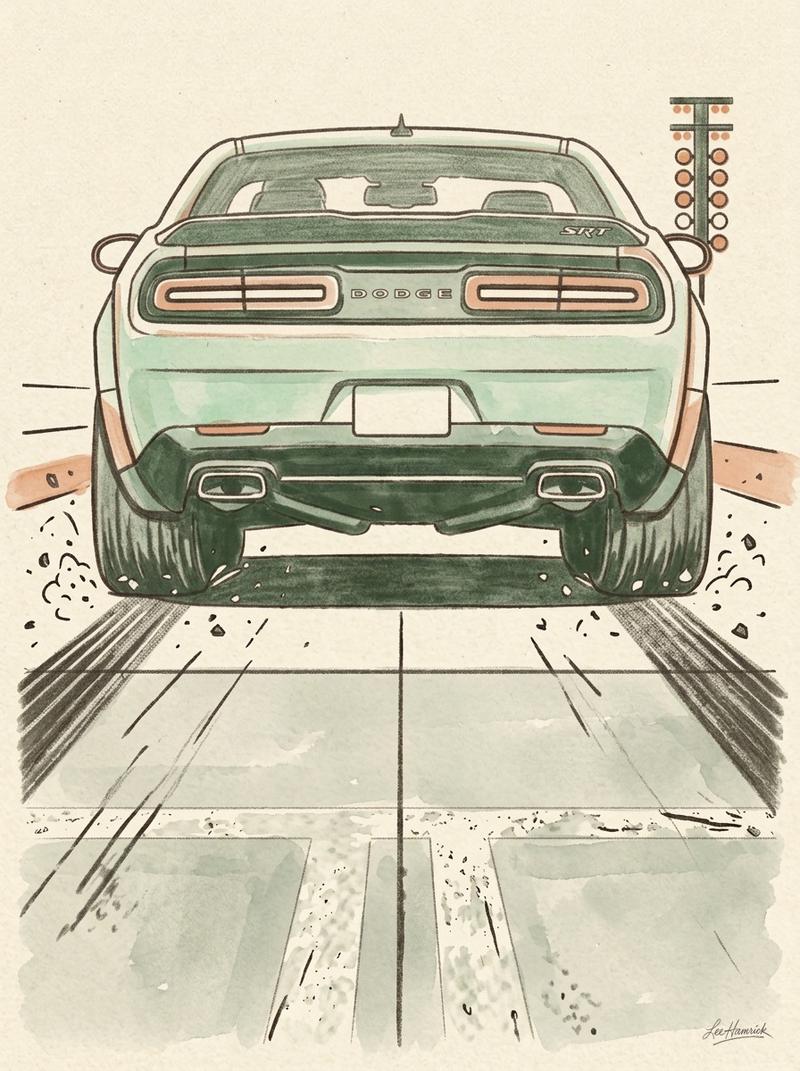
The Challenger Hellcat is not pretending to be something it isn't. It is a large, heavy, rear-wheel-drive coupe with a supercharged engine that produces more torque than most drivers will ever fully use. The platform under it has been around long enough to qualify as a historical artifact. Chrysler introduced this body style in 2008, and while the suspension and electronics have been updated over the years, the fundamental architecture is not what you would design from scratch if your goal was lap times. That is not a criticism. It is a description.
What the Hellcat is doing is delivering a specific experience: massive power, a big naturally theatrical V8 soundtrack (earned, not synthesized), and rear-wheel-drive dynamics that reward a certain kind of driver confidence. It is also doing something that matters more than critics give it credit for, which is being accessible. The Challenger has been available in configurations that real people can afford, and the Hellcat specifically lands in a price bracket where the competition is not exactly crowded with 700-horsepower options.
The C8 Corvette is doing something structurally different. When Chevy moved the engine behind the driver for the first time in Corvette history with the C8, they were not chasing a trend. They were correcting a physics problem. Mid-engine placement puts the heaviest component close to the center of the car, which improves balance, reduces polar moment of inertia, and makes the car more predictable at the limit. The result is a car that drives significantly smaller than its numbers suggest, and that is one of the most remarkable things about it.
The Drag Strip: Where It Gets Complicated
On a drag strip, the Hellcat has a genuine argument. 717 horsepower is 717 horsepower, and in a straight line, that supercharged V8 has the kind of mid-range torque delivery that makes elapsed times look deceptively simple. Launch control and sticky tires help manage what is otherwise a significant traction problem: putting that much power through the rear wheels of a 4,400-pound car requires either excellent tires, a skilled driver, or both.
The C8 Stingray's advantage in a straight line is not raw power but efficiency. Lighter weight means the engine is moving less mass, and the dual-clutch transmission in the C8 executes shifts faster than most human-operated manuals can manage. The result is a car that can run competitive quarter-mile times despite a significant horsepower deficit on paper. The base Stingray is not giving the Hellcat a comfortable margin to hide in.
Move up to the C8 Z06 with its flat-plane crank 5.5-liter V8 making 670 horsepower, and the calculus changes further. That engine revs to 8,600 rpm and was developed with racing architecture in mind, which is a different kind of performance statement than a supercharged torque monster. Both approaches work. They just feel different getting there.
The Part That Actually Matters: Corners
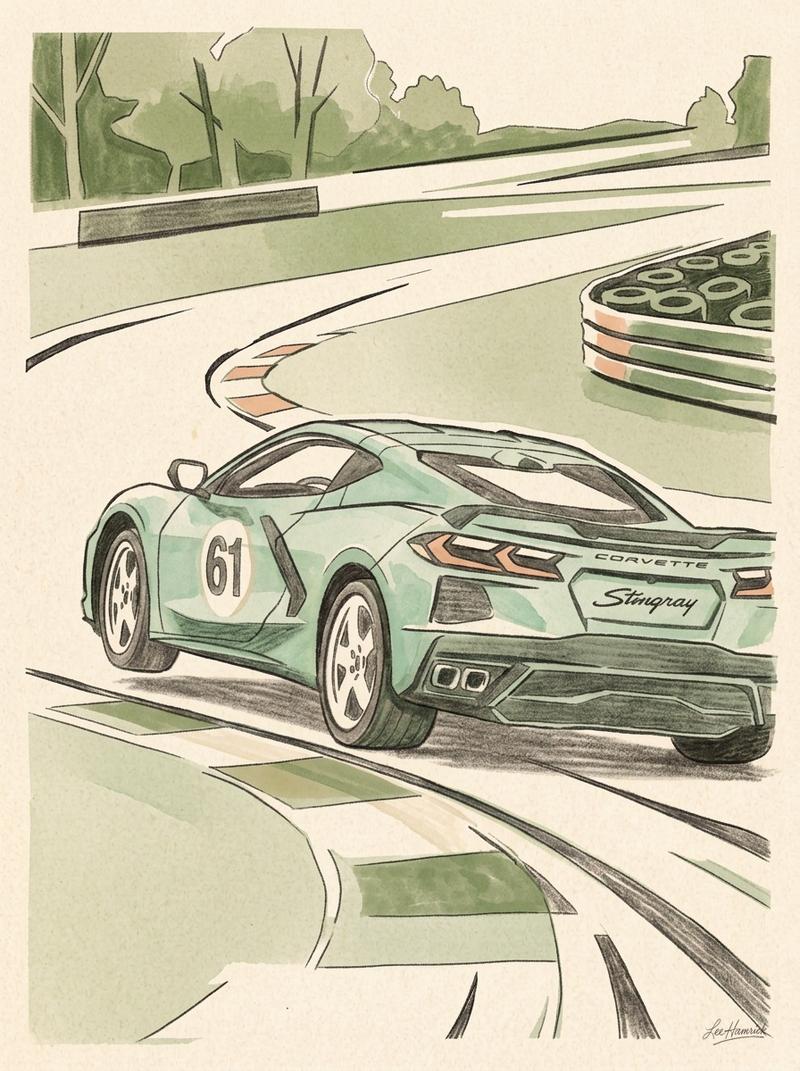
This is where the comparison stops being close. The C8 platform was designed to handle, and it does, with a composure that the Challenger's older architecture cannot match. The Hellcat is entertaining in corners, but entertaining in the way a very powerful car with relatively high mass is always entertaining, meaning you are managing it more than the car is managing itself. The C8 in the same corner is doing something different: it is communicating, responding, and rewarding driver input with a precision that the Hellcat simply was not built to deliver.
Track days clarify this immediately. The Challenger Hellcat is not a track day car in any serious sense. It will overheat its brakes, wear through its tires, and remind you through every medium-speed corner that it was designed for boulevards and drag strips, not sustained apex work. That is not a failing of the car's mission. It is just the mission being what it is.
The C8, particularly in Z51 configuration, is a legitimate track tool that happens to be streetable. The brakes are sized for repeated use, the suspension geometry handles load transfer predictably, and the mid-engine balance means you can ask the rear to rotate without the front pushing wide. It is the better driver's car. That conclusion is not really contested by anyone who has driven both on a circuit.
The Ownership Reality
Here is where the Hellcat earns genuine respect from a practical standpoint. The Challenger's back seat exists and humans can sit in it. The trunk is usable. The car can do a road trip without requiring you to plan your life around its limitations. Daily driving a Hellcat is a real option that people actually exercise, and the experience of doing so, with that supercharged V8 at part throttle on a California interstate, has a quality that no spec sheet communicates.
The C8 Stingray is also a daily driver for many owners, but the ergonomics require some negotiation. Visibility is a known limitation, the trunk configuration is unconventional (the frunk is small, the main cargo area is in the rear), and the car draws attention in a way that some owners enjoy and others find tiring. These are not disqualifying factors. They are the texture of ownership that reviews sometimes smooth over.
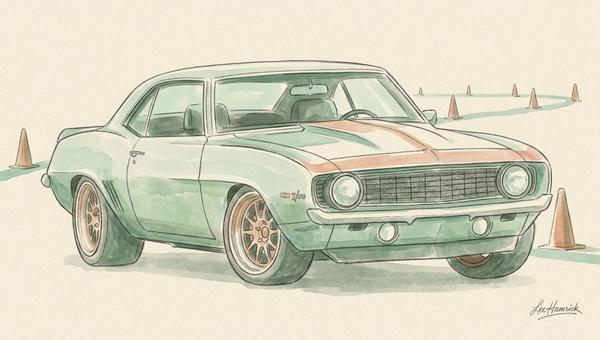
Pricing is worth stating plainly. A base C8 Stingray has been available in the low-to-mid $60,000 range, which for the performance level on offer represents one of the better values in modern automotive history. The Hellcat has historically been priced meaningfully below that. Both cars represent strong value arguments within their respective classes.
Two Right Answers
The drag strip argument between these two cars is genuinely close enough to be interesting, and the specific result depends on which versions you are running, who is driving, and what the surface conditions are. The broader performance argument is not as close: the C8 is the more capable machine on a circuit, by a margin that increases significantly as the roads get more technical.
None of that makes the Hellcat wrong. It makes the Hellcat exactly what it is, which is a very fast, very loud, very American car that delivers an experience the C8 does not and was not trying to. If you want a car that will pull hard enough to flatten your expression at any speed, comfortably carry four adults, and announce its presence the way only a supercharged pushrod V8 can, the Hellcat is not a compromise. It is the answer.
If you want the better driver's car, the one that rewards skill and communicates through corners and makes you a faster driver the more time you spend in it, that is the C8. Both exist. Both are worth existing. The argument was never really about which one wins. It was about which one is yours.