2026 Mazda MX-5 Grand Touring: Love It and Keep It

The 2026 MX-5 Grand Touring proves Mazda still understands what makes a driver's car work. Simple, honest, and worth holding onto.
I spent way too long thinking about whether the 2026 MX-5 Grand Touring deserved the attention it gets, or if I was just falling for something easy to love because it's designed to be loved. And then I drove it on a road I know too well, one that has humbled faster cars and bored me in appliances, and I understood: this car isn't trying to trick you. It's just working.
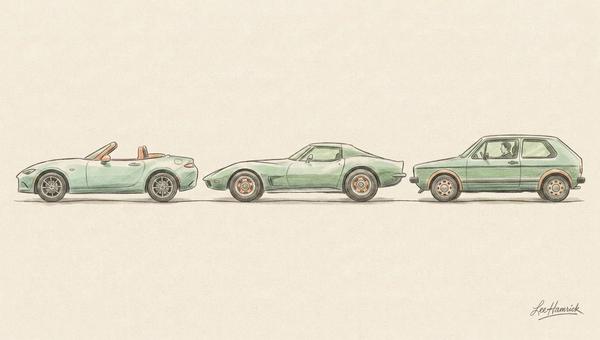
The MX-5 occupies a strange place in the enthusiast world. It's not the fastest. It's not the rarest. It doesn't have the exotic appeal of a Porsche or the raw mechanical theater of a V8. What it has instead is an almost insulting level of clarity about what a lightweight, well-balanced sports car should feel like. And in 2026, when so much of automotive design has tilted toward weight, complexity, and systems that mediate between you and the road, that clarity reads like restraint. Like someone saying no when the industry was screaming yes.
The Grand Touring trim sits in the middle of the lineup, and that positioning matters. You get the manual transmission as standard (the automatic is available, but if you're buying this car, you know what you want), along with Brembo brakes, an LSD, and Michelin Pilot Sport 4S tires. The suspension tuning is tighter than the base Sport model without crossing into the unbearable territory that would make the car a chore on anything that isn't a track. I spent time in both configurations back to back, and the Grand Touring's extra stiffness didn't feel like punishment. It felt like a promise being kept.
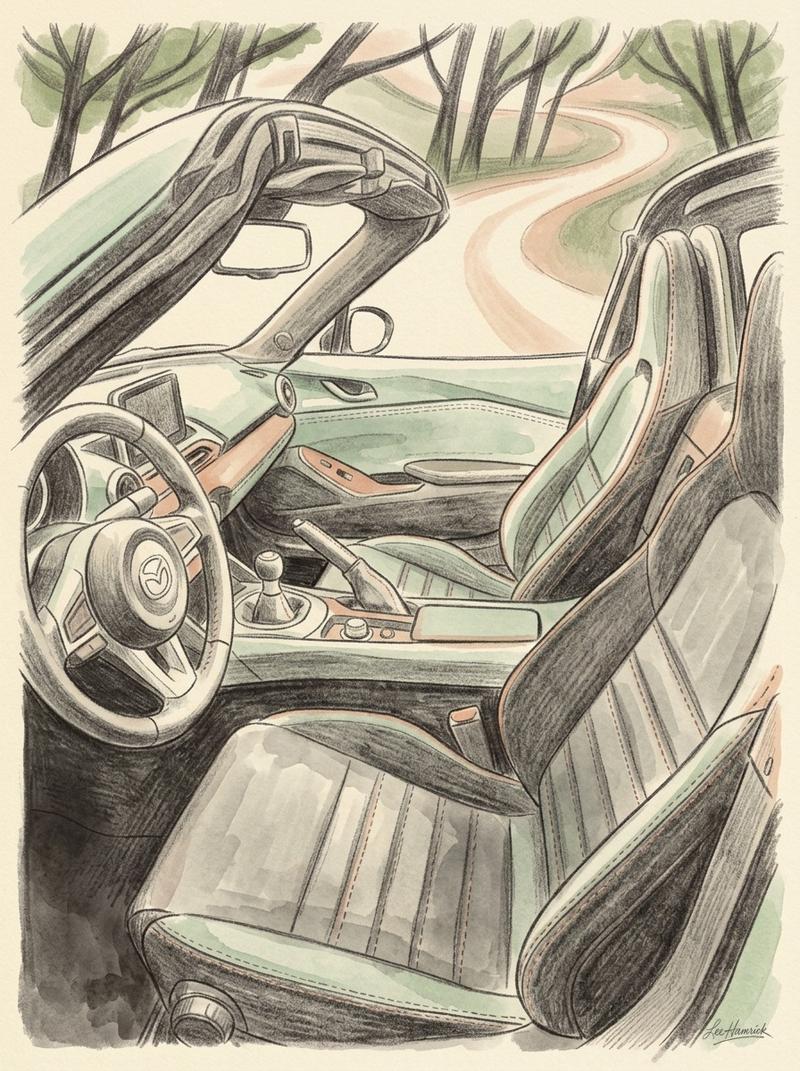
The numbers here are not impressive on paper. 181 horsepower from 2.0 liters, 151 pound-feet of torque, 0-60 in something north of six seconds depending on conditions and how hard you're willing to work it. On a freeway full of crossovers making 300 horses without breathing hard, this feels quaint. But the details here are worth paying attention to. The power delivery is linear. The throttle response is immediate. The gear changes in that manual gearbox are short and precise, with a click that tells you something mechanical just happened inside the transmission. Every interaction between you and the car's systems is direct, unfiltered by electronic nannies or adaptive this or artificial feedback that.
The steering is where the car reveals what Mazda has been thinking about for the last two decades. It's not mechanical, but it feels like it could be. The weight is progressive without being heavy, and the feedback is genuine information about what the front tires are doing, not a synthesized approximation of what Mazda thinks you'd want to feel. Turn into a corner and the car leans into it with a kind of honesty that makes you trust the chassis. Push harder and it will tell you when it's approaching the limits. Not with warnings or stability control interventions, but with a gradual conversation that starts at the steering wheel and travels through the seat.
It's probably not as bad as I'm making it sound, but the elephant in the room is that nothing here is new. The platform has been in production since 2016. The engine is naturally aspirated in an era of boosted everything. The design language reads conservative next to the sharper angles that manufacturers keep chasing. On paper, the 2026 MX-5 is incrementally refreshed, incrementally updated, and incrementally the same car it's always been. And somewhere in the design process at Mazda, someone made the decision that those increments didn't need to be revolutionary. They just needed to be right.
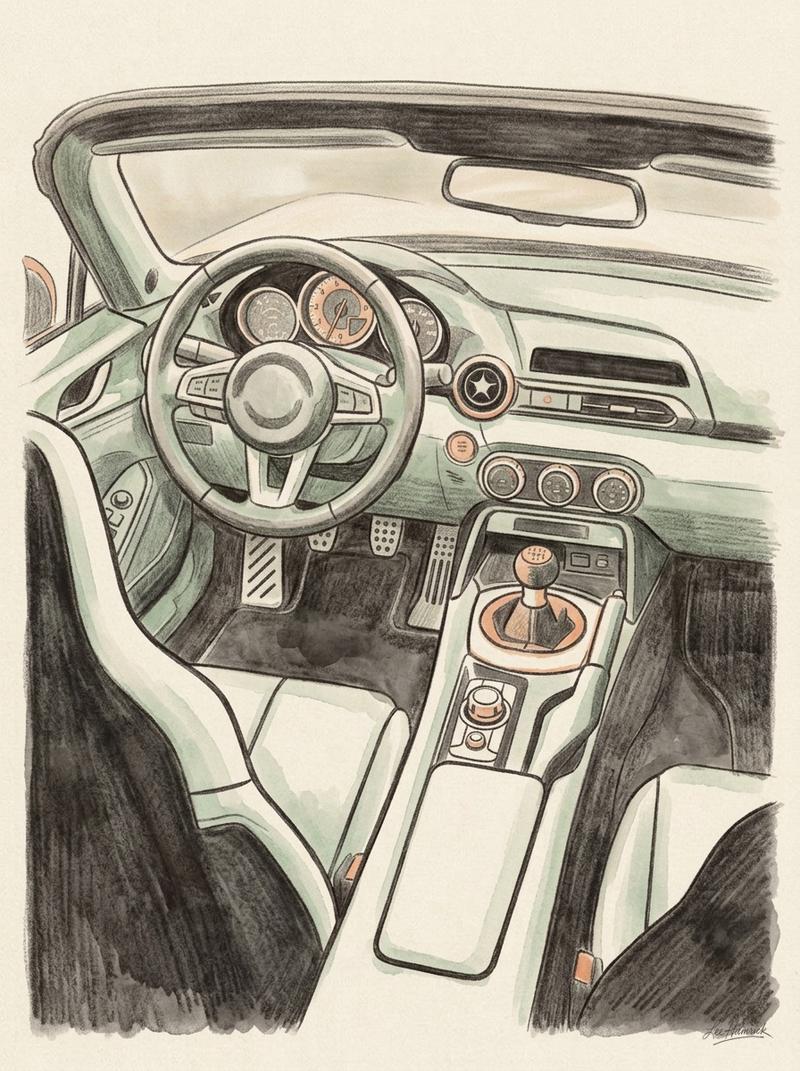
The interior reflects that philosophy. The cabin is not plush. The materials are not exotic. There's no leather everywhere unless you pay for it, and even then the touch and feel doesn't rival a German sports car three times the price. But the ergonomics are obsessive. The seat holds you without trying to reposition your skeleton. The pedals align naturally under your feet. The controls fall to hand intuitively, which sounds like the bare minimum until you spend time in cars where the touchscreen is placed for looks instead of usability, where buttons are small and placed for aesthetic balance rather than function. In the MX-5, the design priority is clarity. Can you use it? Does it do what you expect? If the answer to both is yes, Mazda leaves it alone.
The convertible top is still manual, which will turn some people away immediately. Those people are not the audience for this car. The top is easy enough to raise and lower, and there's something about the mechanical simplicity of it that fits the overall philosophy. You're not delegating the experience to an electric motor. You're participating in it, even if participation here just means pulling a lever and tossing fabric over your head.
Practicality, as ever, is the compromise. The trunk is small enough to make weekend trips require planning. The back seat is barely a back seat, more an acknowledgment that some people occasionally have friends. The car drinks regular fuel but doesn't pretend to be efficient about it. These are not flaws that Mazda is unaware of. They're trade-offs that the company has accepted in exchange for the other qualities that matter to this car's actual purpose.
The price sits just over 32,000 dollars for the Grand Touring, which is not cheap for what you're getting in terms of raw capability. A Golf GTI will out-accelerate it and hold more people. A Hyundai Veloster N will surprise it at a stoplight and cost less. An older Porsche 911 Cabriolet on the used market might be in the ballpark if you're patient and willing to accept older maintenance costs. But the MX-5 isn't competing with those cars, and the people who understand why will know why without me explaining it.
Every time I walk past an Elise at a cars-and-coffee, I do the math again, and every time the math says yes and I still don't sign the paper. The MX-5 is not an Elise. It's heavier, softer, less extreme. But it shares the Elise's fundamental belief that a small, light car with good steering and honest feedback is worth the compromises. And unlike an Elise, you can actually buy one, and then you can actually keep it running without hemorrhaging money. The Elise is the dream. The MX-5 is the thing you can actually do.
If you own a 2026 MX-5 Grand Touring, don't let the reviews and the metrics and the horsepower conversations convince you to want something else. Don't sell it for a hot hatchback. Don't trade it for something with more seats or a more powerful engine. This car knows what it is, and it's very good at being that thing. In a world of cars that try to be everything, the MX-5 has the confidence to be one thing well. That's rare enough that it's worth keeping.

Written by
Jeremy Dorando