One Week, One Thousand Miles: What We Actually Learned Living With a 2026 Tesla Model Y

A week of real ownership and a thousand-mile road trip reveals what Tesla's newest Model Y actually delivers, and where it still falls short.
There's a difference between driving a car and living with it. A test drive feels like borrowing someone else's confidence. A thousand miles in the first week feels like living in someone else's compromises.
We made the switch from a gas vehicle to a brand new 2026 Tesla Model Y AWD, and before the new car smell had even settled into the upholstery, we packed it for a long road trip. No breaking-in period. No honeymoon phase where you pretend the charging cable wraps itself neatly back up. Just real world work, and real world quirks revealing themselves at mile 47, mile 312, and somewhere around mile 847 when you're standing in a cold parking lot watching the percentage tick down slower than you'd hoped.
The things that surprised us most weren't the headline features. Full Self Driving is there, the acceleration is exactly as described, and yes, the interior is minimal. What actually stuck with us were the small moments that a test drive never catches, the textures of daily life with an electric car that look good on video but feel different when you're living inside them.
The Good Stuff Actually Works
Charging at home changes the math on car ownership in a way that's hard to overstate until you experience it. You don't have to think about fuel anymore, and that cognitive relief is more significant than it sounds. The Model Y pulls in, plugs in, and in the morning it's full. For normal daily driving, this is genuinely frictionless. The car sits there, idling, waiting for you to decide what kind of drive this is going to be, except it's already charged and ready.
The acceleration is as advertised. There's no drama to it, no gearing down and winding up. You press the pedal and the thing just goes, immediate and linear. It doesn't feel dangerous or desperate; it just does what you ask it to, no committee involved. After a week, you stop noticing it as a parlor trick and start using it as a tool to merge smoothly or move around traffic with an ease that most gas cars simply can't match.
What genuinely exceeded expectations was the long-distance Supercharger network. We ran into real world charging situations: cold weather, busy Supercharger stations, strategic stops on a road trip. The navigation guides you to chargers intelligently, accounts for your battery state and trip distance, and the actual charging speeds were consistent with what Tesla claims. Is it faster than a five-minute gas stop. No. But it's not chaos, either. You plug in, you walk inside, you grab a coffee or stretch. Thirty minutes later you have enough charge to reach the next station. The infrastructure actually backs up the promise.
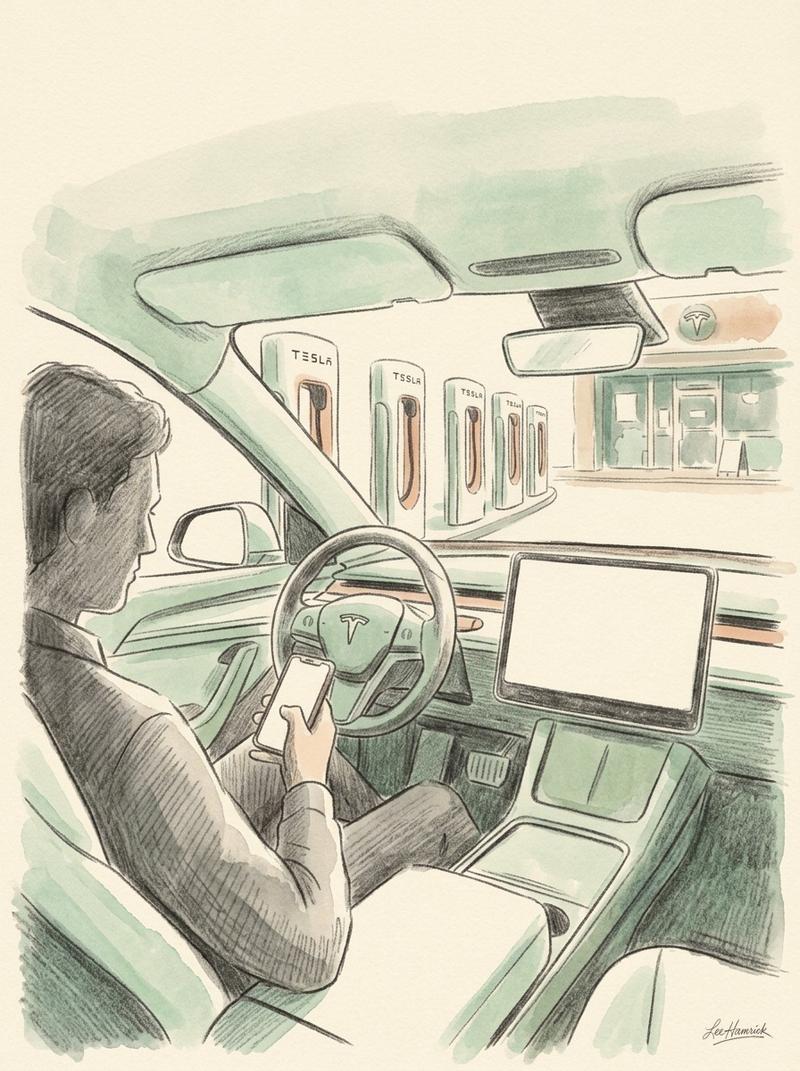
The build quality feels solid. Panel gaps are tight, nothing rattles, and the seats hold you properly for long highway drives. The steering is light and responsive. The ride is firm without being punishing. It's not trying to be something it isn't. It's a practical vehicle that handles the job it was designed for without theatre or apology.
Where Reality Diverges From Expectation
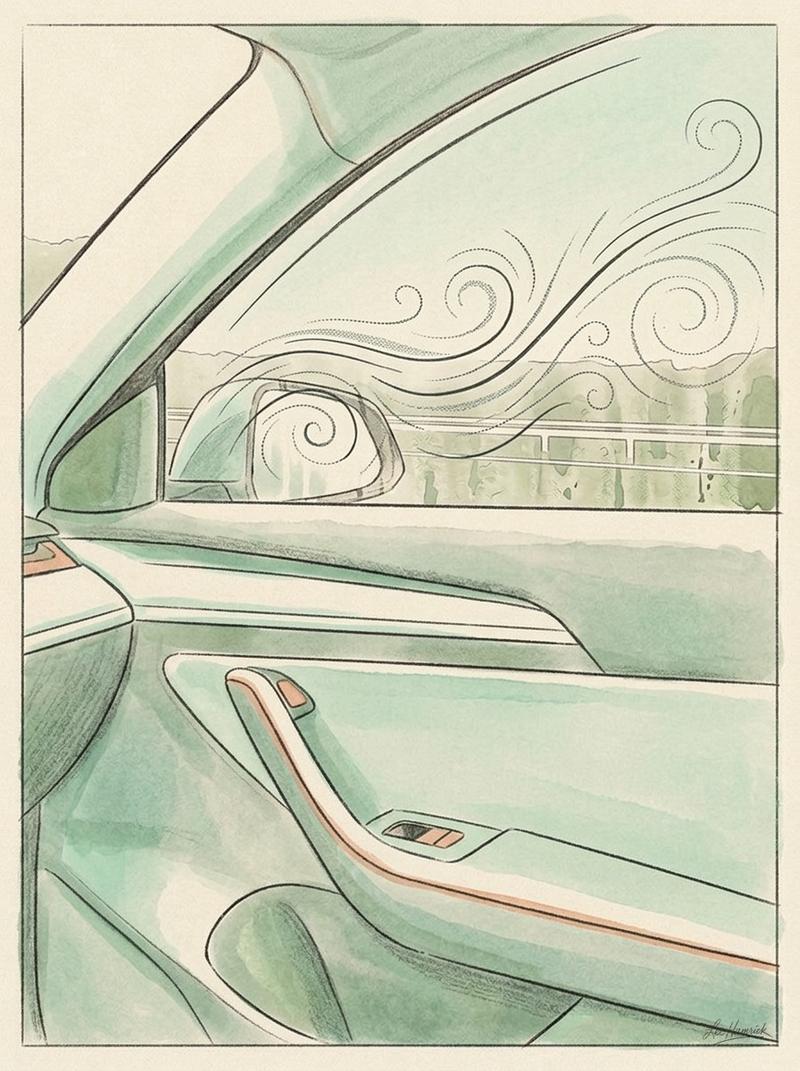
Wind noise at highway speeds is real and constant. On the test drive, you're not concentrating enough to notice it. After six hours of road trip, you will. The Model Y doesn't isolate you from road noise the way a 2010s sedan would. It's not unpleasant, but it's there, a steady white noise that reminds you that maybe the sealing isn't quite as good as the finish suggests.
Cold weather charging efficiency is not a secret, but it hits different when you're watching your planned range shrink in real time on a winter road trip. The car warns you, the navigation accounts for it, but standing there watching a one percent charge take longer than expected while the outside temperature hovers near freezing is its own kind of lesson. This is not a flaw; it's physics. But it's a physics lesson that a test drive on a mild day never delivers.
The minimalist interior works until it doesn't. The touchscreen controls everything, which is elegant in theory and maddening when you're trying to adjust cabin temperature while the car is moving and you're looking for a button that doesn't exist. The physical steering wheel stalks are sparse. You learn the interface, and after a week you move through it without thinking, but that learning curve is steeper than traditional cars. There's no muscle memory to fall back on; everything is novel.
The Full Self Driving system is genuinely capable at highway driving, which is what matters most on a long road trip. It handles lane changes smoothly, maintains spacing, and navigates merges without jerking the wheel. It's clearly competent. It's also clearly not ready to be called autopilot in the way that phrase used to mean something. You don't engage it and check out. You engage it and supervise, hands light on the wheel, watching for the moments where it needs correction. That's not a criticism, actually. It's clarity about what it is and what it isn't. It's useful without being naive about its own limitations.
The Things You Only Learn By Living With It
One thousand miles in one week tells you things that no marketing campaign will. The acceleration is genuinely fun, but you'll only use full throttle maybe twice a month. The Supercharger network actually works, but you'll plan your road trips around charging stops in a way that you never plan around gas stations. The interior simplicity is elegant, but you'll miss physical buttons more than you expected. The drive quality is composed and confident, which matters more than the headline specs because you'll drive it every day for years.
The Model Y doesn't ask anything of you the first ten miles. It just sits there, charged, available, ready to go. What it is asking becomes clearer around mile three hundred, when you're thinking about your next charging stop, when you're adjusting the climate control through the screen for the fourth time, when you're realizing that this is a different way of living with a car, not better or worse necessarily, just different.
That difference is worth understanding before you make the jump. If you're weighing the value proposition, our look at what used EV prices actually mean right now is worth a read before you commit. The car itself handles the job. The question is whether the job fits your life, and you can only answer that by living with it, not by sitting in it in a showroom while someone explains features you'll forget before you leave the lot.
A week and a thousand miles later, we're still working it out. The car is good. The question of whether it's right is something that only time and real world use will answer. And that's the most honest thing a week of ownership can tell you.

Written by
John Buchanan