Tesla’s ADAS Charges Forward: Unsupervised FSD and Robotaxi Dreams Take Shape
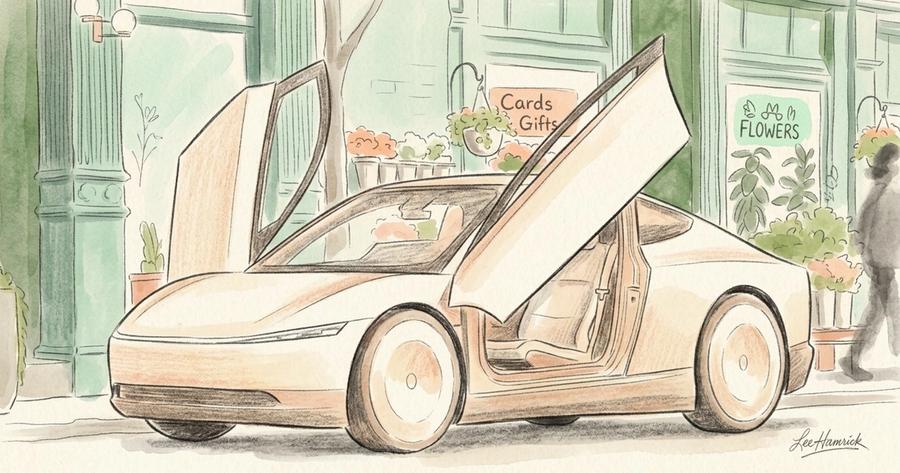
Tesla’s dropped a roadmap that’s got everyone talking, promising a “Robotaxi-derived build”…
June 2025 is shaping up as a genuine inflection point for Tesla's driver assistance technology. Between unsupervised Full Self-Driving launching in Austin, a Robotaxi network going live, and a software update that's baking Grok AI into the dashboard, Tesla is making moves that will force every traditional automaker to show their hand. Here's what's actually rolling out, what it means for everyday drivers, and where the legitimate questions still sit.
A Bigger Brain: The Robotaxi-Derived FSD Build
Tesla has dropped a roadmap promising a "Robotaxi-derived build" with 4.5 times more AI parameters, targeted for wide release later this year. More parameters mean the neural network can hold more variables in play simultaneously — sharper reactions to complex scenarios, better pattern recognition in conditions that would have tripped out earlier models.
Early testing is already showing results. Reports from rural gravel road runs are showing zero interventions, which is meaningful context for anyone who's white-knuckled it through a Canadian winter, navigating snow-covered backroads or watching for deer at dusk. The camera-based vision approach — no expensive lidar — is competing directly with sensor-heavy rivals like Waymo, and the expanded parameter count is the clearest signal yet that Tesla believes software iteration alone can close the gap.
The 2025.20.x update series is also tweaking neural nets specifically to handle edge cases: temporary construction signs that appear overnight, poorly marked intersections, and the kind of low-visibility conditions that make black ice so dangerous. For drivers in regions where highways stretch for hundreds of kilometres and cell coverage can disappear for stretches, reliability improvements like these aren't incremental — they're essential.
Unsupervised FSD Launches in Austin on June 22
Tesla is rolling out unsupervised FSD as a paid service in Austin, Texas, on June 22nd, with a safety monitor still present in the vehicle during this initial phase. The word "unsupervised" is the key distinction here: the car operates without a human ready to grab the wheel. It's the closest Tesla has come to delivering on the autonomous driving promise it's been making since 2016.
What the Austin Launch Actually Involves
The Austin rollout runs alongside the Robotaxi network launch, which allows owners to add their vehicles to a shared fleet. The concept is straightforward: your Tesla earns revenue as a driverless taxi while you're not using it. The practical questions are trickier. Will owners consistently commit their vehicles to a shared pool? What does the insurance and liability framework look like when your personal car is operating commercially without you in it?
Tesla hasn't fully answered those questions yet, and the June 22nd date represents a beginning rather than a full product launch. The traditional automakers, weighed down by longer development cycles and union negotiations, are not positioned to match this timeline. Whether Tesla's pace is a strength or a risk is the question the industry is asking.
Software Update 2025.20.6: Security, Speed, and Grok AI
Update 2025.20.6 is rolling out across the fleet with a focus on security hardening alongside usability improvements. The interface is more responsive, voice command latency is down, and the system is receiving patches aimed at closing vulnerabilities to external intrusion.
Grok AI Integration in the 2025.20.x Series
The headline addition in the 2025.20.x series is the integration of Grok, xAI's chatbot, directly into vehicles. The beta voice mode on the Tesla app is noticeably smoother — you can ask about weather, request a detour to a specific location, or just hold a conversation while the car handles navigation. It functions like an onboard co-pilot with a broader knowledge base than a standard voice assistant.
The practical upside is real. Asking for a heat adjustment when it's minus 20 outside without taking your hands off the wheel is a small thing, but it's the kind of small thing that adds up over a long drive. The integration also hints at a longer-term ambition: as FSD takes on more of the driving task, the in-cabin AI assistant becomes a larger part of the product's value proposition.
The Legitimate Concerns
Not everyone is convinced the technology is ready for every scenario it will encounter at scale. Drivers on X have posted accounts of FSD handling tricky urban intersections cleanly, but others have flagged near-misses with poorly lit stop signs and unmarked construction zones. Sudden fog banks, spotty GPS coverage, and roads with no clear lane markings remain edge cases the system still needs to prove out in real-world conditions.
The Robotaxi model carries its own uncertainties. Regulatory environments vary sharply by jurisdiction — what's approved in Austin is nowhere near approved in most Canadian provinces, where oversight of autonomous commercial vehicles is tighter and moving slowly. The technology may be ready before the legal framework is, and that gap matters for anyone expecting these services to appear beyond the initial launch market anytime soon.
What This Means for Drivers Outside the Launch Market
For Canadian drivers specifically, the stakes are high because the conditions are demanding. Black ice, snow squalls, moose on unlit highways, and gravel roads that don't appear in standard mapping data are not hypotheticals — they're Tuesday. Tesla's camera-only approach needs to prove itself across all of those conditions, not just on the dry Texas roads where the initial Robotaxi service is being launched.
The parameter expansion and neural net refinements in the current update cycle are promising signals. Zero interventions on rural gravel in testing is a concrete benchmark, not marketing language. But full trust in any ADAS system, especially one operating without a safety driver, is earned through consistent real-world performance across a wide range of conditions over time.
The Robotaxi network, if it scales, has implications beyond just convenient airport pickups. A household that can offset the cost of a second vehicle by putting a Tesla into commercial service part-time changes the ownership calculus entirely. That's the long-term disruption the traditional automakers are watching closely.
Key Takeaways
- Tesla's upcoming "Robotaxi-derived build" delivers 4.5 times more AI parameters than the current FSD system, with a wider release targeted for later in 2025.
- Unsupervised FSD launches as a paid service in Austin, Texas, on June 22nd, with a safety monitor still present; the Robotaxi fleet-sharing network launches simultaneously in Austin.
- Software update 2025.20.6 addresses security vulnerabilities and improves interface responsiveness, while the 2025.20.x series adds Grok AI integration to in-vehicle voice commands.
- Real-world reliability across edge cases — low-visibility conditions, unmarked construction zones, poorly lit signage — remains the credibility test FSD still needs to pass at scale.
- Regulatory approval outside Texas, particularly in Canadian provinces, will determine how quickly these services can expand to markets where road conditions present the greatest challenge to autonomous systems.

Written by
Tabitha Corman