The 2026 Toyota GR86 Is Still the Sports Car That Actually Gets It

The 2026 GR86 proves that affordable, naturally aspirated RWD sports cars still matter. A track day conversation.
There's a moment on a track day, usually around lap three, when a car stops being a spec sheet and becomes pure communication. The 2026 Toyota GR86 reaches that moment in about six corners.
It's not the fastest car on the circuit. It won't embarrass a turbocharged sedan or a properly modded anything. What it does is something rarer and more honest: it teaches you how to drive. Every input gets immediate feedback. The steering doesn't lie. The chassis responds to weight transfer with the clarity of a mechanical conversation. You can feel the tires working, the suspension loading, the balance shifting. That's not marketing language. That's what happens when engineers decide that driver engagement matters more than power output.
The GR86 sits in a position most manufacturers abandoned years ago. A lightweight, naturally aspirated, RWD sports car with a manual transmission, all priced to not destroy a first-time track day budget. The base model starts under $30k. You can walk onto a circuit in something that genuinely invites you to work, without taking out a second mortgage or selling plasma to pay for consumables.
That's increasingly radical.
What It Actually Is
The current generation arrived about three years ago, and Toyota has been careful not to overcomplicate it. The 2.4-liter naturally aspirated boxer engine makes 228 horsepower and 184 lb-ft of torque. Those numbers don't sound exciting until you remember that this car weighs about 2,800 pounds. Power-to-weight becomes real pretty quick. More importantly, you can hear and feel that power arriving. It's linear, predictable, and transparent in a way that turbocharged motors simply aren't. No lag, no sudden boost spike disrupting mid-corner throttle work. Just engine and air and fuel doing what they've done for decades.
The transmission is a six-speed manual that trades some convenience for the kind of mechanical engagement that makes driving feel like a conversation instead of a task. That matters more on a track than it does on the street, but it matters everywhere. People who think manuals are outdated haven't spent time in a car where the transmission is actually part of the driving experience. If you need something different, Toyota also offers an automatic, but the manual is where the GR86 really shows what it's about.
The chassis is where the engineering really shows its hand. MacPherson struts up front and double-wishbone suspension in the rear, Sachs dampers tuned specifically for this platform, and a setup that rewards smooth inputs while punishing abrupt ones. It's not complicated. It's not trying to be three cars in one. It's a sports car that was designed as a sports car, not a commuter retrofitted with performance bits.
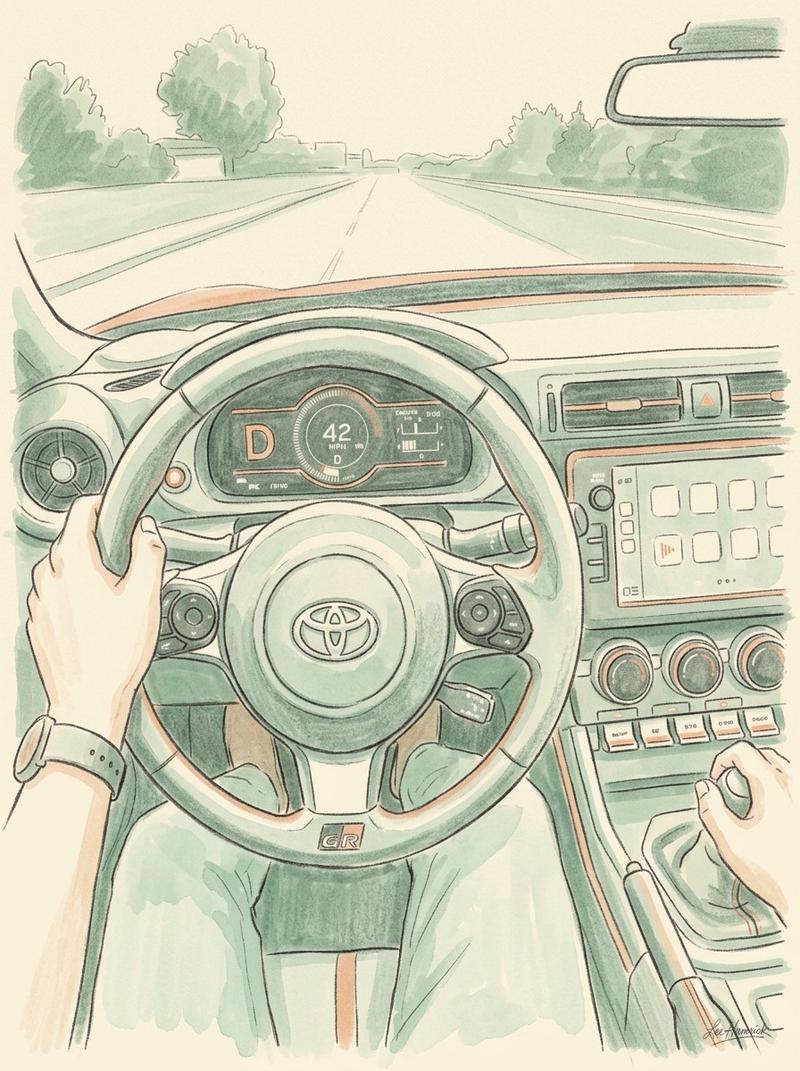
Brakes are Brembo. Tires come from Michelin. Neither of those companies was chosen for marketing value. They were chosen because they work. The GR86 doesn't have a fancy infotainment screen trying to teach you how to drive. It has a simple, analog-first approach to controls that means you spend time looking at the road and the track instead of tapping icons at 80 miles per hour.
What Matters on a Sunday Morning
Track days expose what marketing can't hide. A car either communicates, or it doesn't. It either invites you to push, or it teaches you to be afraid. It either feels connected, or it feels like you're piloting a video game with compliance mode turned on.
The GR86 invites you to push. Not because it's powerful, but because it's honest. The front end tells you exactly how much grip you have. The rear end loads progressively, giving you feedback instead of surprises. The throttle response is immediate. You can trail brake into corners and feel the car settle. You can get on the power mid-corner and trust that it will do what you asked instead of wheelspin or electronic nannies intervening.
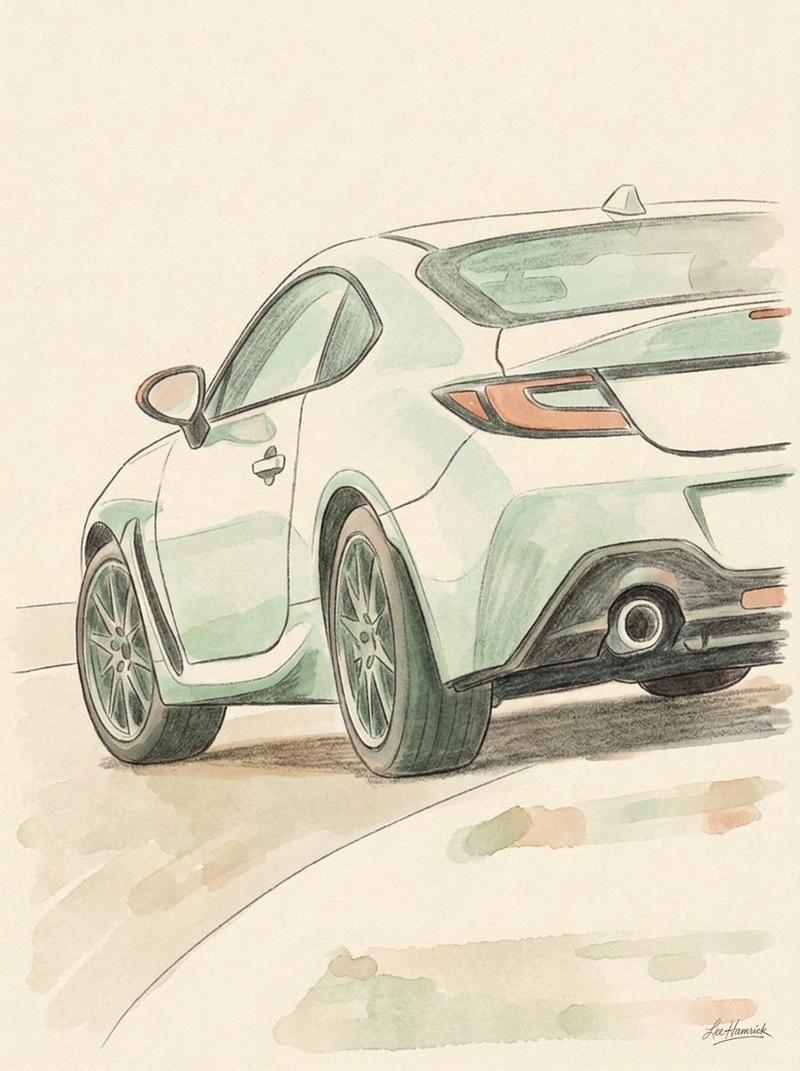
That's the whole point of this car existing. It's not trying to replace a 911 or challenge a Miata to a sales war. It's trying to be the entry point that doesn't feel like a compromise. You're not buying a stripped-down version of something else. You're buying a car that was engineered from the ground up to be exactly this: affordable, engaging, and genuinely fun at speeds and on roads where most cars just feel like transportation.
Reliability is another strength that doesn't get enough attention. Toyota's boxer engine is proven across multiple generations and platforms. Parts are available. The platform shares enough DNA with the Subaru BRZ that a thriving aftermarket exists. That matters if you want to actually drive the car, modify it, wrench on it, and keep it running for a decade. You're not dependent on dealer-only components or subscriptions to access basic functions.
The 2026 updates keep the formula intact. Toyota added new color options, refined some interior materials, and kept the price discipline that makes this car remarkable. The base trim is still available, which is worth mentioning because Subaru dropped theirs. That means you can walk out with a track-ready sports car for less than a Honda Civic Type R, with a transmission that actually works the way sports car transmissions are supposed to.
The Larger Truth
The GR86 exists in defiance of an industry trend toward turbocharging everything, electrifying everything, and filling every second of driving time with digital distraction. It says, without any apology, that driver engagement matters more than 0-60 times. That lightness is better than power. That a car can be both affordable and fun without being a compromise on either front.
That's why it's special. Not because it's the fastest thing or the most technologically advanced. Because it understood that the best cars don't distract from the drive. They enhance it.
If you're thinking about a sports car and you haven't seriously considered the 2026 GR86, you're missing the entire point of what makes a sports car matter. Earned opinions, not borrowed ones. This one is.
Written by
Nick Mangino