Electric Cars Don't Have to Feel Numb. Most Do Anyway

Why most EVs feel like appliances despite instant torque, and which ones actually engage you behind the wheel.
There's this weird moment when you drive a genuinely good electric car on a back road. The motor hits instantly, the weight is balanced right, the steering actually talks back at you, and for a second it doesn't feel like you're piloting a virtuous appliance. It feels like electricity is doing something that gas engines can't.
Then you drive a Hyundai Ioniq 6, which is also quick and efficient and completely dead behind the wheel, and you remember: most electric cars are engineered to be smooth and efficient and forgettable. They're not broken. They're just not trying to be fun.
The mechanical reality is straightforward. An electric motor delivers full torque from zero RPM. No spool-up, no waiting for the powerband to kick in. A gas engine has to build into its power delivery, which creates this whole conversation between you and the engine before it's really singing. That's a genuine advantage for electric. The problem is that 90 percent of EV makers treat that advantage like a checkbox instead of an opportunity to actually engage someone behind the wheel.
They're engineering for EPA ratings and efficiency curves. Not for what the car feels like on a two-lane road on Saturday with your hand on the wheel.
Straight-Line Speed Is Only Half the Story
A Tesla Model 3 Performance does 0-60 in 3.2 seconds. On paper, that's fast. On the road, that's a rush for maybe four seconds, and then you're doing 80 and the experience is over. The car has no real conversation after the initial attack. There's nowhere left to explore.
Now take a Porsche Taycan Turbo S. It hits just as hard, but it has a transmission that lets you hunt through gear ratios. The acceleration doesn't end. It evolves. You're still modulating, still searching, still having a driving experience at speed instead of just being along for a roller coaster. That's the difference between a car that thrills you once and a car that keeps you engaged.
And here's what most EV marketing gets wrong: instant torque only matters if the car is light enough to actually feel it properly. A Model S Plaid weighs 4,500 pounds. It's quick, sure, but it's a giant sedan trying to behave like a sports car. It feels heavy. An electric Lotus Emira at 3,400 pounds with responsive steering and a chassis that actually wants to move feels alive. Same torque delivery. Completely different experience because the mass is right.
A gas car pulling the same 0-60 time feels different too, because turbo lag gives you a moment of anticipation before the rush hits. With an electric car, it just attacks. Is that better? Depends what you're actually hunting for.
The Steering Wheel and Brake Pedal Tell the Real Story
Here's what actually separates a fun electric car from an appliance: does the steering have weight and feedback, or does it feel like a video game controller? Does the brake pedal feel like actual brakes, or are you fighting regenerative weirdness that makes your foot unsure about what's happening?
The BMW i4 M50 gets this right. The steering has resistance. The brakes have real progression. You feel information through the seat. It's a car you'd actually choose to drive on a weekend instead of just needing to get somewhere.
The Ioniq 6 gets it wrong. Quick, efficient, decent interior, completely numb. The steering is lifeless. The brakes feel disconnected. You're along for the ride, not driving it.
This isn't about being electric. A manual GR Corolla feels alive because the engineers tuned the suspension for feedback and the steering for actual feel. A 1996 Corolla automatic was an appliance. Same company, completely different philosophy. Most EV engineers are still thinking like efficiency is the primary goal. They're not thinking about what a car feels like at 35 mph on a tight road with your hand on the wheel. And that gap is enormous.
Where Electric Actually Wins
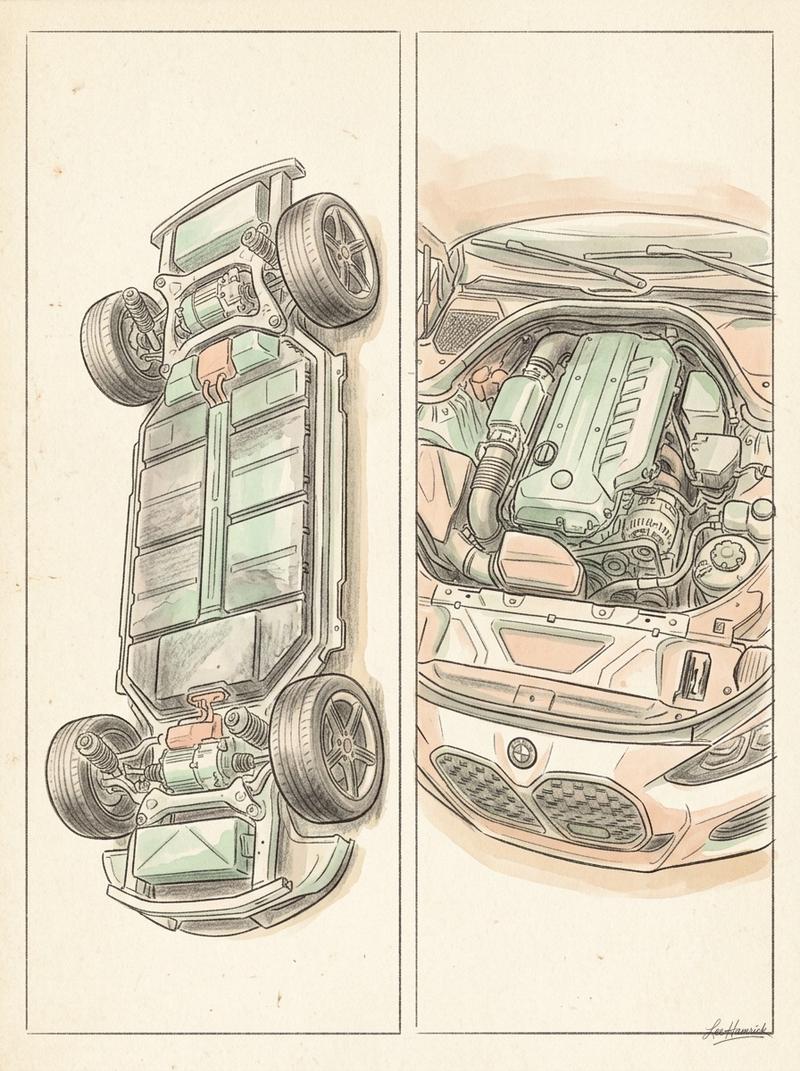
The low center of gravity is real. Batteries live in the floor, which means a Taycan sits lower and handles better than a conventional sports car. Weight distribution is perfectly balanced front to back. No engine block trying to plow straight through the turn.
Regenerative braking, when calibrated correctly, is genuinely smooth. One-pedal driving isn't just efficient. It's like driving a car with a perfectly modulated clutch. Most EVs ruin it by being too aggressive or too weird about the transition to friction brakes. The Taycan gets it right. So does the Model 3 once you adjust to it.
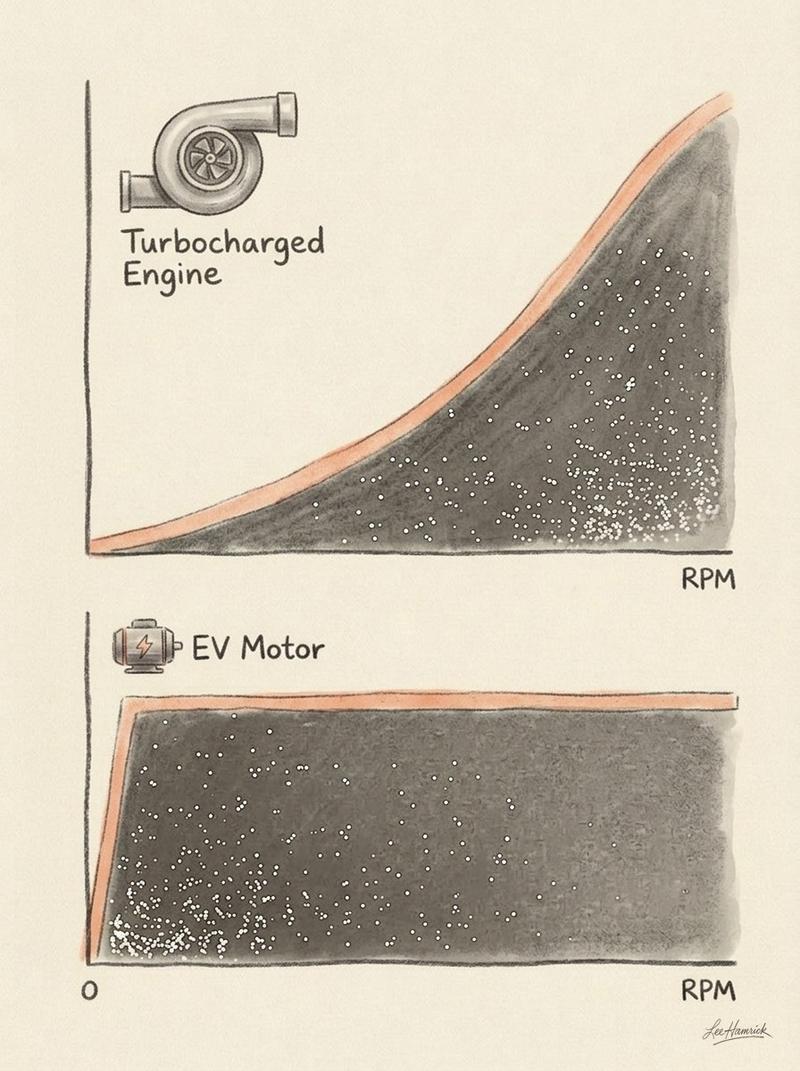
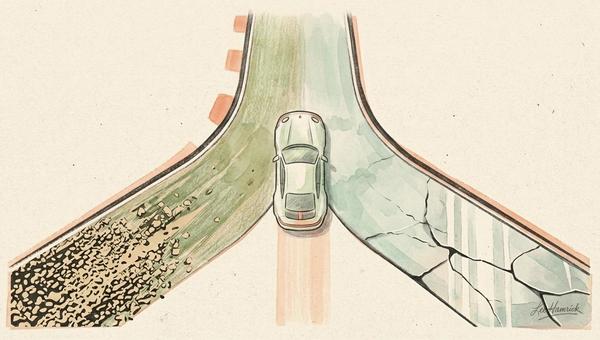
Instant torque in low-grip situations is magic. An electric car modulates power in milliseconds on gravel or loose dirt. It finds grip instead of spinning. In a gas car, you're fighting wheelspin. Here, the motor just adapts and keeps you moving.
And the quiet is actually a feature if you're hunting for real information. In a gas car at 8,000 RPM, engine noise buries everything else. In an electric car, you hear the tires squealing, the suspension creaking, the brakes talking. Some people hate that silence. Some people find it meditative. Either way, the road is talking directly to you instead of being buried under noise.
The Short List of Cars Actually Worth Hunting
If you want an electric that's genuinely fun to drive, you're looking at a short list: Porsche Taycan, BMW i4 M50, Lotus Emira if you can actually find one, maybe the Polestar 3 Recharge when the tuning settles in. The Lucid Air is capable but it floats like a cloud. Some people love that. Some people find it disconnected.
Everything else is transportation. There's nothing wrong with that if transportation is what you actually need. But calling a Hyundai Ioniq 6 a driver's car because it's quick in a straight line is missing the point entirely. Quick in a straight line is table stakes now. Feeling like something worth driving is the actual skill.
The real promise of electric cars isn't that they'll all be fun. It's that they CAN be fun if someone actually cares enough to engineer them that way. A handful of manufacturers do. The rest are still building appliances that happen to be electric.
Here's what gets me optimistic: electric drivetrains are getting cheaper and more mature. Someone is eventually going to crack the code on a fun, affordable EV that makes you actually want to turn the wheel instead of just getting where you're going. When that happens, everything shifts. The infrastructure will be there. The batteries will be reliable. And someone will have figured out that driving feel is worth engineering for.
Until then, electric cars are what they are. Capable, efficient, and mostly numb. Hunt for the exceptions. Skip the rest.
Written by
Kathlien "Kat" Mangino