How Michel Gondry Used Cars as Pure Storytelling in Mood Indigo
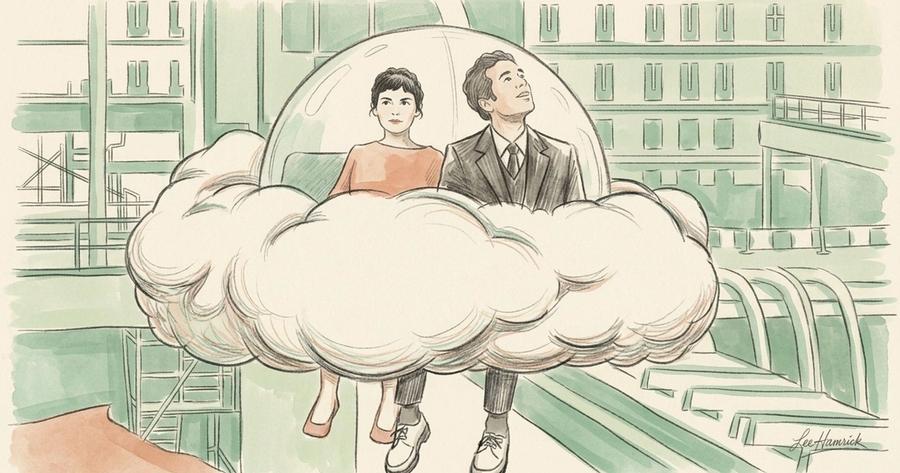
Gondry's surrealist film turns vintage automobiles into emotional devices. Cars don't just move characters; they reveal their dreams and delusions.
Michel Gondry does not make films about cars. He makes films where cars are the story itself, and Mood Indigo (2013) is the most audacious proof of this principle ever committed to celluloid.
The movie opens with a feast of 1960s French automotive absurdity: a Delage D8, a Talbot-Lago T150, a Citroën Traction Avant, all painted and modified so aggressively that they blur the line between vehicle and living organism. These are not cars you drive to the grocery store. These are cars that think. They have opinions. They judge you.
Here is what most people miss about this film: the cars are not set dressing. They are characterization. The protagonist Colin's affection for a Citroën SM (a car that was itself a surrealist exercise in French engineering) tells you everything you need to know about him before he speaks. He has taste that conflicts with practicality. He has money but uses it to admire weird things. He will make catastrophic emotional decisions and wonder why afterward.
Gondry understands something that automotive journalists often gloss over: a car is not neutral. The moment you choose to drive one thing and not another, you have made a statement about who you are. When Colin chooses the SM, he is choosing sophistication married to obsessive French mechanical complexity. He is choosing a car that requires specialized knowledge to maintain. He is choosing something doomed.
The Car as Emotional Mirror
The genius of Mood Indigo is that Gondry uses automotive detail as emotional texture. As Colin's relationship deteriorates, his car loses functionality in ways that are both literal and metaphorical. A car does not run well when its driver is unhappy. This is not magic. This is engineering meeting psychology.
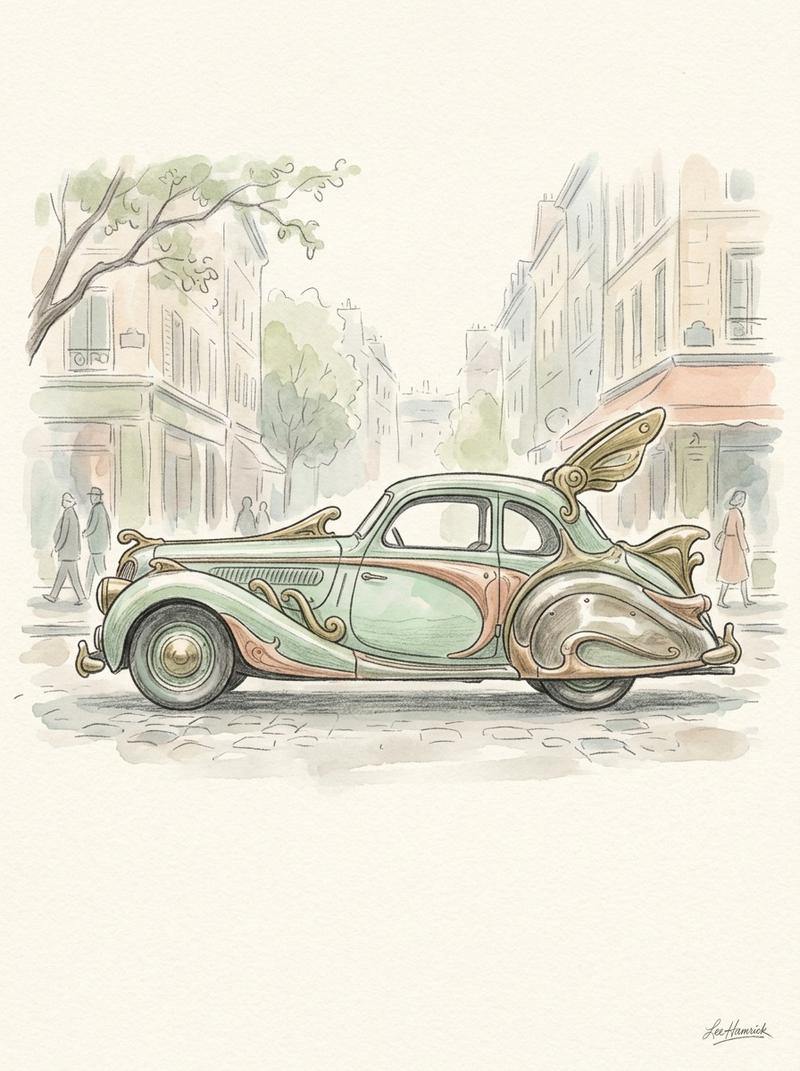
The film is stuffed with cars that have been modified beyond recognition. A wedding car dripping with flowers. A vehicle that looks like it was assembled from spare parts of five different manufacturers. A Delahaye that seems to have been designed by someone who has heard about cars but never actually seen one.
This is the opposite of every car movie that takes itself seriously. Gran Turismo films obsess over authenticity. They will spend 40 minutes getting the tire pressure correct on a Ferrari 250 GTO. Gondry spends five minutes watching a car that appears to be made of plumbing fixtures drive down a street. The automotive detail is secondary to the emotional truth.
What separates Gondry from a typical whimsical filmmaker is that the surrealism is anchored in real automotive history. These are not fantasy machines. A Citroën Traction Avant is a real car (1934-1957). A Delage is real. A Talbot-Lago is real. Gondry has simply freed them from the responsibility of looking normal. He has given them permission to be what they secretly are: emotional devices masquerading as transportation.
The Vocabulary of Mechanical Failure
As the film progresses, Colin's car begins to malfunction. Doors stick. Windows won't open. The engine makes sounds that engines should not make. Any automotive engineer watching this will recognize the symptoms: a car suffering from neglect and heartbreak.
The reason this works is because Gondry knows the difference between a car working and a car failing. He has built enough hand-made contraptions in his films to understand mechanics at a fundamental level. When a door sticks in Mood Indigo, it sticks like a real door sticks. The malfunction is cinematically exaggerated, but the underlying physical logic is sound.
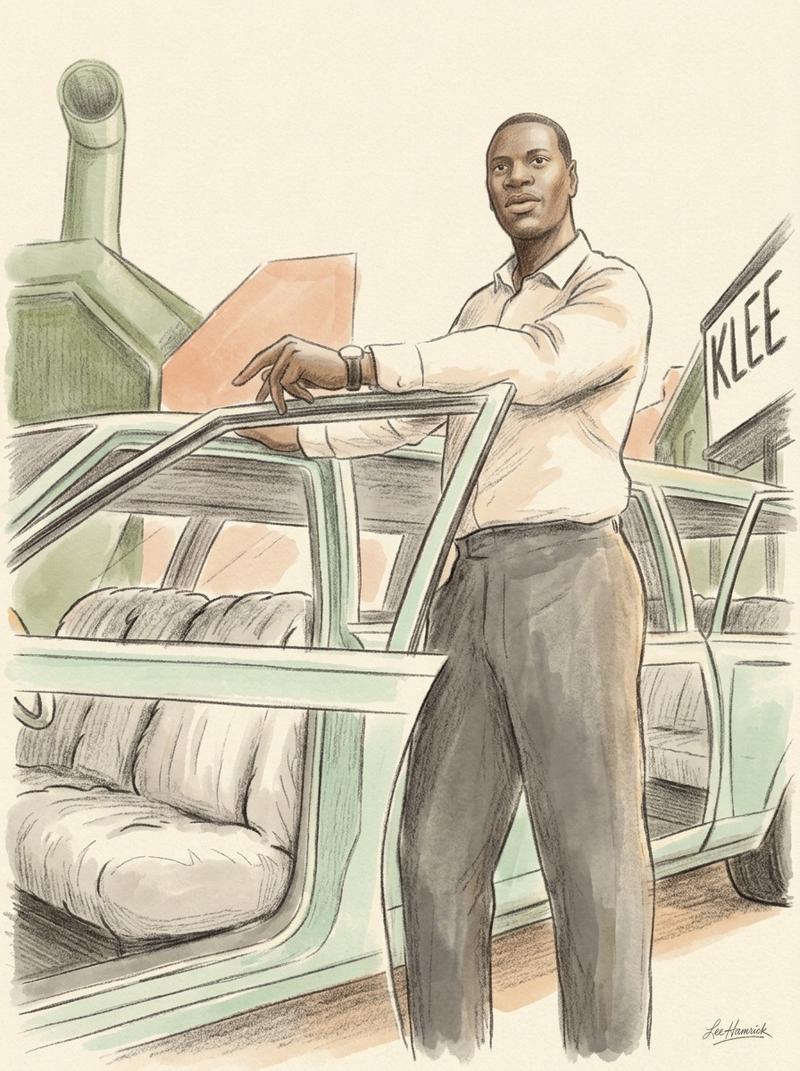
This is what separates a film that uses cars as props from a film that uses cars as language. Gondry speaks automotive fluently. He knows that a car's behavior reveals the driver's mental state. He knows that mechanical breakdown is the perfect visual metaphor for emotional collapse. He knows that the specific type of car you own broadcasts your interior life to the world.
Most filmmakers would never notice that Colin's choice of vehicle reveals everything about his vulnerability. Gondry built an entire emotional arc around it.
Why This Matters for How We Understand Cars
There is a reason that car culture obsesses over authenticity and specification. We understand, at some level, that our vehicles are extensions of ourselves. We are not wrong. The car you drive is a statement about who you are, what you value, and what you are willing to endure.
Gondry took this intuitive understanding and made it explicit. His cars do not pretend to be neutral. They are as much characters as the humans in the film. Colin does not fall in love with a woman and then discover that his car mirrors his emotional state. Rather, Colin's car IS his emotional state, rendered in metal and glass and chrome.
This is a harder argument to make in a documentary or a traditional automotive film. Gondry makes it effortlessly by allowing his cars to behave like characters. A car that works when its driver is happy. A car that breaks down when its driver is sad. A car that seems to have opinions about its own future.
The most successful moment in Mood Indigo arrives when you stop thinking of the vehicles as surreal embellishments and start seeing them as the actual story. The plot is not about Colin falling in love with a woman named Chloe. The plot is about Colin's slow realization that he has attached his entire sense of self to objects and people that are fundamentally impermanent. His car knew this from the beginning. His car was telling him all along.
Gondry made a film where the automobiles are more honest about the human condition than the humans are. This is not whimsy. This is radical clarity.

Written by
Ben Eckels