Farah: Cleetus McFarland's Spec Crown Vic Race Was My Wildest Motorsport Experience Yet

Matt Farah raced a nitrous-equipped Crown Victoria at Stafford Speedway in Cleetus McFarland's sold-out New England 900. Here's what actually happened.
There are race events you attend, and there are race events that happen to you. Stafford Motor Speedway on a Cleetus McFarland Freedom night is firmly in the second category, and Matt Farah, the man behind The Smoking Tire and someone who has logged more seat time across more cars than almost anyone in automotive media, came back from Connecticut saying it was the wildest motorsport experience of his life. That's a high bar. When someone who has been to races across the world and behind the wheel of everything from track-prepped exotics to complete junk says a Crown Victoria race at a short oval redefined what motorsport can be, it's worth paying attention to.
Cleetus McFarland, whose legal name is Lawrence Garrett Mitchell, started as a YouTuber and has quietly built something that looks a lot like the future of grassroots racing. What began with buying an abandoned racetrack, the former DeSoto Speedway, purchased in January 2020 and renamed the Freedom Factory, has grown into a touring show that sells out venues. Mitchell plays promoter, host, producer, and chief instigator, and the operation has a competent spine behind the chaos.
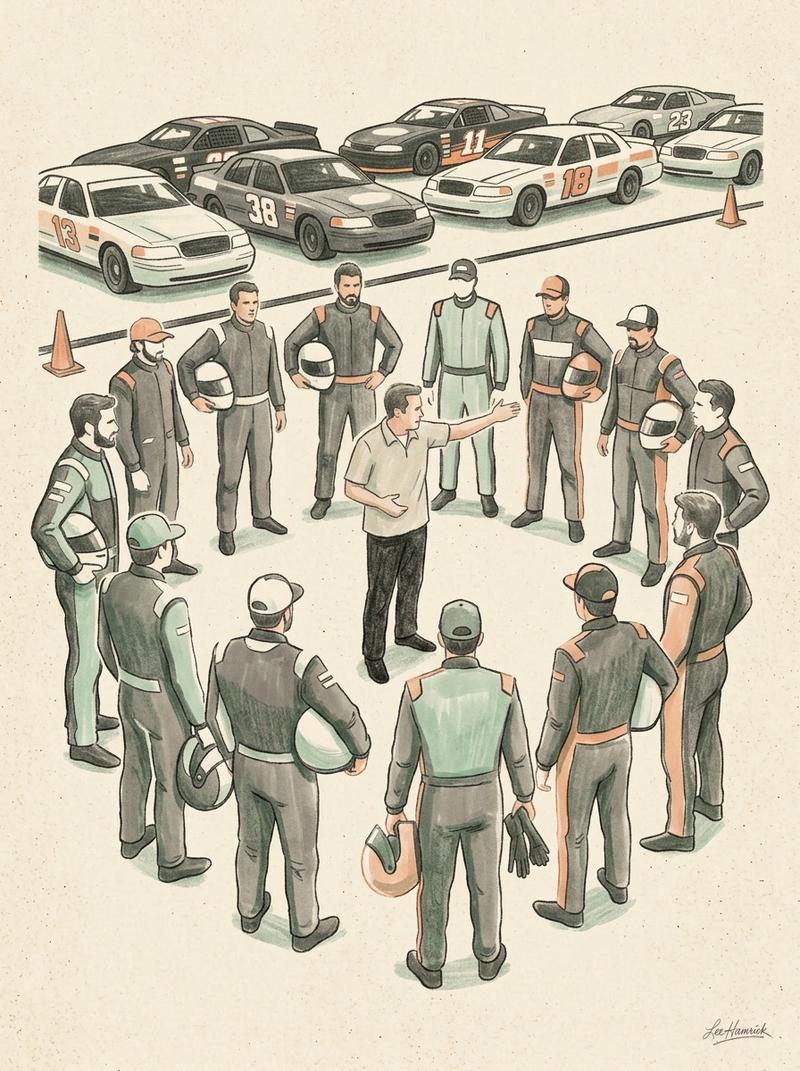
The format for the main event at Stafford is a spec race built around Ford Crown Victorias. Each car gets a roll cage, a racing seat, steel wheels, and Nitto NT555 G2 tires in 255/50R17. The cars also run a dry nitrous kit. The specific shot size and bottle capacity were not disclosed, so take anyone's published estimate of those figures with appropriate skepticism. What is confirmed is that the cars are made as identical as possible, and the rules enforce parity. What you see is what you get. It's the kind of rulebook that strips away the engineering game entirely and just leaves the driving, which is either terrifying or liberating depending on how good you are.
Farah decorated his Crown Vic with help from his 5- and 6-year-old nephews, yellow base coat with an avant-kindergarten art direction, which is probably the correct aesthetic for an event of this character. The grid of 24 cars mixed professional racers with influencers and motorsport-adjacent personalities, Farah included, along with Zack Klapman, BoostedBoiKyle, and others. The professional half of the field included late model regulars and Formula Drift champions, among others.
That mix is genuinely unusual. A field where half the drivers have won professional races and the other half are more or less novices, with no practice, no shakedown laps, and qualifying starting the first time you put the car in drive. Five laps total: one out, three flyers, one cool-down. Farah qualified P18 out of 24, which he's honest about not being an impressive number, but which planted him exactly in the mid-back chaos he was hoping for. Someone ahead of him hit the wall on the qualifying lap, which moved "don't hit the wall" well ahead of "go fast" on the priority list. That's a reasonable adjustment.
Before the Crown Vic main event, the undercard ran two races that deserve their own mention. First, a 40-plus car Nissan Altima race around an infield course, billed as 40 laps but functionally a last-car-standing survival exercise. Roughly two-thirds of the field didn't finish. The surviving cars were barely surviving. These are cars bought off Facebook Marketplace, registered, insured, and brought to the track with the sincere expectation of driving home afterward. Cleetus told Farah that the owners are always going home in a rental. Delusional, he said, but you have to love the optimism.
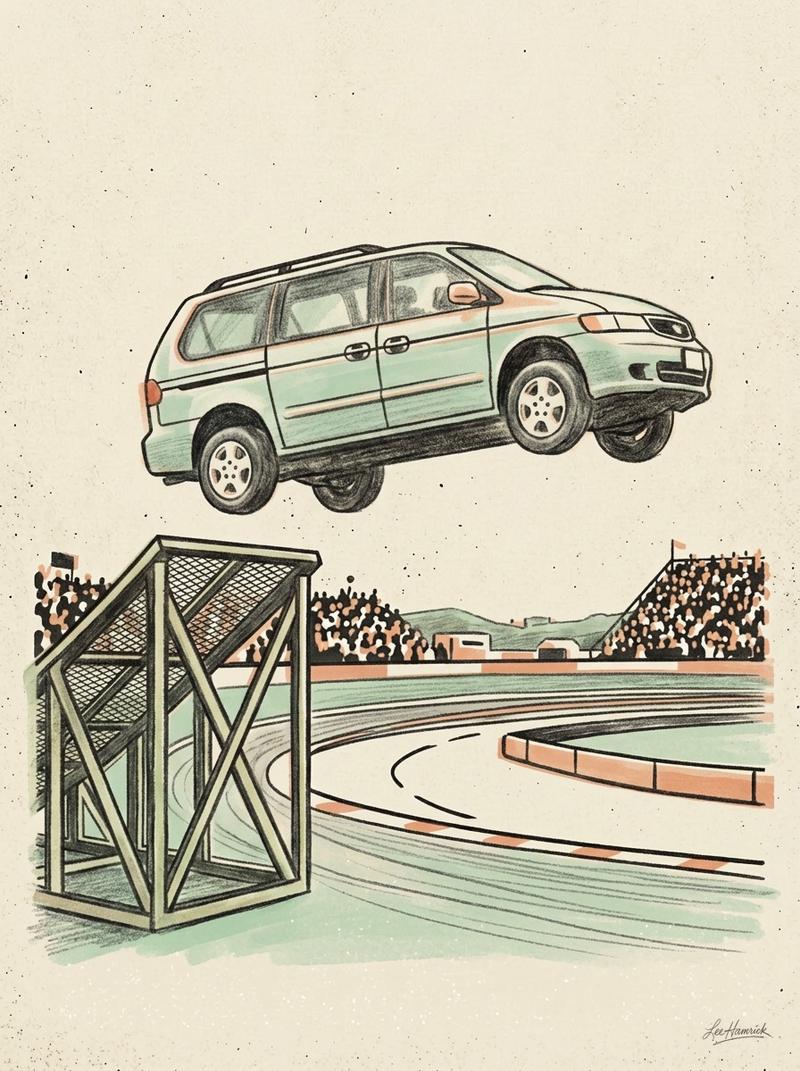
Then came the Van Prix. Uncaged, road-legal minivans, straight off the street, normal seats and seatbelts, no roll cages, racing on the oval with a portable jump thrown into the mix. The jump sends a minivan into the air and the landing is flat, nose-first, at speed. Farah watched this happen repeatedly and came away with genuine respect for minivan front suspension durability. Cleetus, watching from the sideline as another van crumpled its nose into the asphalt and kept going, noted to Farah that this particular sport has a hard out at about 24 years old. He was not wrong. The crowd, many of whom had been through the gates since 3:00 in the afternoon for a main event that didn't start until 7:30 in the evening, was completely sold on every bit of it.
The Cleetus McFarland New England 900 ran on Friday, July 18th at Stafford Speedway, the show was sold out, and the Crown Vic feature ran 90 laps. What Farah's finishing position was in that race is not something the available sourcing confirms, and that's a real gap in this account. He started P18 and, by his own description, entered the mid-pack chaos he'd expected. What happened during those 90 laps, any contact, any nitrous deployments, any incidents involving his car specifically, he has described in general terms as wild, but the specific on-track story of his race is not something this piece can reconstruct accurately from what's been published.
What Farah is describing, and what McFarland has built, is something that the traditional motorsport establishment has struggled to manufacture for decades: genuine stakes at an accessible price point, entertainment that doesn't require a racing education to enjoy, and a crowd that's actually loud because they actually care. The sellout crowd, the fireworks budget that Farah compared to a medium-sized city's display, none of that happens by accident. It happens because the product is honest. The cars are real. The hits are real. The fun is real. Nobody's pretending the Crown Vics are anything other than Crown Vics.
There's a version of this story where a seasoned automotive journalist goes to a hooptie race and comes back slightly condescending about it. That's not what happened. Farah drove the car, qualified the car, started mid-pack in a field full of people who would have put him into the wall without losing sleep over it, and came away calling it the wildest motorsport experience of his life. The spec format, the identical machinery, the nitrous equalizer, all of it points toward a race decided almost entirely on nerve and racecraft, not money or preparation. That's what grassroots racing is supposed to be, and it's rare to find it delivered this cleanly at this scale.
Whether the business model scales beyond what McFarland has already built is a genuinely interesting question. What it is right now is a sellout touring show with professional drivers sharing a grid with guys whose cars were decorated by kindergarteners. That's not a problem to be solved. That's the product.

Written by
Lee Hamrick