How Ford's Flex-O-Matic Suspension Helped Sell Trucks to People Who Didn't Want a Truck
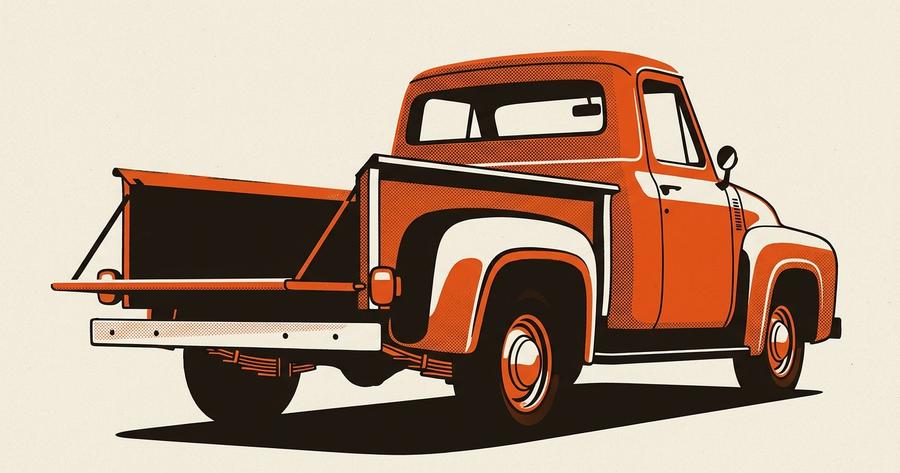
Ford's Flex-O-Matic suspension tackled the classic pickup problem: ride quality with an empty bed. Here's how it worked and why it mattered.
The fundamental problem with a pickup truck's suspension hasn't changed much in 70 years. Build the springs stiff enough to handle a loaded bed and the truck drives like a buckboard when it's empty. Soften things up for an unloaded ride and the rear end bounces and wallows the moment you put any real weight in back. For decades, truck buyers basically accepted this as part of the deal. Ford decided to do something about it.
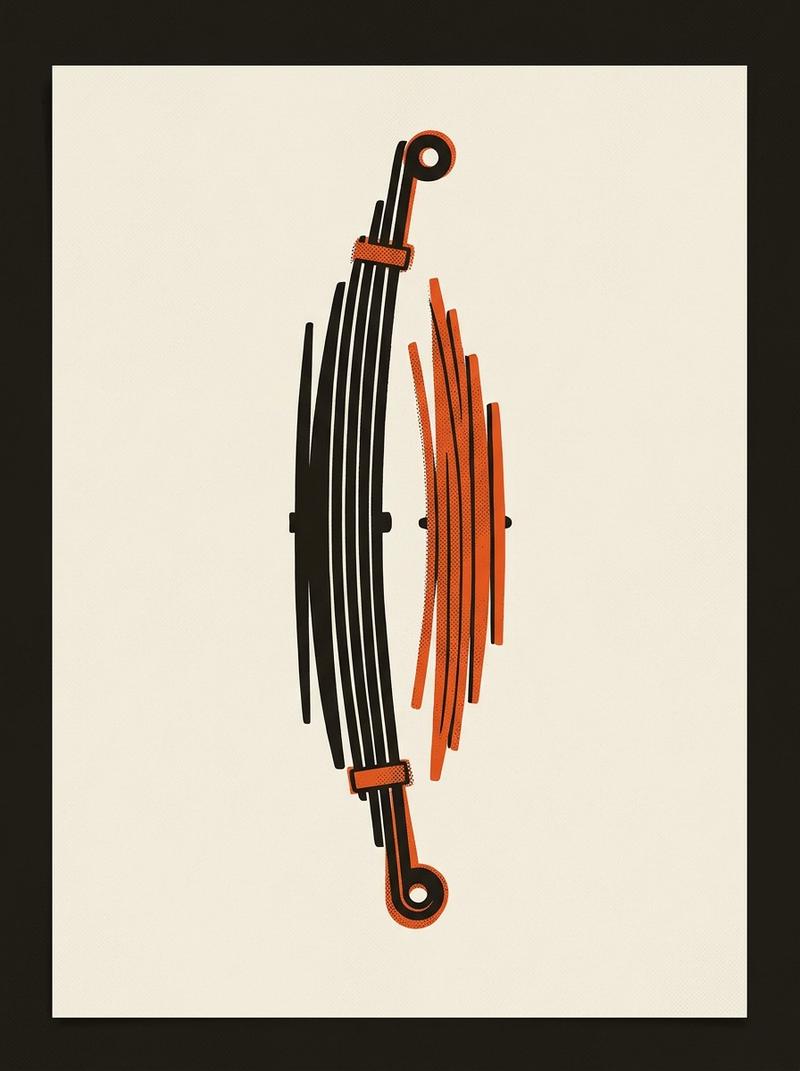
The solution Ford came up with was called Flex-O-Matic, a rear suspension setup designed specifically to change its effective spring rate depending on load. The core idea was to use a pivoting shackle arrangement that changed the effective length of the rear leaf springs depending on load. Unloaded, the truck rode on a softer effective rate. Load it up, and the shackle rotated to shorten the spring's effective length, stiffening the ride to match. Same truck, two different behaviors, no driver input required.
This wasn't magic, and it wasn't unique to Ford in concept. Variable-rate leaf springs had existed in various forms before. What Ford did was package and market it aggressively, giving it a name, putting it in ads, and using it as a direct pitch to a buyer who wasn't a traditional truck customer. The idea was simple: if the empty-bed ride quality stops feeling punishing, more people will buy a pickup even when they don't haul heavy loads every day.
That was a real market insight. By the time Ford was pushing Flex-O-Matic, pickups were already starting their long transition from pure work vehicles to something more versatile. Plenty of buyers wanted the utility and the bed without wanting to feel every expansion joint in the highway on the way to the hardware store. Ride quality was a genuine barrier to purchase, and Ford's engineering team knew it.
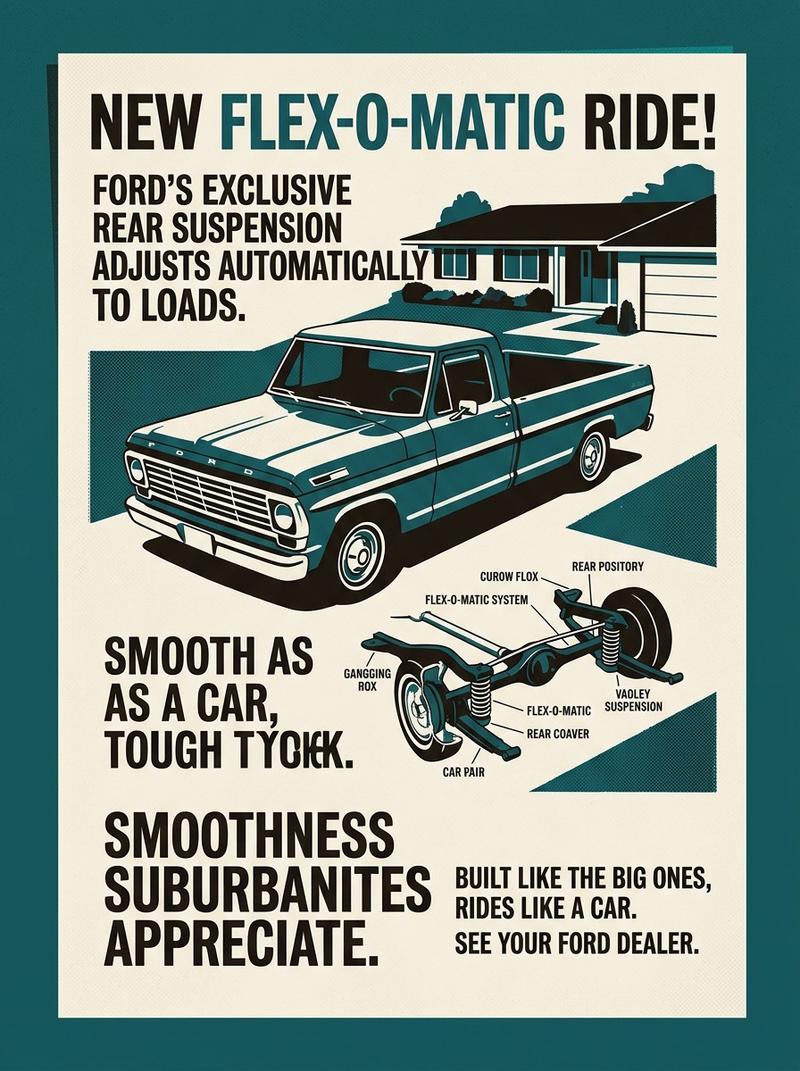
The mechanical execution relied on a special pivoting shackle at the back of each rear leaf spring. In a conventional leaf spring, the shackle stays fixed and the spring deflects as a unit from the first inch of suspension travel. In Ford's setup, the shackle stayed in an upward position under light loads, allowing the spring to use a longer, softer effective length. As the load increased and the spring deflected enough, the shackle rotated downward, shortening the spring's effective length and raising the effective rate. It's a passive system with no electronics, no valving, no driver-selectable modes. Physics does the work.
The benefit in practice was meaningful but not transformative. An empty half-ton truck with Flex-O-Matic still rode like a truck. The rear axle is still a solid axle on leaf springs, and nothing changes that fundamental character. What the system did was reduce the worst of the harshness that comes from running stiff springs completely unloaded. The difference between a truck that jars your fillings loose on a rough road and one that merely feels firm is actually a pretty significant quality-of-life improvement, even if neither one is mistaken for a luxury sedan.
Ford's marketing team understood how to sell this to a buyer who might otherwise skip the truck segment entirely. The pitch wasn't aimed at contractors or ranchers who were already committed pickup buyers regardless of empty-bed ride quality. It was aimed at the suburban buyer who wanted a truck for weekend projects, maybe some occasional towing, and didn't want to dread the daily commute in it. That buyer was price-sensitive and comparison-shopping against station wagons and early SUVs, and ride comfort was part of the calculus.
What makes Flex-O-Matic interesting from an engineering standpoint is how much it accomplished with how little. There are no additional components to leak, fail, or require maintenance. The shackle pivot geometry is set at the factory. It adds essentially no weight penalty worth discussing and no complexity that a backyard mechanic can't understand in about thirty seconds of looking at the spring pack. In an era when automotive engineering was often about adding systems, this was a case of a clever geometric arrangement doing the work instead.
The broader lesson here applies well beyond one Ford suspension option from decades ago. The pickup truck's ride quality problem is still with us, just addressed now with coil-spring rear suspensions, air suspension options, and sophisticated dampers that would have seemed like science fiction to the engineers who designed Flex-O-Matic. Modern trucks like the Ram 1500 with its available air suspension do a genuinely impressive job of managing the loaded-versus-unloaded compromise, but they do it with a lot more hardware. Ford's old solution was elegant precisely because it was simple: let the geometry change the rate, and don't add a single part more than necessary.
For anyone who daily-drives a truck and occasionally wonders why the empty-bed experience still feels like a penalty compared to any modern car, the answer is rooted in the same physics that Ford was wrestling with when Flex-O-Matic was new. The springs have to be stiff enough to not bottom out under load, which means they're over-sprung for everything else. Every solution since, whether progressive leaves, air bags, or active damping, is just a different approach to the same constraint. Ford was working that problem earlier than most people remember, and the approach was clever enough that versions of it are still in use today.

Written by
Tabitha Corman