What Happens When You Freeze a Cummins Diesel to -40 Degrees

Banks Power cold-chamber tested a 2024 Ram 2500 HD Cummins diesel from -20 to -40°F. Here's what the data actually shows about starting, cranking RPM, and survi
At -20 degrees Fahrenheit, a 2024 Ram 2500 HD's 6.7-liter Cummins diesel cranked at just 82 rpm without a block heater. That's a 46.9 percent drop in piston speed compared to a warm-weather baseline. At -40 degrees, it didn't start at all. Banks Power has the data to back that up, because they actually ran the test.
The experiment happened at the Thermal Dynamics lab in Southern California, which is a sentence that never gets less strange to read. Banks locked a late-model Ram HD inside a cold chamber and took it all the way to -40 degrees, methodically documenting coolant temperature, resting voltage, cranking voltage, and cranking RPM at each interval. The truck was prepped properly before testing: new Interstate AGM batteries, fresh Amsoil Signature Series 5W-40 oil, winter diesel treated with an Amsoil anti-gel additive, and a new fuel-water separator. This wasn't a stress test designed to kill the truck. It was a controlled study of what the physics actually look like when a diesel faces genuinely punishing cold.
Why Diesel Cold Starts Are Different
Gasoline engines use spark ignition. A diesel doesn't. It relies entirely on the heat generated by compressing air in the cylinder, enough heat to ignite fuel when it's injected. At normal operating temps, that works elegantly. At -20 degrees, the thermodynamics start working against you in multiple directions at once.
Banks founder Gale Banks outlined four variables that govern a cold diesel start: ambient temperature, coolant temperature, heat of compression, and manifold air temperature. The ambient temp is whatever it is. You can't touch that. But the other three are at least partially addressable through hardware, and that's precisely what the test was designed to quantify.
When the engine block is cold-soaked, the metal cylinder walls absorb heat from the compressed air before ignition can happen. Thicker, colder oil creates more friction, dragging down cranking speed. Batteries deliver less voltage in the cold, which drops cranking RPM further, which reduces compression heat, which makes ignition harder. It's a compounding problem, and each variable makes the others worse.
The Block Heater Numbers
The clearest finding from the Banks test is how much the block heater matters, in concrete terms rather than general advice.
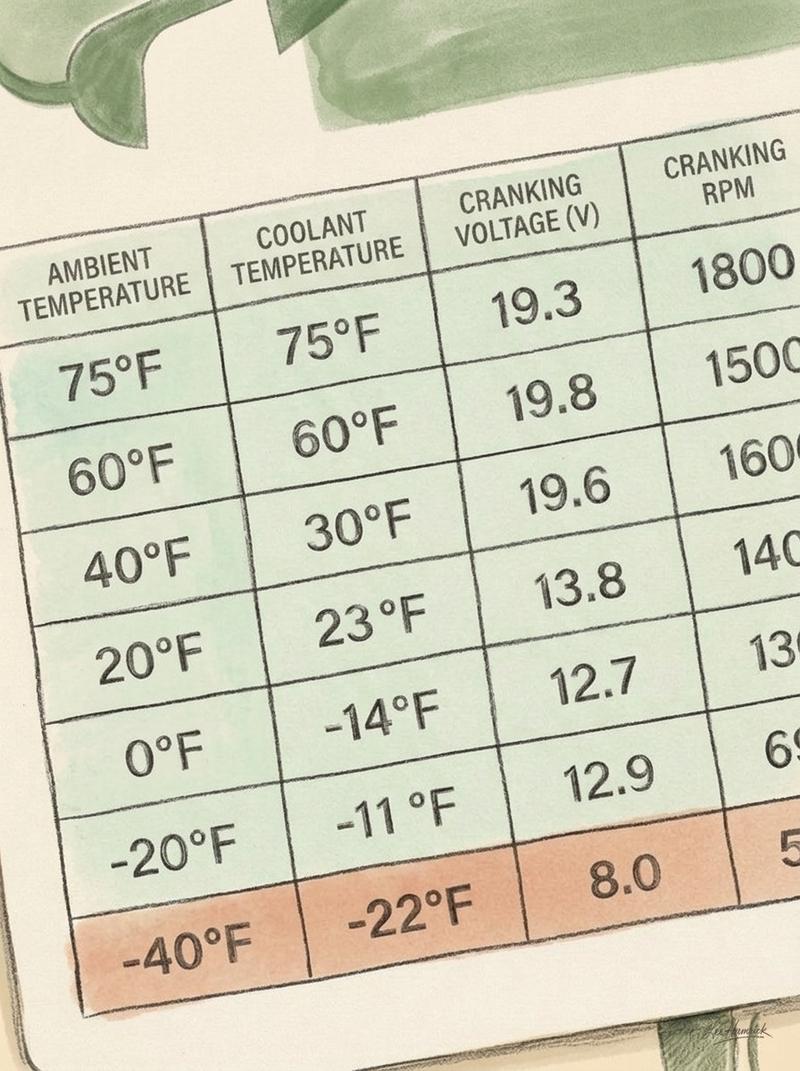
Without a block heater at -20 degrees Fahrenheit, coolant temperature matched the ambient air. The engine managed 82 cranking rpm, and this was with 1,500 watts of intake air heating supplied by a dual-element Banks Monster Ram. That 82 rpm figure represents a significant loss in compression heat generation, because piston speed and compression work are directly linked.
Add the block heater at the same -20-degree ambient temp, and coolant climbs to 32 degrees Fahrenheit. The test conditions shifted slightly here (down to a single 750-watt intake heating element instead of the dual 1,500-watt setup), so the two runs aren't perfectly apples-to-apples. But even with less intake heat, the block heater's influence on overall cylinder thermal management is measurable. Cranking speed improved, and internal temperature shock dropped substantially. Banks noted that cylinder temps can exceed 300 degrees on startup, and a warmer water jacket surrounding the cylinder means a smaller delta between the cold metal and that immediate heat spike. That's the part of the block heater equation that doesn't show up on a spec sheet but shows up in long-term engine wear.
At -30 degrees with the block heater running and the dual 1,500-watt intake element back in play, the truck achieved 89 cranking rpm and coolant held at 20 degrees Fahrenheit. The engine started.
-40 Degrees: The Point of No Return
At -40 degrees, the system collapsed. Cranking voltage dropped to 6.4 volts. That wasn't enough to keep the ECU running, which meant the intake air heater never got the chance to help. Block heater coolant temp was 9 degrees Fahrenheit, which under other conditions might have been useful. But without a functioning ECU, none of it mattered. The truck did not start.
This is worth sitting with for a moment, because -40 is not a hypothetical in a significant part of the country. Northern Minnesota, the Dakotas, Montana, Wyoming, and large stretches of Canada see those temperatures regularly. The 2024 Ram 2500 HD tested here was described as being in peak condition, with new batteries and fresh fluids. This wasn't a neglected truck. The cold simply won.
The Grid Heater Problem Worth Knowing About
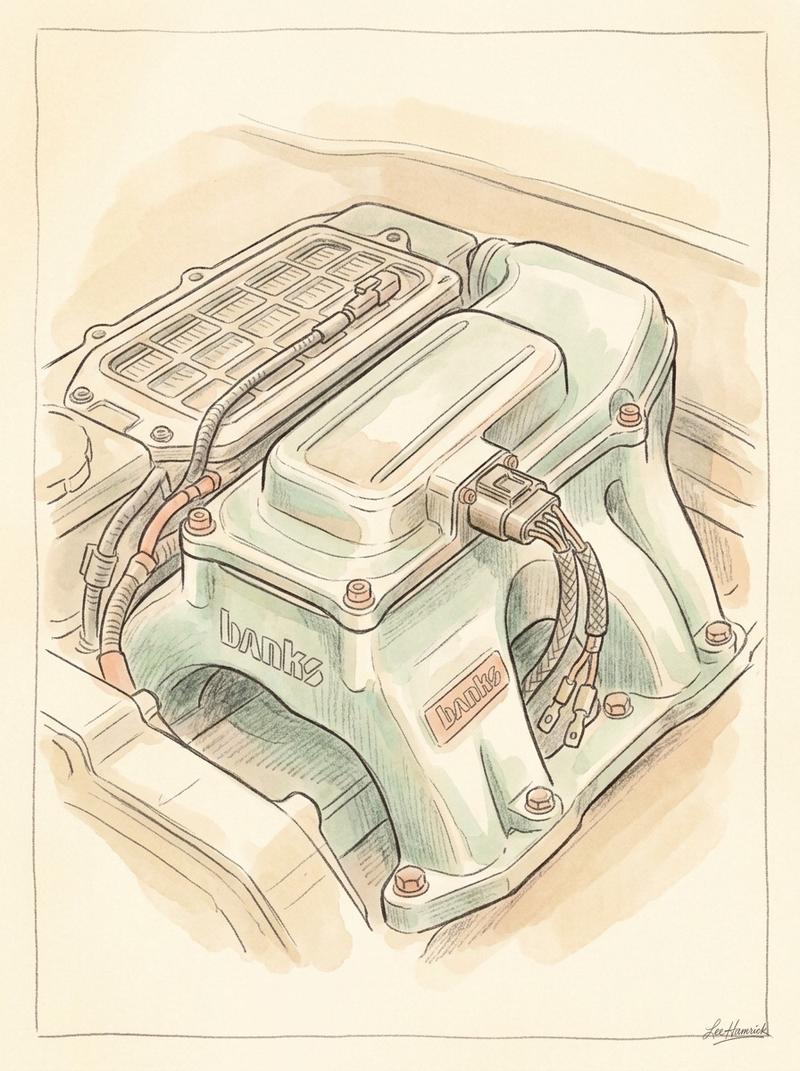
One detail buried in the Banks data deserves more attention than it typically gets. Cummins has used factory grid heaters on trucks like the 2024 Ram 2500 tested here. The issue is a faulty bolt in that system that can melt and get drawn into the engine. Banks noted that Cummins switched to glow plugs on 2025 models, and while no official cause was stated, the timing lines up with exactly that failure mode.
If you own a 2024 or earlier Ram HD with the factory grid heater setup, that's worth understanding before winter. The Banks Monster Ram intake, which replaces the factory grid heater with an external heated element, sidesteps the issue entirely. The current version offers a triple-element configuration rated at 2,250 watts, though the version used in this test was the dual-element 1,500-watt setup.
What This Actually Tells Diesel Owners
The numbers from this test point to a few conclusions that are straightforward to act on.
- Block heaters aren't optional in cold climates. The piston speed data at -20 degrees without one shows how much compression heat the engine loses. The wear implications alone justify the cost, before you even get to whether the truck starts reliably.
- Intake air temperature is a secondary lever, not a primary one. The Monster Ram intake showed meaningful benefit at -30 degrees, but at -40 the battery voltage failure happened upstream of everything. Intake heat couldn't help because the ECU was already down.
- Battery condition is a hard floor. At -40 degrees, two fresh Interstate AGM batteries delivered 6.4 volts under load. That is the baseline. Batteries that are two or three years old and sitting in Minnesota in January are starting that test in a worse position.
- Fluid choice compounds the other factors. The test was run with fresh 5W-40 synthetic, which flows better in the cold than conventional oil. Results with worn or heavier-weight conventional oil would look worse at every temperature point tested.
Most diesel owners in genuinely cold regions already know to plug in before bed. What this test adds is the actual mechanism behind why it works, and what the specific limits of the hardware are when conditions stop cooperating. The truck did everything right at -20 and -30 degrees. At -40, the physics won.
That's not a criticism of the Ram or the Cummins. It's just the data, and the data is useful to have.