Ruffian's Galaxie 500 Proves Modern Car Building Can Still Have Soul
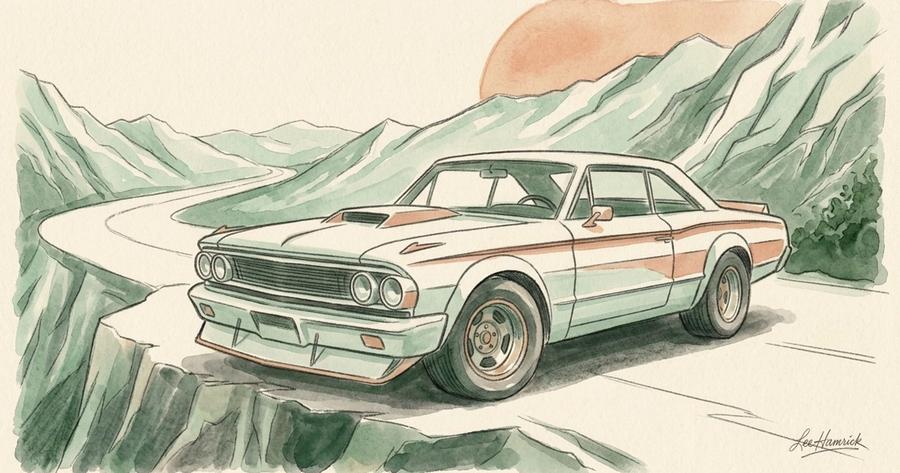
Chris Ashton's hand-crafted Galaxie 500 reimagines the classic American cruiser as a driver's car. Here's what matters about it.
The best car builders aren't trying to recreate the past. They're trying to steal what made the past work and graft it onto something that actually functions in the present. Chris Ashton, the former game designer turned automotive craftsman at Ruffian Cars, understands this completely.
The Galaxie 500 sitting in front of me isn't a restoration. It's not a restomod in the sense that marketing has poisoned the term. It's a car built by someone who grew up understanding structure, balance, and iterative design, then applied those principles to a 1963 Ford body and a contemporary drivetrain. The result is unsettling in how right it feels.
Most people will see this car and assume it's built for crawling through car meets at five miles per hour. Polished chrome, perfect patina, the kind of machine you'd find parked under a tent with a velvet rope around it. But then you sit in it. The steering wheel is positioned where your hands actually want them. The pedals are where your feet expect them. The visibility isn't compromised by overbuilt A-pillars because this car was designed before that particular safety theater became mandatory.
And then you drive it.
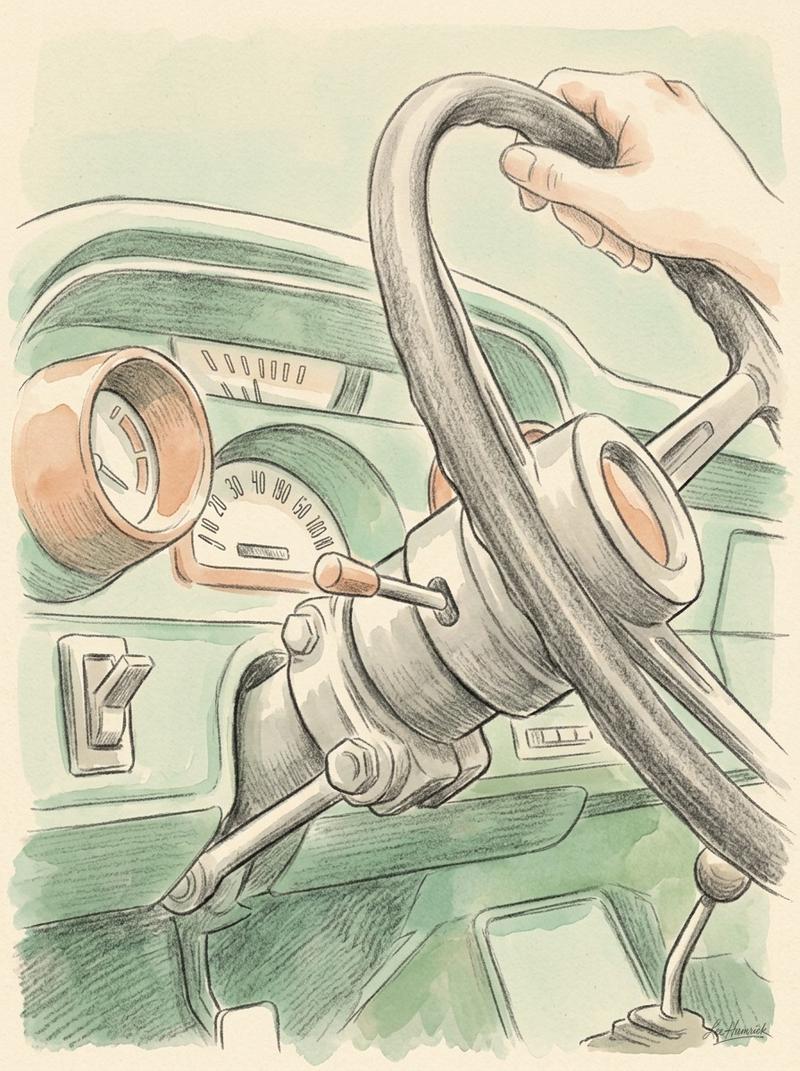
This is where most modern "restorations" of classic cars completely fail. They prioritize looking correct over feeling correct. They preserve the rolling resistance of 50-year-old suspension geometry, the vagueness of ancient steering, the wallowing body roll that makes you question whether the thing is actually in control or just hoping for the best. The Galaxie doesn't compromise. It has independent front suspension with proper geometry, a modern engine producing real power, and a chassis that was completely rebuilt to tolerances that would've seemed impossible in 1963.
But here's the thing that separates Ashton's approach from the guys who just swap LS engines into whatever classic they inherited: the Galaxie actually drives like a purpose-built machine, not like someone's grandfather's car with a turbocharged heart transplant. The steering carries information. Not the artificial heaviness that comes from old-school hydraulic systems, but real communication about what's happening at the contact patches. The suspension works with you instead of fighting against decades of design compromise.
From someone who spends a significant amount of time driving small, light, connected cars on track, I can tell you that most modern vehicles have completely lost the plot on this. They've optimized for isolation and smoothness, which is fine if your goal is to arrive somewhere without noticing the journey. But a car like this reminds you why the journey matters in the first place.
The acceleration is properly violent for something that weighs what it weighs. You feel it in the seat, in the way the car settles on the throttle, in how the rear tires talk to you through the steering wheel (yes, really). It's not the disconnected shove of a turbocharged appliance. It's mechanical, honest, and immediate.
What impresses me most isn't the engineering or the build quality, though both are clearly exceptional. It's that Ashton built this car to be driven, not preserved. The interior is period-correct in flavor but functional by modern standards. You're not fighting switchgear from an era when engineers assumed drivers had six hands. Everything works intuitively. Every control is where you'd expect it to be.
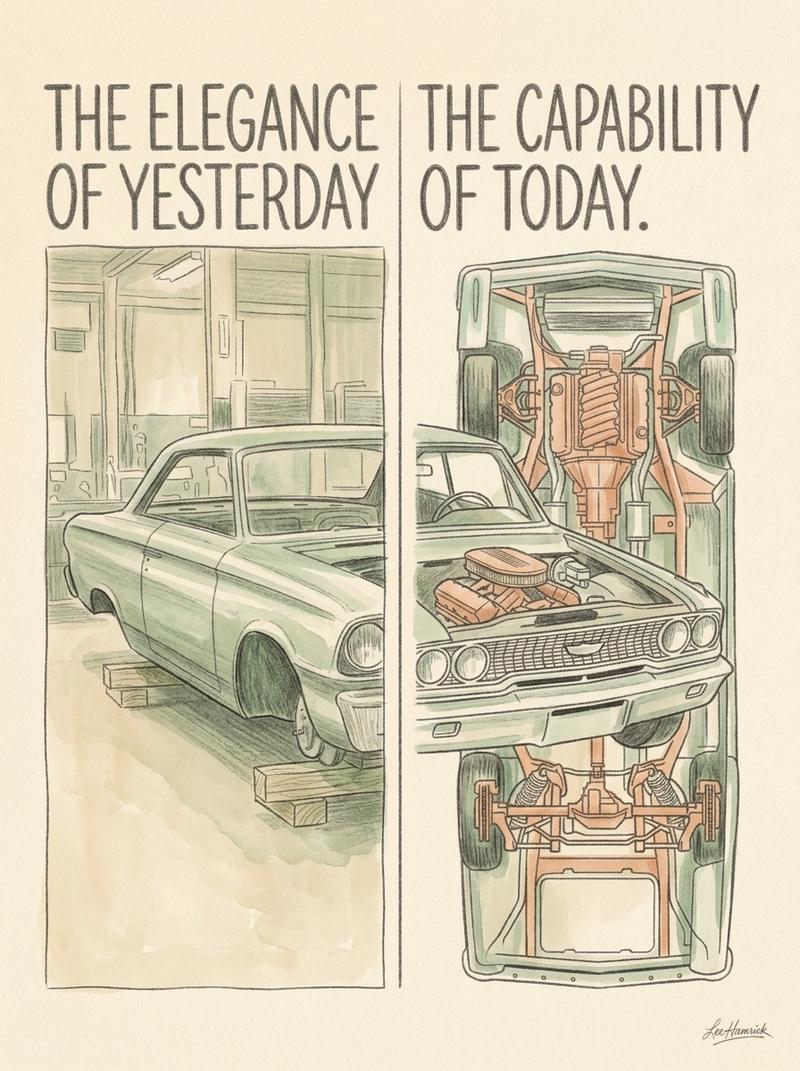
The attention to detail is genuinely obsessive, but it's the kind of obsession that serves the driving experience rather than detracting from it. The proportions are perfect because Ashton clearly understands form and balance from his design background. The body lines flow the way they do because that's how they were supposed to flow, not because he was slavishly copying reference photos.
There's a moment on an open road where this car completely clicks. You're not thinking about whether it's authentic to 1963 or properly restored or any of that collector-car conversation. You're thinking about how natural it feels to steer, how predictable the weight transfer is, how the engine pulls without hesitation. You're thinking about driving.
Modern car culture has largely fractured into two camps: the collector world that treats cars as investments and museum pieces, and the performance world that chases numbers on a dyno and lap times at race tracks. There's barely any overlap anymore. But the Galaxie exists in a space that shouldn't exist in 2024. It's beautiful enough to turn heads. It's engaging enough to make you actually want to drive it places. It's hand-built in a way that mass production simply can't replicate. And it works.
If you haven't driven a properly sorted classic car, you're missing the entire point of why people built cars like this in the first place. Not the marketing version of automotive history, but the actual reason: driving something that responds the way you expect it to, that doesn't insulate you from the experience, that makes you a participant instead of a passenger.
Ashton built this car because he understands that lesson. Not many people do anymore.

Written by
Anna Buchanan