Tractor Paint and a Chevy Frame: What a $400 Bronco Budget Build Gets Right

A Ford Bronco on a Chevy chassis, finished with free tractor paint. This cheap budget build is honest about what it is, and that's the point.
There's a version of this story where someone spends $400 on a Bronco, drops it on a Chevy frame, sprays the whole thing with leftover tractor paint, and the result is an embarrassment. Then there's the version where that sequence of decisions is actually the most honest thing happening in the budget build space right now. Casey's Customs landed in the second category, and it's worth talking about why.
The build concept is straightforward: take a Ford Bronco body, mate it to a Chevy chassis, and finish the exterior with free tractor paint. No pretense, no sponsor budget, no carefully lit reveal in a shop that looks cleaner than most people's kitchens. The appeal isn't the execution in isolation. It's that the whole thing is upfront about its constraints and works inside them anyway.
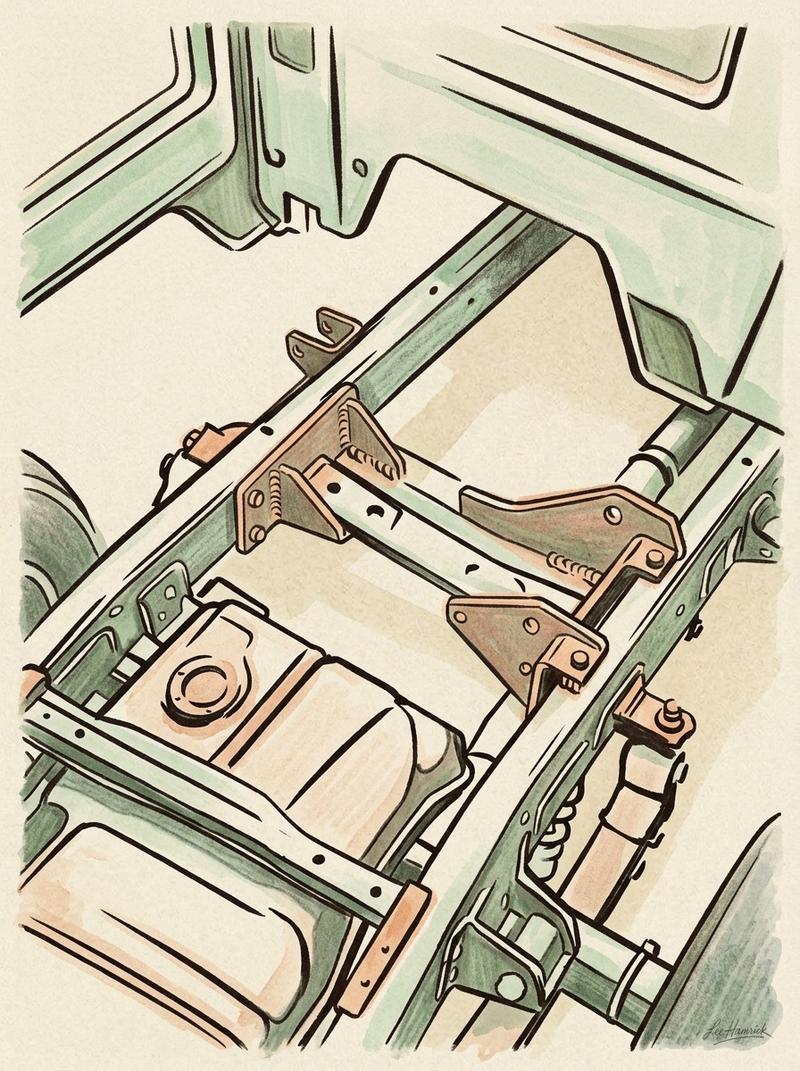
Chassis swaps on tight budgets are where you find out what someone actually knows. Swapping a Bronco body onto a Chevy frame isn't a novel concept in the rat rod and off-road world, but it requires genuine problem-solving at nearly every step. Mounting points don't line up the way they're supposed to. Brake lines need rerouting. Steering geometry becomes a conversation you didn't expect to have. None of that is glamorous, and none of it can be faked. Either the body sits right on the frame or it doesn't. Either the thing drives or it doesn't.
That's the part of budget builds that gets glossed over in the content. Everyone shows the dramatic moment of the body drop. Fewer people walk through the tedious bracket fabrication that happened two weeks before. What matters for a build like this isn't the headline number, it's whether the decisions made to hit that number hold up once the thing is actually moving.
The tractor paint choice is where the build gets philosophically interesting, and I mean that without irony. Tractor paint, particularly the old Rustoleum-style farm equipment coatings, is oil-based, thick, and genuinely durable. It's not glamorous. It doesn't buff to a show finish. But on a rat rod chassis swap that's going to see actual use, outdoor storage, and probably a fair amount of mud, the argument for using it is stronger than the argument against it. The finish telegraphs exactly what the build is. There's no mismatch between the presentation and the reality underneath.
Compare that to budget builds that drop $1,500 into a respray to look finished in photos, then reveal structural issues at the first event they attend. The tractor paint Bronco isn't pretending to be something it isn't. That's not a small thing.
The rat rod genre has always had this internal tension between builds that are genuinely scrappy and functional versus builds that perform scrappiness as an aesthetic while quietly spending real money on the parts that matter. A legitimately cheap build, one where the constraints are real and the solutions are improvised, is rarer than it looks. Most of what gets called a budget build has a hidden accounting somewhere, whether it's free shop space, donated parts, or a parts car that wasn't counted in the total.
A $400 Bronco that's actually $400 (or close enough) changes the calculation. The cross-brand chassis swap is one of those decisions that makes sense when the frame you have is better than the frame you'd have to buy. A usable Chevy frame is easier to source in a lot of markets than a solid Bronco frame, and if the body is the piece you're trying to save, the chassis is where you go looking for a solution. It's the kind of lateral thinking that budget builds require, and it's harder than it sounds to commit to when you're in the middle of it. If you want a deeper look at how smart parts sourcing changes the trajectory of a cheap build, our Cheap Race Car Build series gets into exactly that.
From a pure observer's standpoint, what I find useful about builds like this is how clearly they demonstrate what actually matters in a project vehicle. Not finish quality. Not brand consistency. Whether the thing is structurally sound, whether the drivetrain is reliable, whether the geometry works. The tractor paint build forces that hierarchy because there's no budget left to hide behind anything else. You solve the real problems or you don't have a vehicle.
There's also something worth noting about the airbag suspension component of the build. Air suspension on a cheap chassis swap sounds like a contradiction, but on a rat rod intended for street use, ride height management matters practically, not just aesthetically. Getting the stance adjustable gives you a vehicle that can clear obstacles when needed and sit where you want it when parked. Whether the execution holds up long-term is a separate question, but the decision to include it isn't frivolous.
The broader point is that this kind of build, Ford body, Chevy chassis, free paint, minimal budget, is a compression of the actual choices involved in keeping old vehicles alive without a restoration budget. Most people who own project vehicles are making similar compromises at a smaller scale. The $400 Bronco just makes them visible. And builds that are honest about their constraints tend to be more instructive than builds that pretend the constraints weren't there. For a look at what that philosophy looks like when applied to a more conventional sleeper project, the $10K LS-swapped Nova build covers similar territory from a different angle.
Whether the finished product holds together over time is the real test, and that's a story that hasn't been told yet. But the approach is defensible, and in a space full of builds that spend more on the reveal than the work, that's not nothing.