A Parking Lot in Belfast Is Doing Something a Peace Agreement Couldn't
We Beg to Differ is a 12-minute documentary on Belfast's grassroots drift community, now free on Vimeo after an IFTA nomination and Oscar pre-qualification.
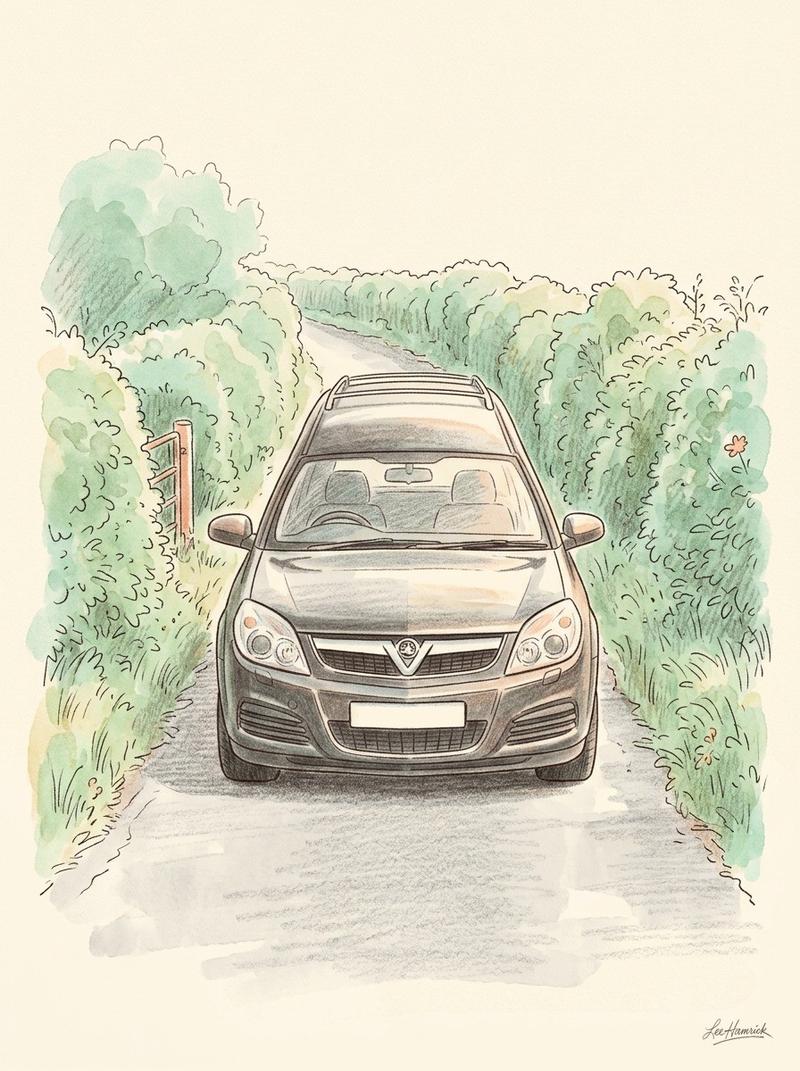
A Vauxhall hearse turns off a country lane. Dirt bikes follow. A caravan of drifters brings up the rear. That's the opening of We Beg to Differ, and if you watch it expecting tire smoke and rev limiters, you'll get those, but they aren't the point.
The film is 12 minutes long. Belfast-born director Ruairí Bradley shot it over 16 days in Northern Ireland, and it marks his directorial debut. Bradley studied at the National Film School in Dublin. He described in an RTÉ interview how he first encountered diffing on a music video set in Dublin, which sent him back to Belfast to find the community at its source. After two years on the festival circuit, the film is now free to stream on Vimeo. That circuit included an IFTA nomination, a European Film Award nomination, and Oscar pre-qualification, a body of recognition that tells you something about how the film reads outside the car world, not just inside it. Bradley's own description sets the stakes plainly: "My directorial debut, 'We Beg To Differ,' is a creative documentary that immerses audiences into the community of underground 'differs,' a group of people who have found healing through their illegal hobby."
That word, illegal, sits there without apology. Street drifting in Northern Ireland operates in the same gray zone it always has, somewhere between community ritual and police cat-and-mouse, with infrared helicopter surveillance now adding a new layer to the chase. One scene in the film ends with an arrest. The sport's formal governing body in the region, the Automobile and Motorsport Club of Northern Ireland, coordinates sanctioned competition and liaises with government bodies. Sanctioned events run on closed circuits with marshaling, safety regs, and scrutineering, everything the grassroots scene deliberately operates without. The culture Bradley documents exists almost entirely outside that structure. Legal spots have opened and closed. The one community had built a routine around, a fenced-off site outside Belfast where they'd received a landowner's permission, recently shut down after neighboring complaints. They kept drifting anyway.
Bradley grew up in Belfast. That matters because the film is not a tourist document. It comes from inside the geography it describes, which means it carries the weight of what that geography actually is. The Good Friday Agreement was signed in 1998. Belfast is approaching 30 years past the formal end of a conflict that ran three decades, and another 800 years before that, as Bradley noted in an interview with Road and Track, "which weren't great either." The infrastructure of the city still reflects choices made during the Troubles. The peace, such as it is, didn't erase the trauma that working-class communities accumulated during those years. It just ended the active shooting.
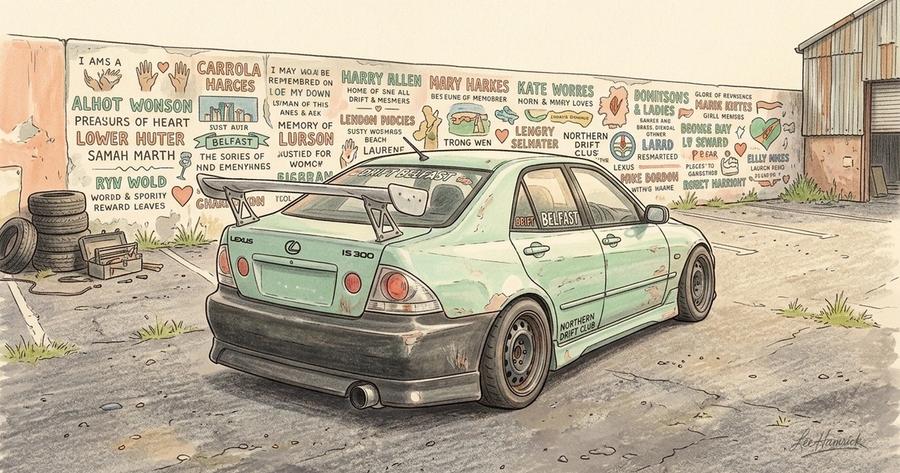
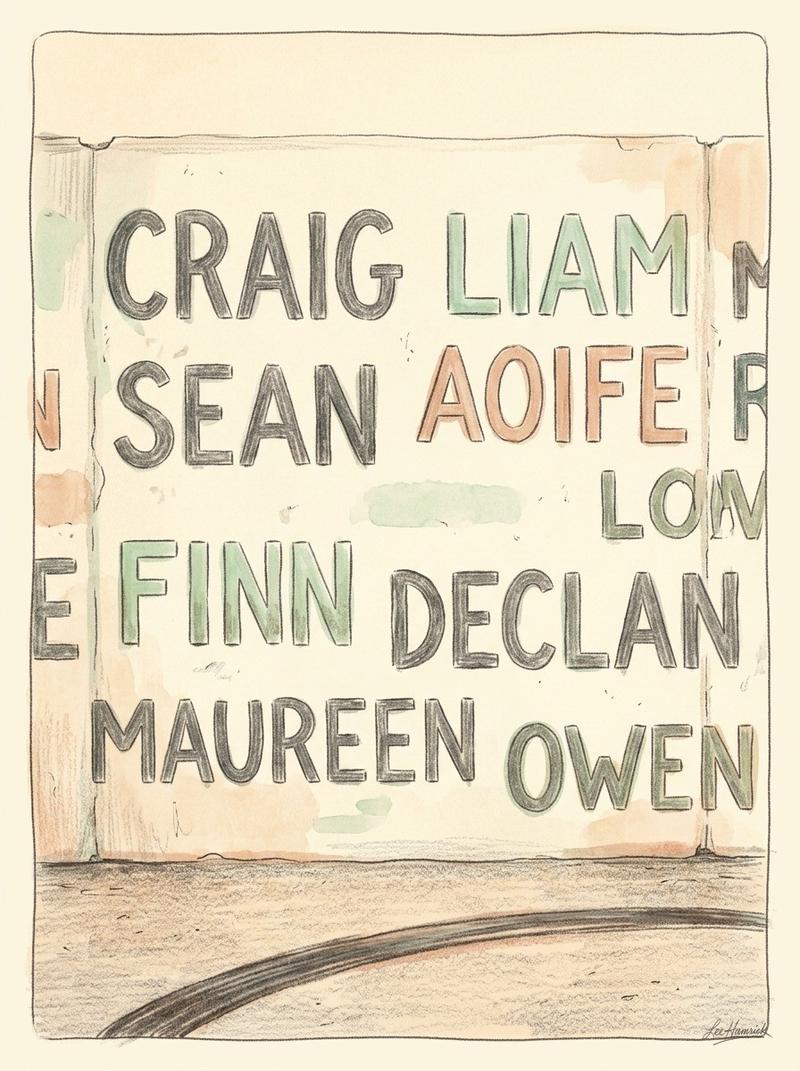
What that leaves is harder to name. Bradley named it anyway: "There is a big mental health epidemic in the North of Ireland." A wall at the community's drift spot is painted with the names of fellow enthusiasts, many of whom died by suicide. Two drifters Bradley met during filming took their own lives within six months of production wrapping. Those facts don't need elaboration.
The film's emotional center is less about the cars than about what the cars make possible. A Lexus IS300 rips figure eights at a memorial for a drifter who died. The crowd watches. Nobody has to say anything. Bradley put it this way in the Road and Track interview: the car is a space where someone can be surrounded by people without having to talk about how they feel. You're in your own seat, in your own machine, but you're not alone. The social math of that is different from what a support group offers, and for a community that came up inside guerrilla warfare, it may be the only version of community that doesn't feel like exposure.
The sectarian divide that defined Northern Irish life for decades runs along religious and political identity, Irish or British, Catholic or Protestant. It shaped where people lived, which roads got built, which communities got investment. That divide hasn't disappeared. But Bradley says the drift community doesn't carry it in. "It doesn't matter if you see yourself as Irish or if you see yourself as British. It's not a place for politics. It's a place for people to come together over cars." That's a modest claim, and an honest one. He isn't arguing that drifting solved the Troubles. He's saying it built something that doesn't require those identities at the door.
The film doesn't name every figure who built this scene, and the community itself seems to prefer it that way. What does come through is how long it has been running, not months but years, organized informally around specific sites and specific cars, the kind of continuity that grassroots scenes either develop or lose in the first year. It developed. The 2JZ swaps, the borrowed land, the burger van when the weather cooperates, these are markers of a scene with enough institutional memory to have habits.
From inside American car culture, where Formula Drift has been selling stadium seats since 2004 and the sport now has its own television structure and celebrity drivers, the world Bradley filmed looks like something from a different era of the hobby. That's not quite right, though. It looks like where the hobby actually lives, for most people who do it. Parking lots. Borrowed land. Cars that cost what people can actually spend, with rev limiters bounced off the ceiling for anyone standing close enough to feel it in the chest.
Bradley's stated aim for the film was to put the viewer in the passenger seat, to let audiences understand "what it means to be a differ." Twelve minutes is a short run time for that kind of ambition, but the film earns it by not explaining itself. The hearse at the opening. The memorial wall. The arrest. The ice cream truck in the background of a burnout. Bradley lets those things sit next to each other and trusts the viewer to feel the weight of the combination.
"He is particularly interested in stories about community, identity and connection," his production company wrote of him. We Beg to Differ is exactly that kind of story, and the cars are what make it possible to tell it without anyone having to admit they needed to be there.
The film is on Vimeo. It's free. It runs 12 minutes.

Written by
Lee Hamrick