149.6 mph in a Plain Dodge Sedan: The Record the Polara Set in 1969
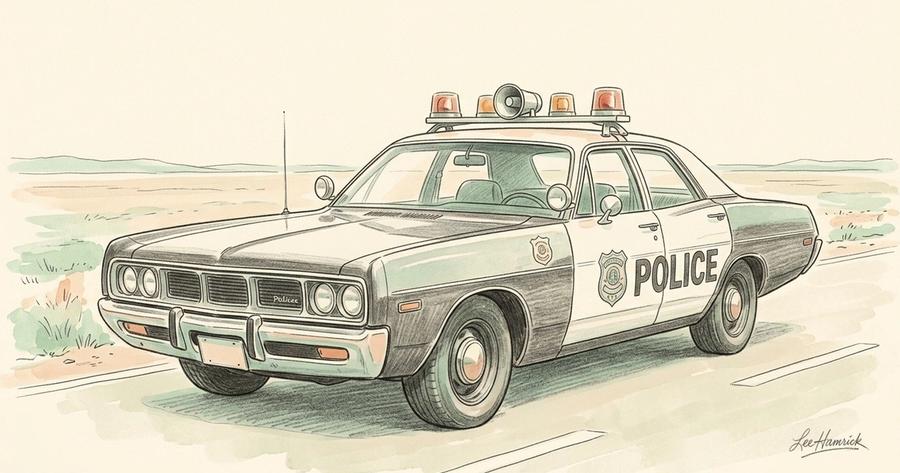
The 1969 Dodge Polara Pursuit hit 149.6 mph at Chrysler's Chelsea test track. Here's what that record meant, and what finally broke it.
149.6 miles per hour. A Dodge sedan. 1969.
No roll cage. No wings. No racing slicks. A police package, which in 1969 meant a heavy-duty suspension, a calibrated speedometer, and whatever engine Dodge was willing to bolt in for fleet buyers who needed to catch things. That car ran 149.6 mph at the Chrysler test track in Chelsea, Michigan, and set a speed record for production police vehicles that would stand for a long time.
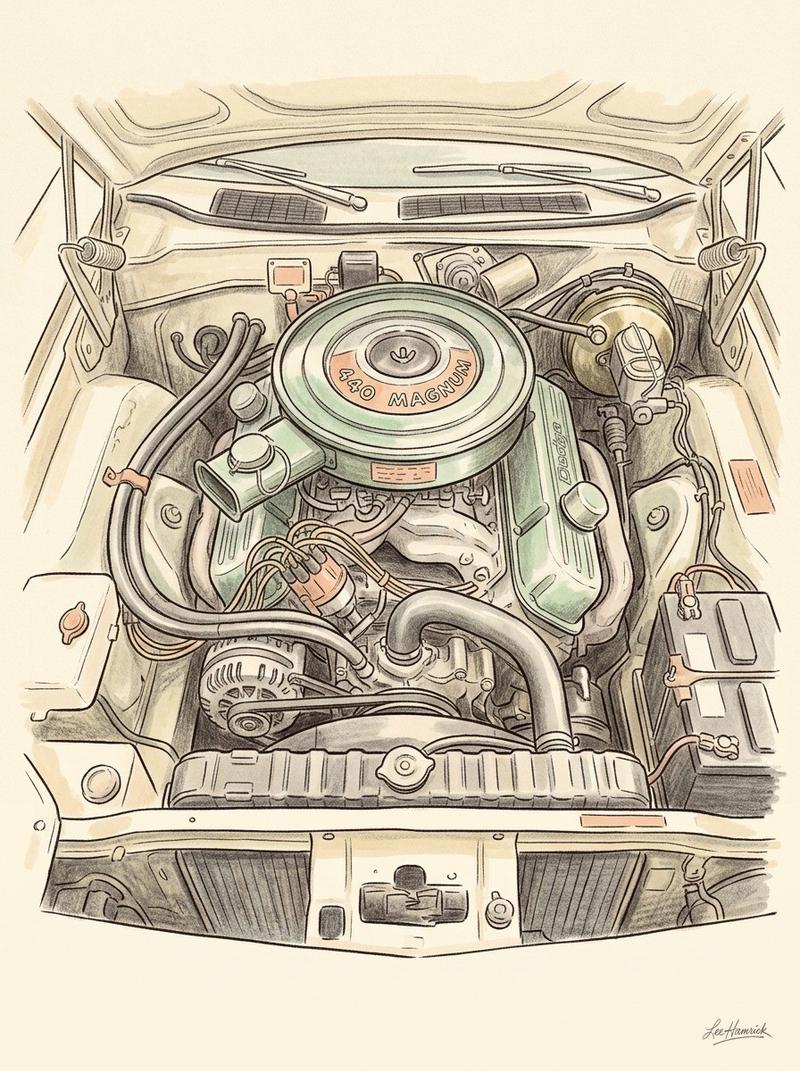
The car was the Dodge Polara, and the engine that got it there was the 440 cubic inch V8. Dodge had been building police packages into full-size Polaras since the early part of the decade, and by 1969 the combination of a large-displacement engine in a body that was still, structurally, a family sedan produced something that nobody had fully planned for. Who at Dodge ordered the specific configuration, who drove the test runs, and whether the 440 was a standard police-package offering or a special-order option for that model year, those details aren't documented in any source I've found. What is documented is the number: 149.6 mph at Chelsea.
To understand why that number held so long, you have to understand what happened to cop cars in the decade that followed. The 1970s arrived and brought with them the fuel crisis, emissions mandates, and a federal government with an increasingly strong opinion about what engines American cars were allowed to have. Displacement came down. Compression ratios came down harder. The 440 that punched the Polara to 149.6 gave way to engines rated in SAE net horsepower, a measurement that made the same engine look smaller on paper and perform worse in the real world. By the mid-1970s, a pursuit-rated police package often meant a small-block V8 in a car that weighed over 4,000 pounds, and the top speed numbers reflected it.
Detroit was building family cars with police badges, and the family cars were getting slower by model year. The B-body Polara and Monaco that followed the 1969 cars were competent enough. Then the Diplomat came, and the downsized St. Regis, and eventually the rear-wheel-drive platform that survived the decade gave way to front-wheel-drive platforms that were cheaper to build and slower in a straight line. The Ford Crown Victoria kept rear-wheel drive and a modular V8 and stayed in continuous production long enough to become the default American police car almost by institutional inertia. It was dependable. It was not fast. Post-2006 Crown Victoria Police Interceptors were electronically limited to somewhere between 120 and 140 mph depending on rear axle ratio, with top speeds in the 136 to 137 mph range reported for the final non-Flex-Fuel model year, respectable, but well short of what the Polara had done at Chelsea in 1969.
The record the 1969 Polara had set was not a target anyone was actively chasing. It was just sitting there, the way old records sit, mostly forgotten until the vehicle that finally breaks them forces someone to go look it up.
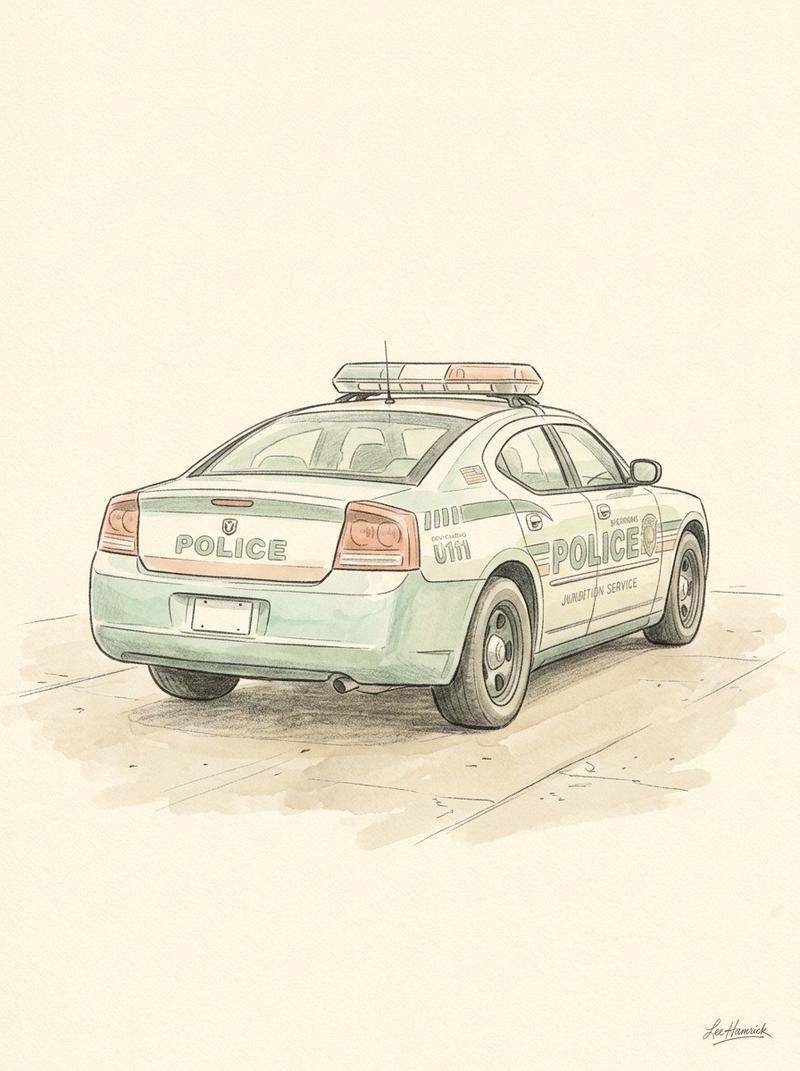
What broke it was the Dodge Charger Pursuit. Dodge reintroduced the Charger nameplate on a rear-wheel-drive platform and almost immediately offered a police pursuit version. The platform was the LX, the same architecture underneath the Chrysler 300 and the Charger R/T, and the engine available at the top of the pursuit lineup was the 5.7-liter HEMI V8. Modern engine management, variable valve timing, a compression ratio the 1970s never allowed. The Charger Pursuit ran past the Crown Vic's ceiling without much effort and eventually pushed past the number that had been on the books since Nixon's first year in office. The exact year it happened and the precise speed it recorded in Michigan State Police testing when it crossed 149.6 are not confirmed in any source I have in hand.
There is something worth sitting with in that timeline. The fastest police car anyone had documented was built in 1969, and it took until the mid-2000s for something to pass it. That is not a story about police procurement or budgets. It is a story about what happens to performance when an entire industry pivots away from it, and how long it takes to climb back to where it was.
The Polara itself is an interesting machine to consider now. It was never positioned as a performance car. Dodge built performance cars, the Charger, the Super Bee, the Dart GTS, and the Polara was not one of them. It was a full-size sedan with a police package, which meant heavy-duty everything and a big engine because fleet buyers in 1969 could still order a 440 under the hood of what was essentially a taxi. The performance was a byproduct of cubic inches and relatively low curb weight by the standards of what came after. The car weighed roughly 3,700 pounds, which is not light, but the 440 made enough torque that it did not matter much at the speeds the test required.
The Michigan State Police vehicle evaluation program, which has been the benchmark for pursuit-rated vehicles in the US for decades, is where subsequent records get measured. The methodology has not changed much: top speed, acceleration, braking, handling. A state police evaluation does not hand out charitable results. Whether the Chelsea test track run in 1969 was conducted under MSP evaluation protocols or as an independent Chrysler test is a question the sources don't fully resolve.
What makes the 1969 Polara record genuinely strange is that it came at the end of a period of American automotive performance, not the beginning. By 1971 the insurance industry had started repricing muscle cars aggressively, the emissions rules were tightening, and the whole era that produced a 440-powered police sedan was winding down. The record was set almost on the way out the door.
Today's Dodge Charger Pursuit runs a 5.7-liter HEMI and can exceed 150 mph in Michigan State Police testing, depending on configuration. Modern traction control and stability systems mean the car is faster in a way the driver can actually use, not just a peak number on a straight road. The Ford Police Interceptor Utility, which is an Explorer-based crossover with an EcoBoost V6 or a hybrid powertrain, runs in the same evaluations now. The pursuit landscape has changed considerably.
But the Polara ran 149.6 at Chelsea in 1969, and for a long stretch of American automotive history that was the number. A plain sedan, a big engine, and a test track in Michigan.

Written by
Lee Hamrick