All Generations Praise the E46 as the Best Modern BMW

The BMW E46 3 Series (1998-2006) earns praise across generations for its balance of driving feel, ergonomics, and everyday usability. Here is why it still matte
There is a particular kind of car that earns its reputation quietly, over years, and the E46 BMW 3 Series is one of them. No single moment made it legendary. It just kept showing up, in driveways and on track days and on Facebook Marketplace listings with every warning light imaginable, and people kept driving it and coming away converted. The generation ran from 1998 to 2006, and if you talk to enthusiasts who were there for it and enthusiasts who discovered it secondhand, they tend to land in the same place. The E46 was the last time BMW really got it right.
That is a big claim, and I do not make it carelessly. The cars that came after it brought more technology, more luxury, more isolation from the road. Some of that is progress. Some of it is loss. The E46 found a balance that later generations never quite recaptured, between a cabin that felt purposeful and refined without feeling disconnected, and a chassis that rewarded you for paying attention without punishing you for a bad day. It was practical enough to be someone's daily driver and honest enough to let a good driver feel like one.
The lineage matters here. The E46 traces its character back to the BMW 2002, a car that was once praised in print for being practical, roomy, and economical without ever being boring. That description fits the E46 just as well. It came in sedan, coupe, convertible, and estate body styles, and BMW even built a three-door hatchback for markets outside North America. Each one shared the same essential DNA. The coupe got a sharper windshield angle that made it feel more immersive, and the estate took the whole proposition to a practical extreme, but underneath every variant was the same balanced, driver-forward engineering. To drive one E46 is to understand all of them.
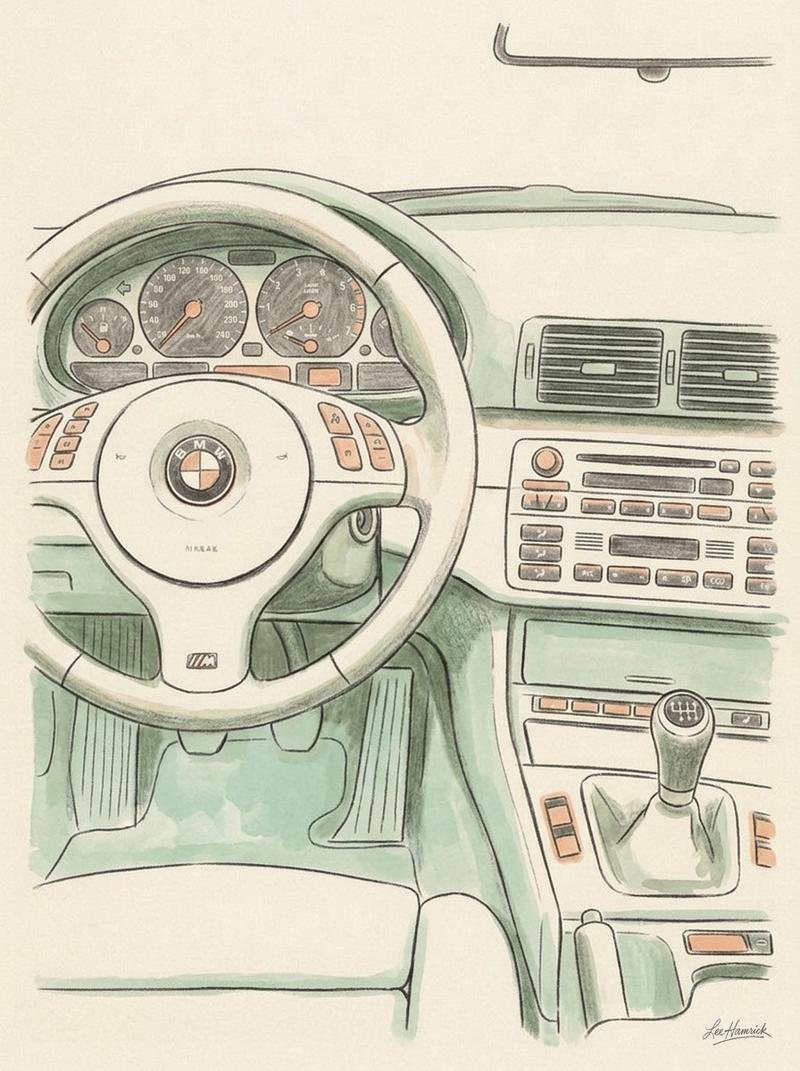
The M3 version, with its S54 engine and the kind of dynamic agility that made it a genuine performance car by any standard, gets most of the glory. And it deserves it. But the M3 is not the only reason the E46 holds up. A 325i sedan with an automatic transmission is still a joy to drive, because the fundamentals are right. The interior had physical buttons where buttons belong and screens where screens made sense. The wood trim and textured plastics and long, flowing lines added up to something that felt considered rather than assembled. If there is a bad E46, nobody seems to have found it yet.
Motorweek tested an E46 323ci coupe with the sport package and a five-speed manual, and their impressions hold up better than most contemporary reviews do. The car ran zero to sixty in 6.5 seconds and trapped the quarter mile at 93 mph. They described the steering input as honed to a fine edge. That coupe had a sticker price of $34,630, which translates to roughly $67,000 in today's dollars. For that money now you could get a current 4 Series coupe with leather and some options, or a loaded Ford Explorer ST with tax money left over. Motorweek's review is also a reminder of how much interior ergonomics have drifted since then. They did not have to explain how to operate the climate controls or navigate a touchscreen to find the radio.
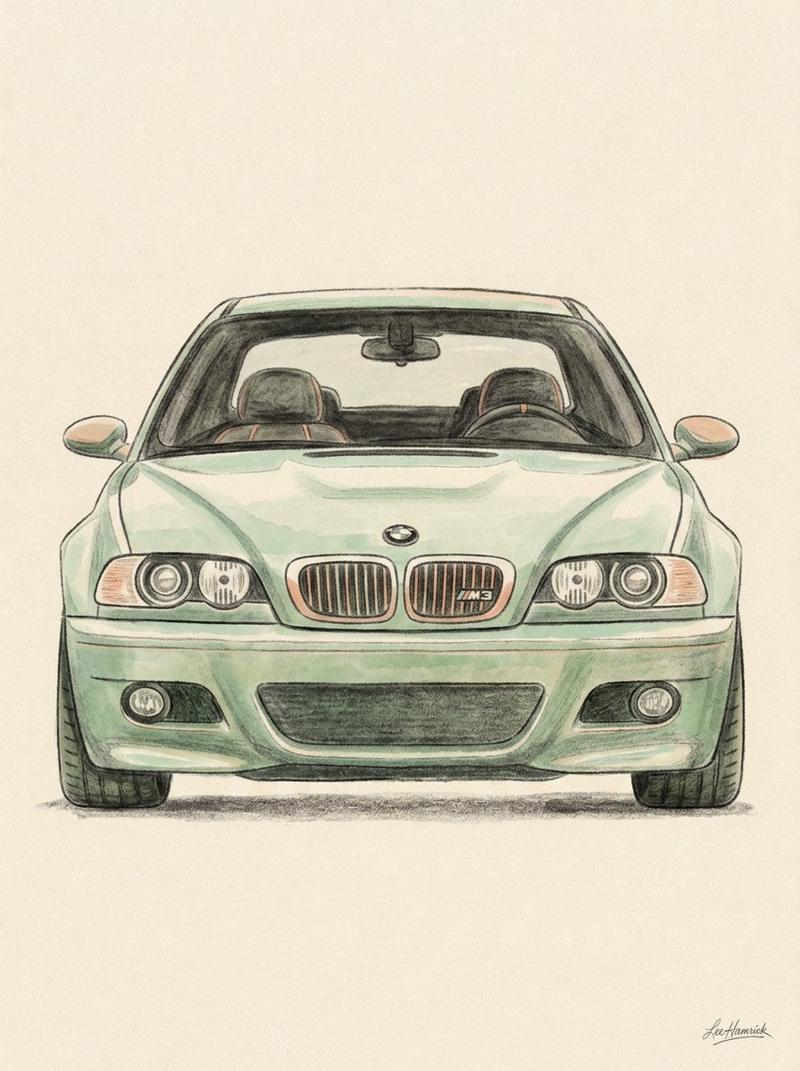
The ZHP performance package sits between the standard car and the M3, and it added meaningful powertrain and cosmetic upgrades over a base E46 without advertising itself loudly. Only people who know can spot one in a parking lot, which is part of the appeal. But even a standard E46 with the sport package proves that the ZHP and M3 are not the only versions worth seeking out. The sport suspension and steering setup made a noticeable difference in a car that already had a strong baseline. BMW put in the work across the lineup, not just at the top.
What keeps the E46 relevant is not nostalgia alone. The author Sajeev Mehta, writing about the car earlier this year, made the point that his appreciation for the E46 came partly through two Gen Z enthusiasts who reframed it for him. He had been in the E36 camp, finding the E46 too polished, too close in character to the E39 5 Series. His younger counterparts changed his mind. That cross-generational appeal is not an accident. The E46 hits differently depending on where you come from. For people who grew up with it, it is a reference point. For people who discovered it later, it is a revelation. The result is the same either way.
A Laguna Blue E46 M3 in driver condition sold for a six-figure price in 2024, which tells you something about where the collector market has placed it. But the E46 still exists at every price point. A 325i sedan on Facebook Marketplace gets you most of what makes the M3 special, for a fraction of the cost. It will probably have deferred maintenance written all over its instrument cluster. It will also have that steering, that chassis balance, that cabin logic that BMW has not managed to replicate in anything that came after. You sort out the maintenance and you have something that drives better than most new cars twice its price.
The E46 did not shout about what it was. It did not need to. It just sat there and waited for you to drive it, and then it made its case. Twenty-plus years later, the case still holds.

Written by
John Buchanan