The Baddest Grand National Ever Built
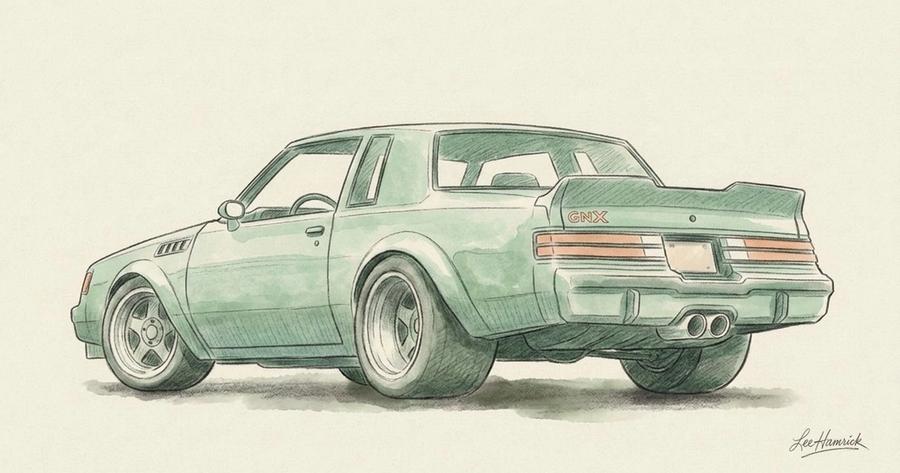
Angelo Vespi's 1987 Buick Grand National GNXS by Dutchboys Hotrods: 10,000 hours, twin-turbo 427 LS7, roughly 1,500 hp, and a fully reimagined interior.
The 1987 Buick Grand National already had a reputation that scared people. It was fast, it was black, and it came from a brand nobody expected to be building something that could embarrass sports cars at a stoplight. That was the stock version. What Angelo Vespi and Dutchboys Hotrods did with one is something else entirely.
The build is called the GNXS, and it took four years and over 10,000 hours to complete. That number deserves a moment. Ten thousand hours is not a restoration. It is not a restomod with some suspension upgrades and a tune. It is a ground-up reinvention of an icon, executed with the kind of obsessive precision that most people reserve for careers, not cars.
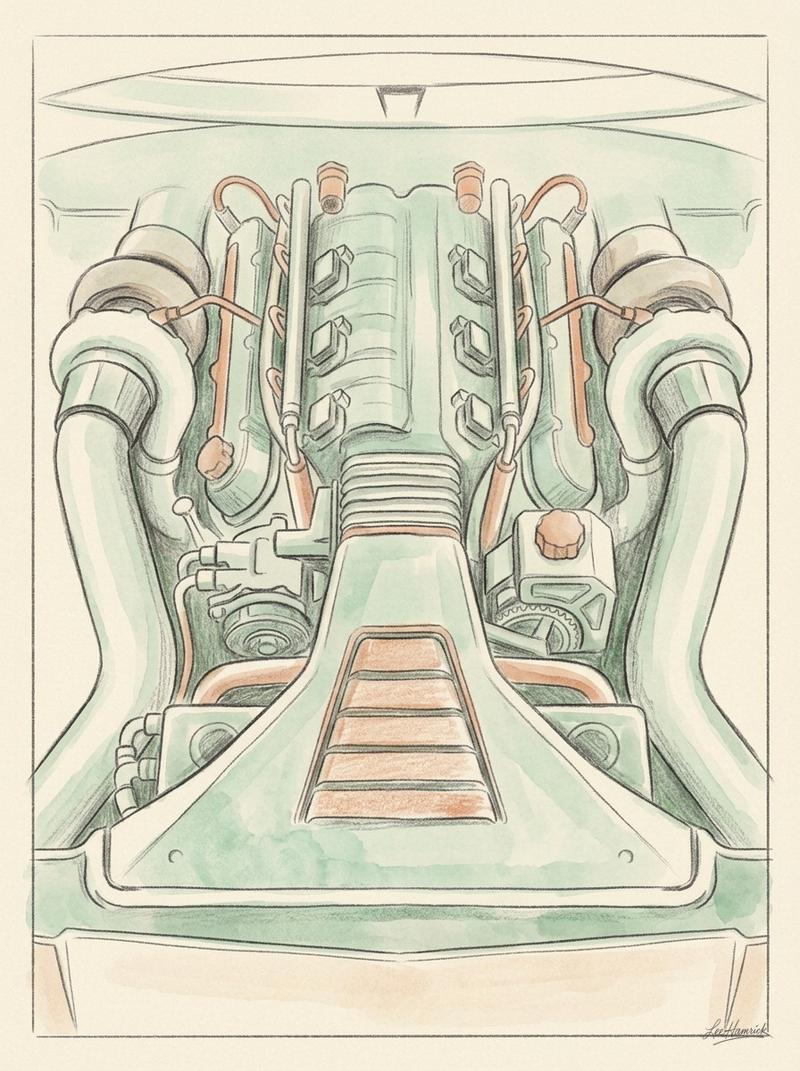
Start under the hood. The engine is a twin-turbocharged 427 cubic inch LS7, producing roughly 1,500 horsepower. The original Grand National ran a turbocharged 3.8-liter V6, which was genuinely fearsome for its era. Replacing it with a twin-turbo LS7 is not paying homage to the original formula. It is a statement that the original formula was just a starting point. The number 1,500 sits in a different category from the street-legal world most of us inhabit, and the fact that it lives inside bodywork that still reads as a Grand National makes it stranger and more compelling than any clean-sheet supercar build.
The chassis is Detroit Speed-based, which is an important detail. Dutchboys did not just drop a monster engine into a body and call it done. The structure underneath was rebuilt to handle what sits on top of it, because a car that makes 1,500 horsepower and handles like a 1987 G-body is not a driver's car, it is a liability. Getting the chassis right is the unglamorous half of a build like this, and it matters as much as the engine number.
Out back, 345-wide rear tires translate all of that power into something resembling forward motion. To put that in context, 345s are wider than what most purpose-built track cars run on the rear. On a car with Grand National proportions, they must look planted in a way that communicates exactly what the rest of the build is about.
The bodywork is custom metal throughout. This is not a fiberglass kit or a widebody fender flare bolted to stock sheetmetal. Dutchboys fabricated the exterior to accommodate the wider stance and the mechanical package underneath, while keeping the silhouette close enough to the original that you still recognize it immediately. That is a harder design problem than starting from scratch. Anyone can make something look aggressive when they have no reference point. Making something look like a Grand National while being nothing like a Grand National requires a specific kind of discipline.
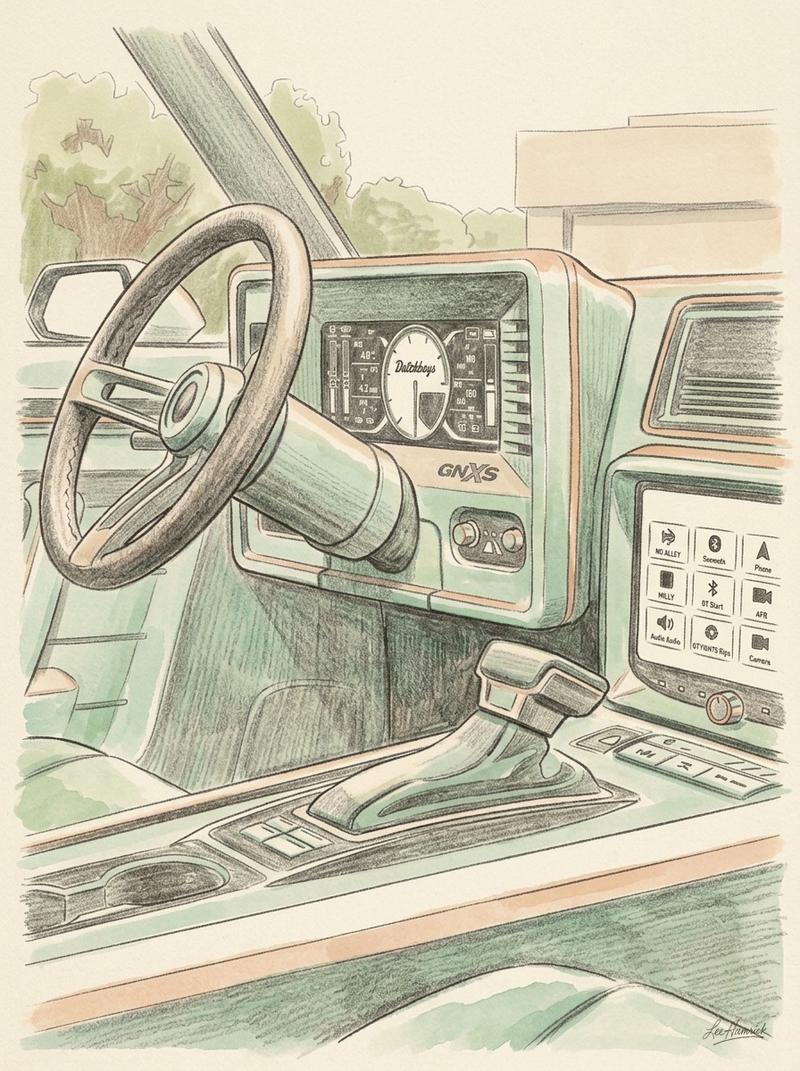
Inside, the interior was redesigned using 3D design tools and rebuilt from scratch. The original Grand National interior was fine for 1987. It was a GM product of its era, which is to say functional and not much more. What Dutchboys built in its place treats the cabin as part of the build rather than an afterthought. Modern Holley electronics handle engine management and presumably much of the instrumentation, which means the GNXS is not fighting its own powertrain the way older conversions sometimes do. The technology is there to support the performance, not just to fill a gauge cluster.
What makes this build worth writing about is not the horsepower figure. Plenty of builds have horsepower figures. It is the combination of the source material and the execution. The Grand National carries specific cultural weight in American performance history. It was the underdog, the car that wore black and surprised everyone. Vespi and Dutchboys did not choose a blank canvas. They chose a car that already meant something, and they spent four years and 10,000 hours trying to be worthy of what it meant.
Most builds at this level end up as show cars that get trailered everywhere and never actually driven hard. Whether the GNXS gets driven the way it deserves remains to be seen. But the mechanical foundation, a proper chassis, massive tires, real electronics, suggests that the intent was not just to impress a crowd at a car show. It looks like someone actually thought about what would happen when the throttle went down. On a car making 1,500 horsepower, that kind of thinking is not optional. It is the difference between a build and a machine.
The Grand National has always attracted obsessives. The GNX production run was tiny, the community around these cars is tight, and the mythology around the originals has only grown in the decades since they were new. The GNXS sits at one extreme end of what that obsession looks like when it has no budget ceiling and no timeline pressure. It is excessive, deliberately so, and it is one of the more honest expressions of what it means to take a car seriously.

Written by
Tabitha Corman