Gumby the Hot Rod: Swapping the Body, Z'ing the Frame, and Narrowing a Rear Axle on a 1929 Ford Model A

Follow the build progress on Gumby, a 1929 Ford Model A coupe hot rod built in the classic '70s tradition, from frame mods to a Ford 9-inch rear.
There's a certain kind of hot rod build that doesn't try to reinvent anything. No billet-everything aesthetic, no six-figure fabrication shop invoice, no chasing clout on social media. Just a guy, a 1929 Ford Model A coupe, a modified chassis, and the kind of honest, roll-up-your-sleeves work that made this hobby worth caring about in the first place. That's Gumby. And watching this thing come together in the updated '70s-rod tradition is genuinely satisfying in a way that a lot of modern builds just aren't.
The name is perfect, by the way. Green, a little goofy-looking in that loveable way, and flexible enough to absorb whatever the build throws at it. More on that in a second.
So where are we in the build? The big milestone this round is getting the Model A coupe body dropped onto the modified chassis. If you've never watched a body swap happen on a car this old, it's one of those shop moments that crystallizes what a hot rod actually is: a body that was never meant to sit this way, on a frame that was never meant to carry it, married together through a combination of fabrication skill and stubborn optimism. When it goes right, it looks inevitable. Getting there is anything but.
Before the body went on, though, two major pieces of chassis work had to happen, and they're worth understanding if you're even casually thinking about doing something like this yourself.
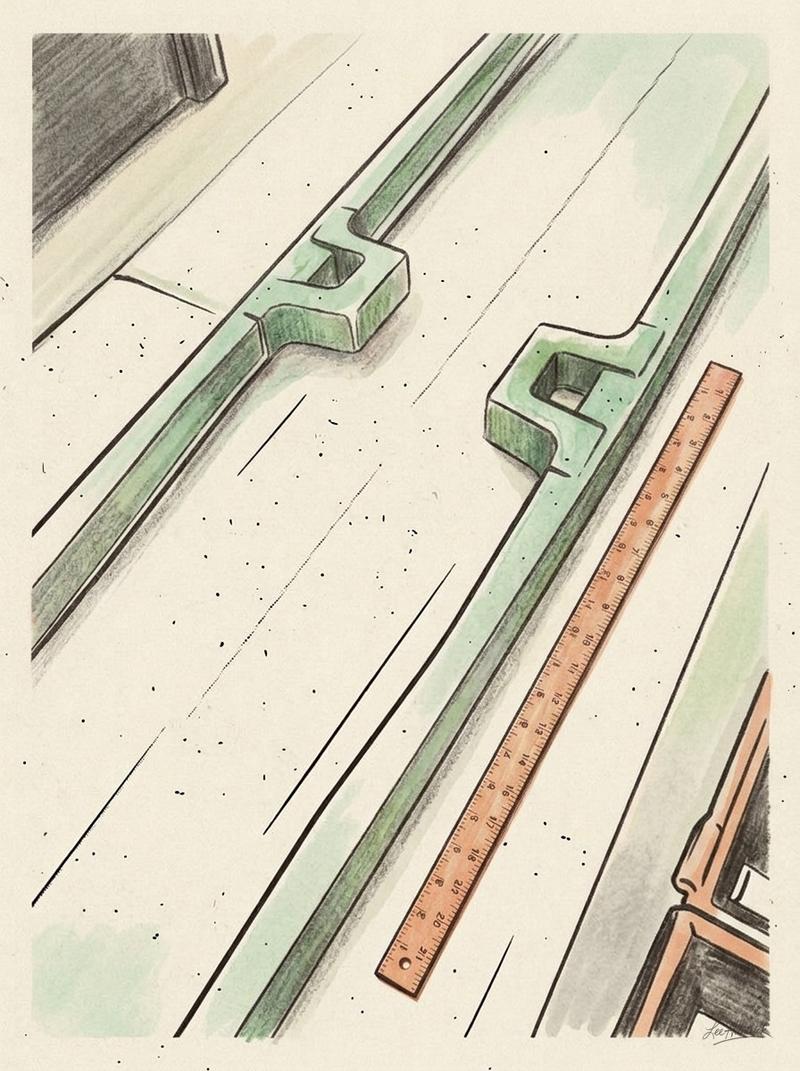
First: Z'ing the frame. If you're new to the term, Z'ing (or Z-ing) refers to stepping the frame rails down at a specific point so the body can sit lower over the axle without cutting into the floor or the firewall. You're essentially creating a Z-shaped offset in the rail, which drops the body's ride height without just slamming it on bump stops and calling it a day. Done right, it's structural, clean, and gives you real low stance without sacrificing geometry. Done wrong, it's a stress concentration point waiting to crack. The craftsmanship here matters, and from what this build is showing, the work is tidy.
Second, and this one is genuinely interesting even if you've built a few rods: narrowing the rear axle housing. This comes up constantly on hot rod and custom builds because a period-correct wide rear axle housing sticks out past where you want your tires, especially when you're running a body that was designed around skinny bias-ply tires and a completely different wheel package. Narrowing the housing means cutting it down symmetrically, re-welding, and making sure everything is still square and true. It's not a casual afternoon job. Get it wrong and your rear wheels aren't parallel, your handling is weird, and your tires are wearing unevenly before you even get to enjoy the thing.
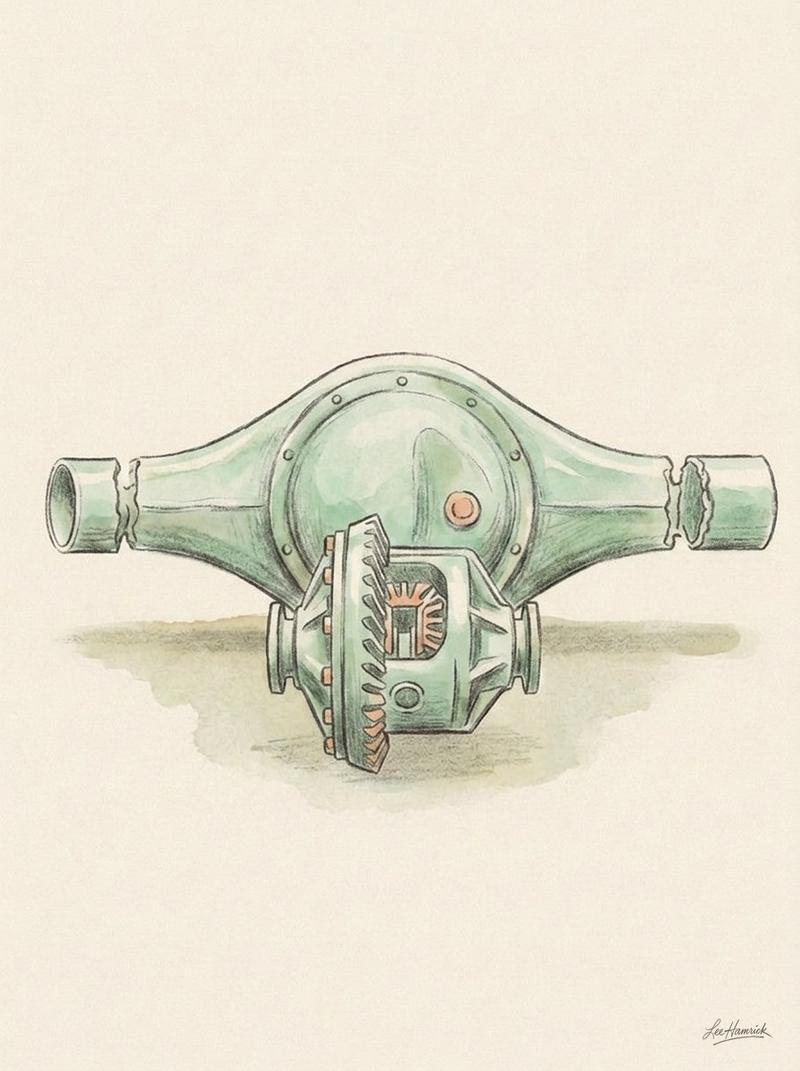
The rear end going into Gumby is a Ford 9-inch, which is about as close to a consensus correct answer as this hobby produces. The 9-inch has been the default choice for hot rod and performance builds for decades because the third member (that's the carrier assembly, the chunk that holds the ring and pinion) pulls out from the front of the housing without disturbing the rest of the drivetrain. Swapping ratios, rebuilding the carrier, inspecting the gears: all of it happens on the bench, not on your back under the car. For a build like this, Speedway Motors offers a Ford 9-inch third member you can spec out to your exact needs, which is the kind of parts support that keeps a project like Gumby from stalling out in the middle.
Now, the '70s-style rod thing is worth unpacking a little because I don't think everybody means the same thing when they say it. What this build seems to be going for isn't a museum-piece period-correct recreation of a specific 1972 car. It's more the philosophy of that era: simple, low, functional, not trying to be a show car first. Chopped top if it earns it, classic proportions respected, chrome where it makes sense, nothing gratuitous. The Model A coupe is a great canvas for this because the body has such strong bones. The greenhouse, the hood, the way the fenders flow, it's all right there. You're not fighting the car to make it look good. You're just getting out of its way.
What I keep coming back to watching this project move forward is how tactile the whole process is. Z'ing a frame rail is not a CAD exercise. Narrowing a rear axle housing is not a software simulation. You're cutting metal, measuring twice (minimum), welding, grinding, checking, and doing it again if it's not right. There's no substitute for that. It's exactly the kind of work that makes you understand a car from the inside out, which is why people who build their own hot rods tend to have a completely different relationship with the finished product than people who just buy one.
Gumby is nowhere near done, and that's kind of the point. Getting the body on the chassis is a major psychological milestone in any build because suddenly you can see what the thing is going to be. The proportions lock in. The problems you didn't know you had become obvious. And if you've done your frame work right, the body sits there and it just looks right in a way that's hard to explain but completely obvious when you see it.
More to come on this one. The details are going to matter.
Written by
Kathlien "Kat" Mangino