BMW's M Performance Track Kit Turns the M2 Into a Nürburgring Weapon

BMW's M Performance Track Kit for the M2 adds aero and trick dampers, cutting 13+ seconds at the Nürburgring and beating both the M3 CS and M2 CS.
The track pack concept has been quietly maturing for a while now. Chevrolet sells the ZTK package, Porsche has the Manthey kits, and now BMW has an M Performance Track Kit for the M2. The premise is familiar: factory-sanctioned hardware that takes a car you can drive to work and makes it meaningfully faster on a circuit. The question is always whether the execution is genuine or whether you're paying for a wing and a badge.
In this case, the lap times are hard to argue with. A stock M2 ran the Nürburgring Nordschleife in 7:38.706. The Track Kit car ran a 7:25.068. That's 13.63 seconds, which on a track that rewards both raw power and mechanical balance equally, is not a small number. For context, that puts it 3.692 seconds ahead of the limited-run M3 CS and about half a second ahead of the M2 CS, which is a more potent limited-production car in its own right. The Nordschleife has enough long straights that the extra aerodynamic drag from the kit should, in theory, cost time. The fact that it didn't tells you something about how well the downforce is being used in the corners.
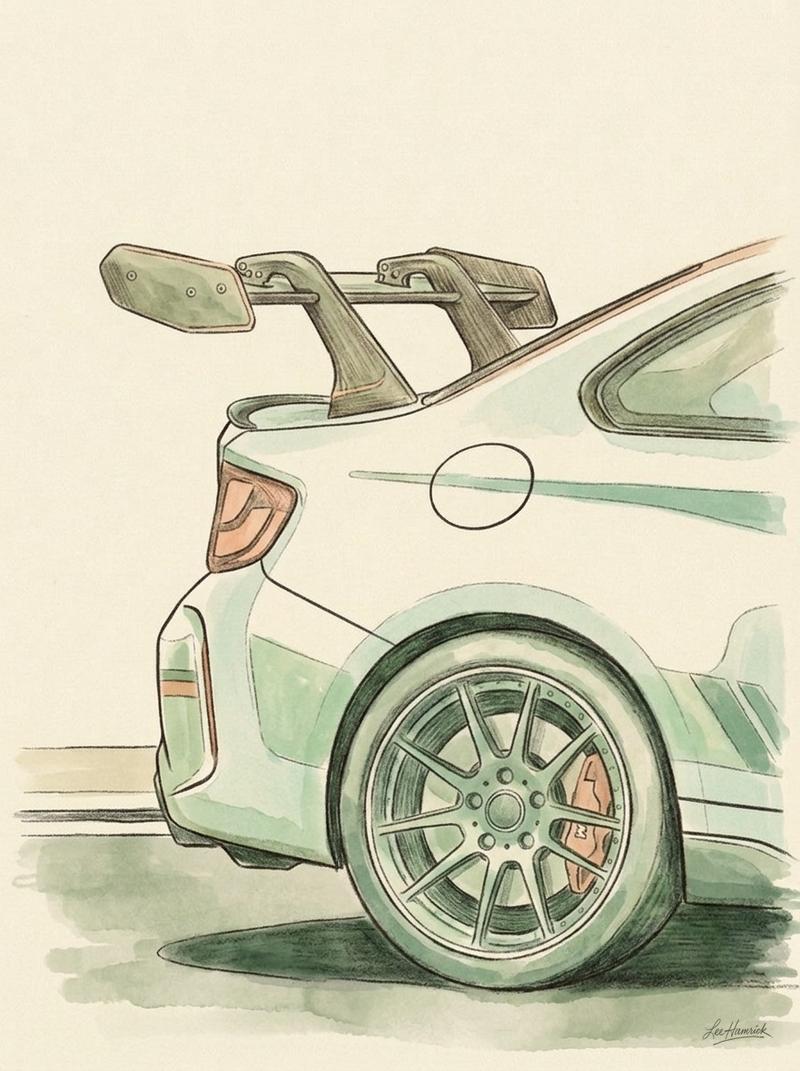
The aero package is straightforward in concept but reasonably serious in execution. Up front there's an adjustable carbon fiber splitter, wheel arch diffusers, and a pair of dive planes. The dive planes aren't road-legal in all jurisdictions when installed, but BMW made them removable, which is a sensible concession rather than a compromise. Out back, a manually adjustable swan-neck rear wing keeps the underside of the wing element unobstructed, which matters for aerodynamic efficiency in ways that a top-mounted bracket setup doesn't. BMW claims around 440 pounds of downforce at 124 mph. That's a real number doing real work, not a styling exercise.
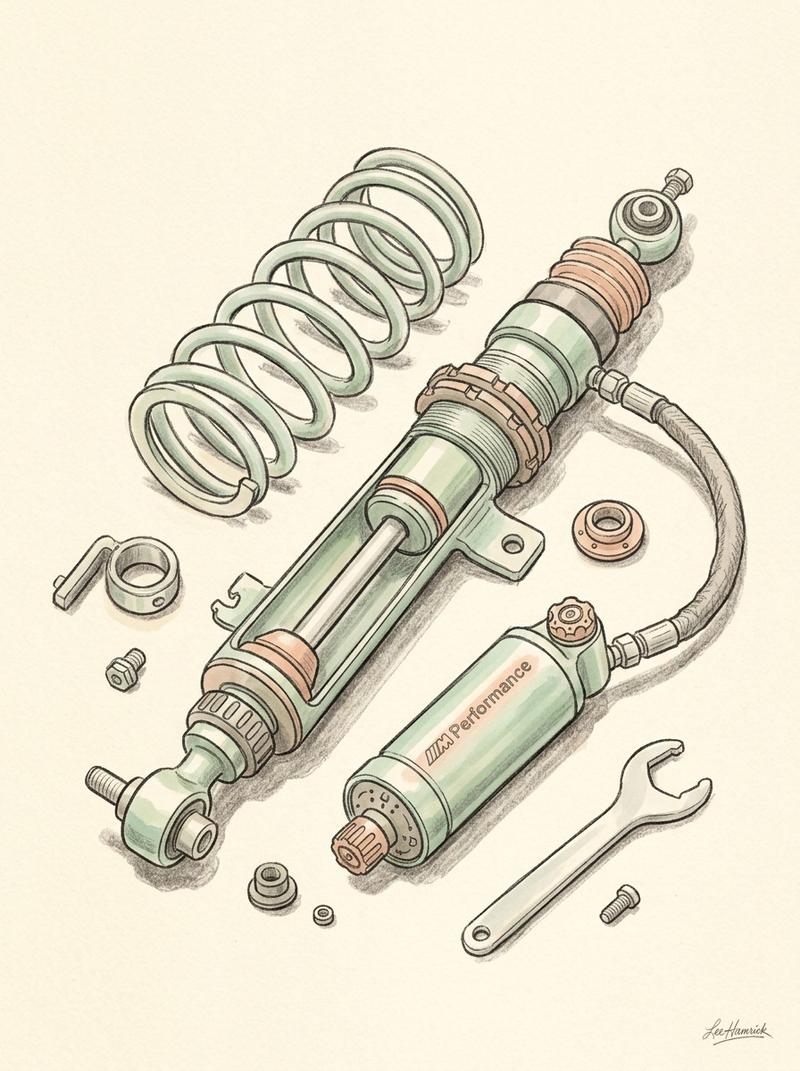
The more interesting piece of the kit, at least from an engineering standpoint, is the dampers. They use a through-rod design, meaning the damper rod runs all the way through the shock body rather than terminating at the piston. That creates equal displacement on both sides of the piston, which eliminates cavitation, the condition where gas and fluid separate under hard use and cause the damper to lose consistent response. For a track application where you're asking the suspension to work hard lap after lap, that's a genuine functional improvement, not a selling point dressed up as one.
They're also four-way adjustable, with independent high-speed and low-speed settings for both compression and rebound. That distinction matters in practice. On a track with aggressive curbs, you might want softer high-speed damping so the car doesn't get upset crossing an apex curb, while keeping the low-speed settings firm enough to control brake dive and body roll. The front damper top mounts allow camber adjustment, and the threaded bodies enable corner weighting. This is the kind of setup that rewards actually learning how to use it. You do give up the M2's standard adaptive dampers, but the intended buyer for this kit has probably already made peace with that tradeoff.
The price is where things get uncomfortable. BMW hasn't released a US figure yet, but the German price is 23,500 euros, which converts to roughly $26,884 at current rates, before installation. Dropping that much into a $70,000 car is a significant ask. But the comparison point matters. A properly specified set of aftermarket four-way adjustable coilovers can run well into five figures on their own, and they won't carry a factory warranty or road-legal certification. BMW's kit does both, at least in Europe. If a similar warranty accommodation carries over to US buyers, that changes the calculus considerably. Aftermarket suspension that voids your powertrain coverage is a different financial proposition than one that doesn't.
There's a broader pattern worth noting here. Factory track packages used to mean a slightly stiffer spring rate and a sticker on the door. What BMW is offering with this kit, alongside what Porsche has been doing through Manthey and what Chevrolet built into the ZTK, is something with actual engineering behind it. Through-rod dampers with four-way adjustability are not showroom theater. A wing that generates 440 pounds of downforce is not decorative. These are parts-counter solutions to problems that used to require going outside the factory ecosystem entirely, with all the warranty and fitment complications that came with it.
For someone running HPDEs or track days with an M2, this kit represents a clear line between what the car is from the factory and what it could be with purpose-built hardware installed correctly from the start. Whether $27,000 is the right price for that line is a personal calculation. But the performance case, at least based on what the Nordschleife data shows, appears to be legitimate.