They Totaled This 718 GT4, So I'm Building the GT4 RS That Porsche Won't Make With a 6-Speed Manual

A totaled 718 GT4 becomes the starting point for a manual-swapped GT4 RS build. Here's why this is the ultimate driver's car project and how it comes together.
Porsche built the 718 GT4 RS with a 9000 RPM flat-six pulled straight out of the 911 GT3. They gave it aero that generates real downforce at real speeds. They gave it the most communicative chassis in the current Cayman lineup. And then they bolted it to a PDK gearbox and said that was it. No manual. No clutch pedal. Take it or leave it.
Most people took it. Not this build.
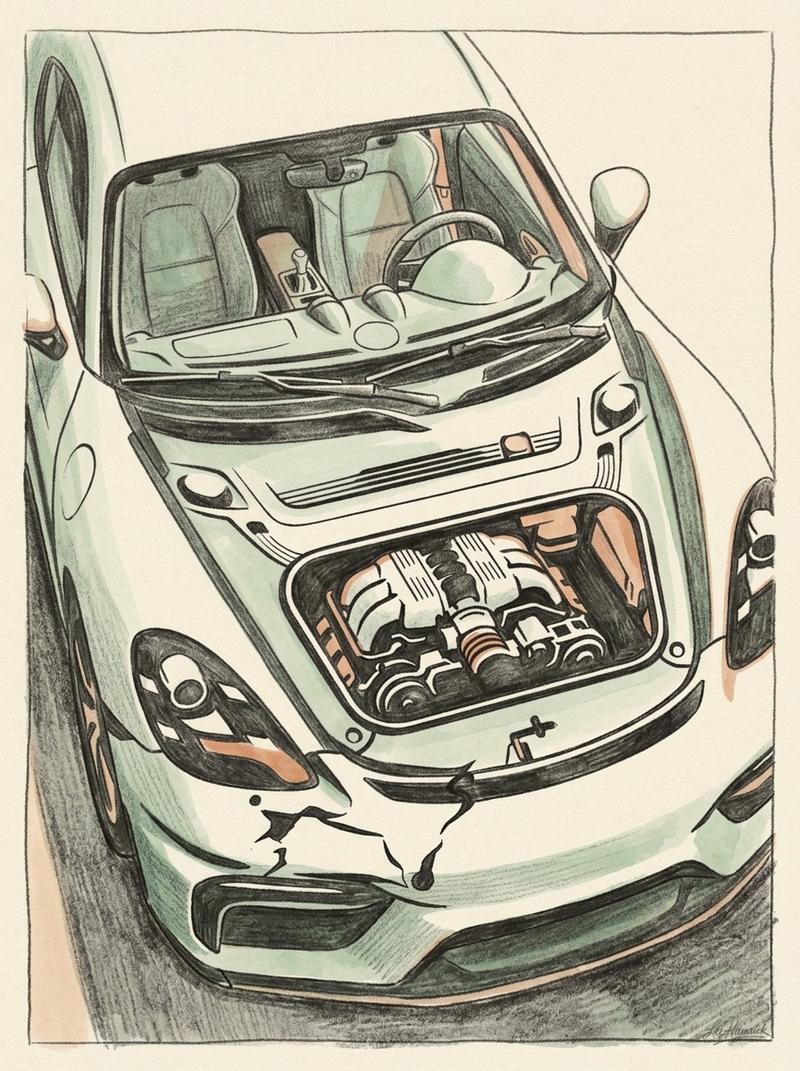
The premise here is simple and completely unhinged: start with a totaled 718 GT4 (the non-RS car, which DID come with a 6-speed manual), source the GT4 RS powertrain and aero components, and mate all of it together into something Porsche decided the market didn't deserve. A high-revving, naturally aspirated flat-six GT4 RS with a proper manual gearbox.
I have opinions about this. Strong ones. And the engineering case for why this is worth doing is not even close.
Why a Totaled 718 GT4 Is the Right Starting Point
The 718 GT4 and the 718 GT4 RS share the same basic platform. Same mid-engine layout, same fundamental chassis architecture, same wheelbase. The GT4 used a 4.0-liter naturally aspirated flat-six producing 414 horsepower. The GT4 RS took that same basic engine family and pushed it to 493 horsepower by borrowing the intake system directly from the 911 GT3, letting it spin to 9000 RPM, and turning it into one of the most exciting naturally aspirated engines currently in production anywhere on earth.
A totaled GT4 on a salvage title gives you the manual-equipped donor car at a fraction of clean-title cost. Insurance totals are often structural damage that looks catastrophic but leaves the drivetrain, chassis tub, and suspension geometry completely usable. That's your foundation. You are not starting from a rusty hulk. You are starting from a precision German sports car that had a bad day.
Here's what the numbers look like in terms of why this matters:
- A clean 2021-2023 718 GT4 in the US market lists used somewhere in the mid-$90k to low-$100k range depending on mileage and options.
- A salvage-title GT4 with repairable damage can come in dramatically lower, sometimes less than half that, through auction.
- The 718 GT4 RS MSRP when new was $143,050 before options, and they sold out immediately. Finding one on the used market at anything resembling reasonable money is a fantasy.
So you are building a car that doesn't exist at a price point that makes it the most interesting project in a long time. The engineering challenge is real. The payoff is a manual GT4 RS that Porsche literally refused to make.
The Engine Swap: What You Are Actually Dealing With
The GT4 RS uses the 4.0-liter naturally aspirated flat-six from the 911 GT3. Porsche calls it the 9000 RPM redline out loud because they know exactly what they're doing. The power difference between the standard GT4's 414 horsepower and the GT4 RS's 493 horsepower is not subtle. That's a 79-horsepower gap on a car that weighs around 3,300 pounds. The RS also gets individual throttle bodies sourced from the GT3 intake system, which is most of why the RS sounds like it does and revs like it does.
The manual transmission from the standard GT4 is a 6-speed unit. It is not the PDK. Porsche chose PDK for the GT4 RS specifically because PDK is faster at the track by a measurable margin at most lap times. That is a legitimate engineering decision. It is also the wrong decision for anyone who buys a sports car to drive it rather than to post lap times.
The mechanical challenge in this build is making the GT4 RS engine live happily with the GT4 manual transmission. These cars share enough architecture that this is a real project, not a theoretical one. The bellhousing, the ECU communication, the throttle-by-wire integration with the PDK versus manual logic, all of it requires proper engineering work. This is not a bolt-on swap. But it is also not an impossible one, and the people doing this kind of work are already out there.
The Aero Argument Is Bigger Than People Realize
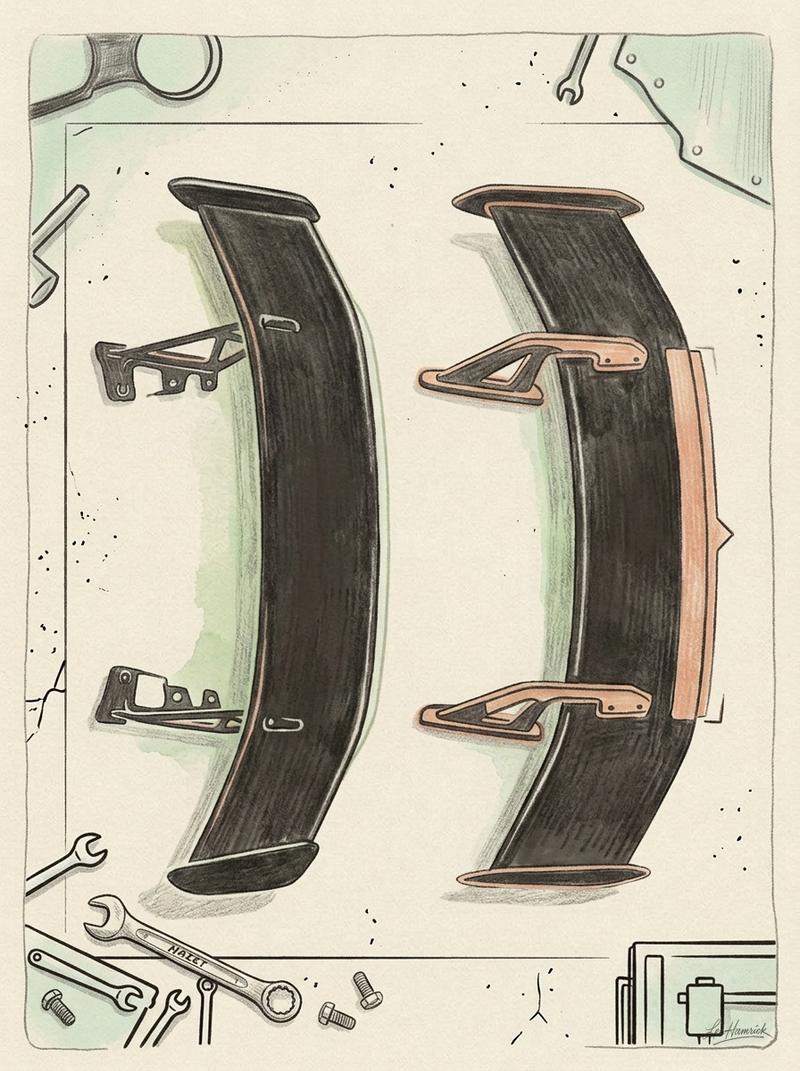
The GT4 RS aero package is not cosmetic. The rear wing, the front splitter, the side sills, the dive planes up front: Porsche claims real downforce numbers from this package. On a mid-engine car with 493 horsepower, downforce is not a styling exercise. It is a functional requirement above certain speeds. Getting the GT4 RS bodywork onto a GT4 donor is the kind of fitment job that requires sourcing individual pieces, checking panel gaps, and doing the work carefully. But the parts exist. Porsche made them. And they bolt onto the same basic car.
The standard GT4 already has a rear wing that generates downforce. The RS package adds to that meaningfully. If you are going to do this build, skipping the aero to save money would be the dumbest possible cost cut. You are building a track-capable driver's car. The aero is not decoration.
The GT4 RS PDK Argument, Addressed Directly
Yes, PDK is faster. I know. I ran the numbers on PDK versus manual lap time comparisons on real circuits and the data is not a coin flip. PDK wins, consistently, in the hands of most drivers, because it shifts faster than any human can and because it manages torque delivery at corner exit with a precision that a clutch foot cannot replicate under pressure.
But faster at a track day is not the same thing as better as a car. The GT4 RS exists as a halo driver's car. It exists because some people care about the connection between their inputs and the car's response. Rowing through a 6-speed in a 493-horsepower mid-engine sports car on a canyon road or an HPDE day is a categorically different experience than paddling a PDK. One of them tells you what the car is doing at every moment. The other one optimizes outputs. Porsche made the GT4 RS for track performance. This build makes it for drivers. Those are different goals.
People don't understand what was lost when Porsche dropped the manual from the GT4 RS. The Cayman GT4 with the manual was already one of the best driver's cars in production. Adding 79 horsepower and the RS aero to that car while keeping the stick shift would have been an all-time great. Porsche chose not to build it. This project is correcting that choice.
What This Build Actually Costs and What It Gets You
Run the honest math:
- Salvage-title 718 GT4 with repairable damage: starting point acquisition, varies by auction but potentially well under $50k in the right circumstance.
- GT4 RS engine sourcing, whether from a wrecked RS or a rebuilt unit: significant, but the engine itself is the whole point.
- GT4 RS aero and bodywork: individual pieces available through the Porsche parts network or salvage sourcing.
- Labor for the integration, ECU tuning, and mechanical fitment: this is where a real shop relationship matters.
Total cost will not be cheap. This is not a budget build. But compared to buying a GT4 RS on the market, and compared to what you end up with, you are not just saving money. You are building the car that should exist and doesn't.
A manual GT4 RS is, full stop, the correct version of the GT4 RS. The lap times might be a few tenths slower than the PDK car. I ran the numbers and I genuinely do not care. You will be driving a 493-horsepower, 9000 RPM, mid-engine Porsche with a clutch pedal and a proper shifter, wearing real downforce aero, and you will have built it yourself from a car that someone else gave up on. That is not a compromise. That is the whole point.

Written by
Ben Eckels