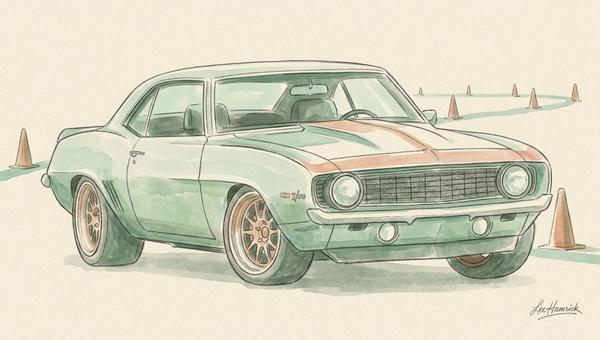
Boreham Motorworks Ford Escort Mk1 RS: When Ford Blesses a Restomod

Boreham's Ford-approved Escort Mk1 restomod pairs a naturally aspirated 325-hp engine with mechanical purity and modern reliability.
Restomods have become a cottage industry. Every weekend warrior with a welder and a dream is bolting a crate engine into a classic and calling it a day. The difference between those and the Boreham Motorworks Ford Escort Mk1 RS is simple: Ford said yes.
That official blessing changes the entire proposition. This isn't a builder taking creative liberties with someone else's design; it's the original manufacturer signing off on the reinvention. For Boreham, a British firm with genuine pedigree rebuilding and tuning Fords since the 1980s, that nod from the blue oval carries weight. It means the engine, the manual transmission, the suspension geometry, and every other modification was engineered with the nameplate's DNA firmly in mind.
The Escort Mk1 RS deserves that respect. It's not just a classic; it's a rally weapon with an actual record. The original RS2000 dominated British stages, and its lightweight chassis and mechanical simplicity gave it an almost supernatural ability to dance through mud and gravel. The Mk1 isn't precious or overthought. It's a working tool that happened to be brilliant to drive.
Boreham's approach understands that. Rather than shoehorn in the biggest engine they could find, they've engineered a package that respects the car's weight distribution and original intent. That matters. A lightweight Mk1 isn't looking for four-figure horsepower; it's looking for balance and response.
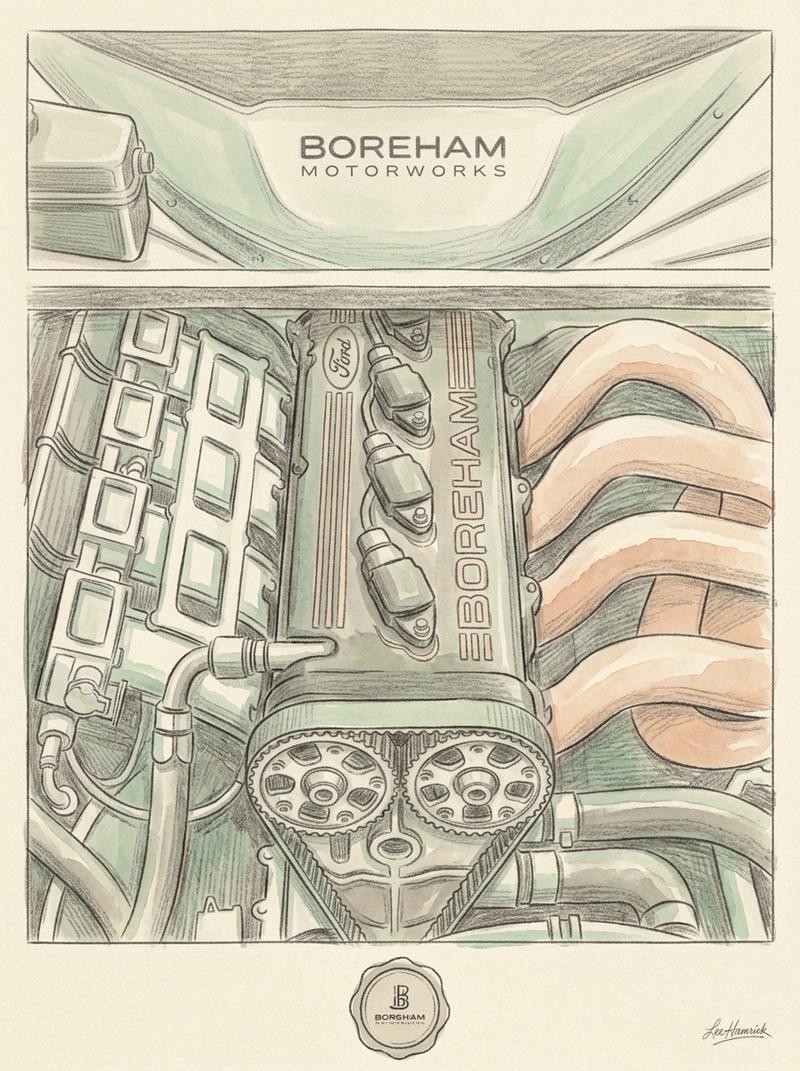
Sure, there's a base twin-cam 1.8-liter engine with around 180 horsepower and enough pep to put a smile on your face, but who's going to order that when Boreham is offering a 325-hp alternative? Boreham calls it the Ten-K, earning its name because the 2.1-liter four-cylinder will scream its way up to a 10,000-rpm redline. With lightweight internals, individual throttle bodies, and gas flow technology derived from studying F1 engines, the whole contraption tips the scales under 190 pounds. The Ten-K pairs with a unique five-speed manual transmission with a dog-leg first-gear layout that sends power to the rear wheels through a 5.125 final drive ratio.
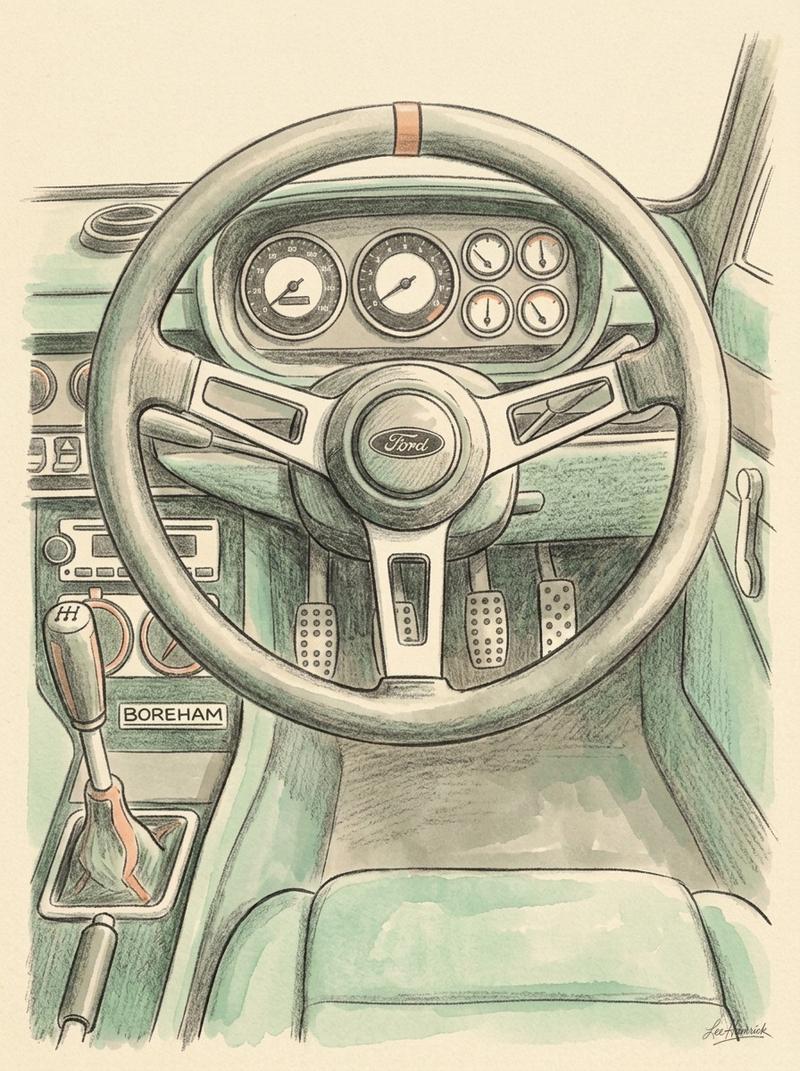
The engine is naturally aspirated and efficient enough to live in the real world but visceral enough to remind you why people fell in love with these cars. The five-speed manual isn't there for show either. In a field where PDK dual-clutches and nine-speed automatics are the default, a three-pedal setup on a 50-year-old design feels like a statement.
That statement matters more than it should. The Escort Mk1 RS was born in an era when engineering was about mechanical sympathy and driver feedback. Power steering was hydraulic or didn't exist. Turbochargers were rare and ornery. Suspension tuning meant swapping springs and dampers and feeling the difference on the road. The restomod doesn't romanticize those constraints; it doesn't keep a car deliberately analog as some kind of purity test. Instead, it threads the needle: modern reliability and usable power, traditional engagement and weight.
The price tag pushes into supercar territory, and that's where the logic gets harder to defend. You're paying for exclusivity, engineering continuity, and Ford's blessing. Those things have value, but they're not the same as value-for-money. A well-sorted classic Escort Mk1 with a proper drivetrain refresh will run circles around traffic for a fraction of the cost. An old rally car has soul that a restomod, no matter how well executed, will always be chasing.
What Boreham has done, though, is remove the compromise. You get the mechanical feeling and the lightweight reflexes of the original without the unreliability, the rust, or the five-point harnesses and helmet requirement. The car is track-capable on day one and garage-safe every day after. For someone who wants to drive a genuine rally icon without building a restoration project in their spare time, that's a real offering.
The real question isn't whether this restomod is justified. It's whether you believe the original design is worth preserving in the first place. If the Escort Mk1 RS is just a curiosity, a piece of automotive history to park and admire, then spending supercar money on a reimagined version is hard to rationalize. But if you think that chassis, that steering feel, and that fundamental rightness deserve to be experienced by drivers who can appreciate them, then Boreham's project makes sense.
Ford clearly believes that. And when the brand that engineered the original gives the thumbs up to a restomod, it's not about ego or nostalgia. It's recognition that some designs don't just age; they wait. The Escort Mk1 RS has been waiting 50 years for an engine, a gearbox, and a chassis that could finally unlock what it always wanted to be. Boreham figured it out. Ford saw it. That's worth paying attention to.

Written by
Christian Kiesz