The Corvair GM Should Have Built

A 25-year restomod 1966 Chevy Corvair named 'Just For Kicks' hides a big-block surprise in the trunk. This is the Corvair GM never had the nerve to build.
The 1966 Chevy Corvair is one of the great what-ifs in American automotive history. GM had a rear-engined, air-cooled compact with genuinely European bones, a suspension that could embarrass the Blue Oval's best at the time, and a styling package that still looks clean more than half a century later. Then the company lost its nerve, let Ralph Nader turn the early swing-axle cars into a political story, and quietly killed the whole program by 1969. What could have been a legitimate sports car became a footnote.
That backstory makes a build like the one spotted at Cruise Above the Clouds in Woodland Park, Colorado all the more interesting. The car is a 1966 Corvair, and whoever built it spent twenty-five years doing it right. The name painted on it is "Just For Kicks," which sounds casual until you open the trunk and see what's hiding in there.
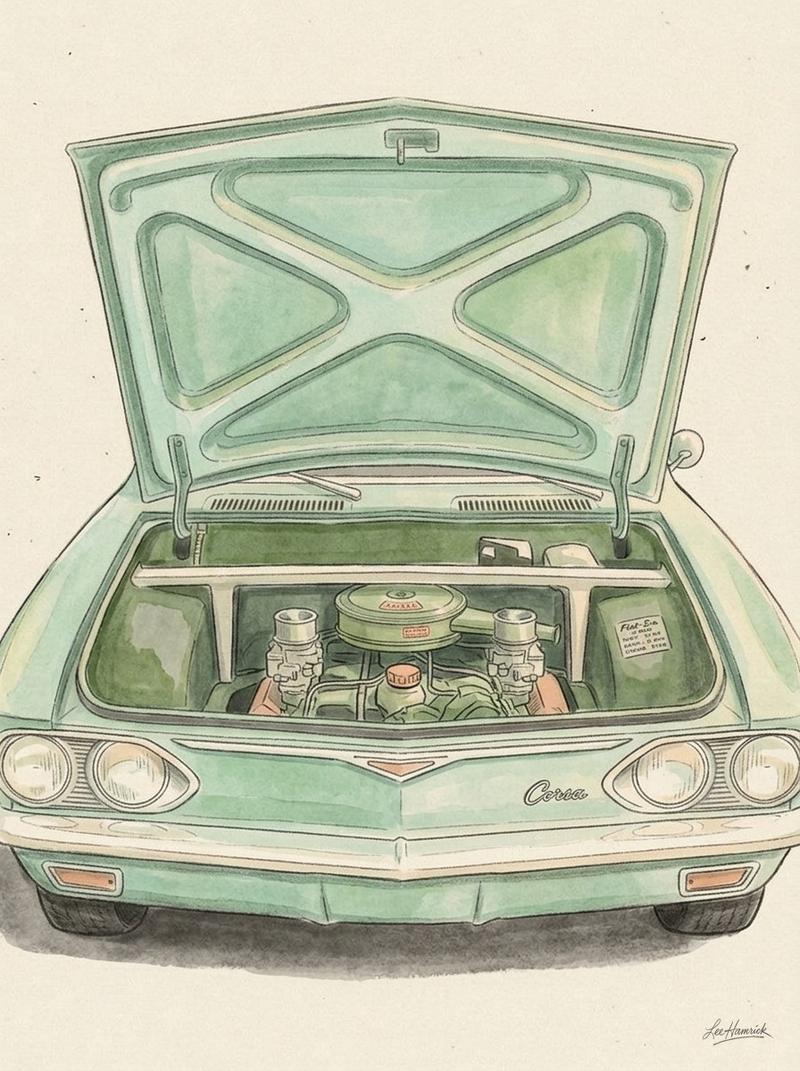
The 1966 model year is the right place to start if you're going to build a Corvair. By then GM had sorted the rear suspension into a fully independent setup, cleaning up the handling that had given Nader his ammunition in the first place. The body is the second-generation shape, longer and lower than the original, with a roofline that still looks like it belongs on a European grand tourer rather than a Chevy dealership in Wichita. The proportions are genuinely good. If you showed the silhouette to someone who didn't know American cars, they might guess Italian.
So what's in the trunk? The Corvair's rear-engined layout means the trunk is up front, which is where the surprise lives on "Just For Kicks." Twenty-five years is a long time to spend on a single project, and that kind of commitment usually means the builder was chasing something specific, not just refreshing stock parts. A build like this earns its name by putting something unexpected where nobody expects to find it, and part of what makes Corvair restomods compelling is exactly that layout inversion: the engine is in the back, so the front end is open real estate.
The Corvair restomod community is small but serious. These aren't trailer queens built for show points. The people building them tend to understand that the platform has structural limits and real strengths, and they work with both. The flat-six in stock trim was never a powerhouse, but the rear-weight bias and the independent suspension mean a sorted example handles with a balance that a lot of more powerful American cars from the same era couldn't match. The challenge with any Corvair build is deciding whether you're trying to amplify what was already good or replace what wasn't.
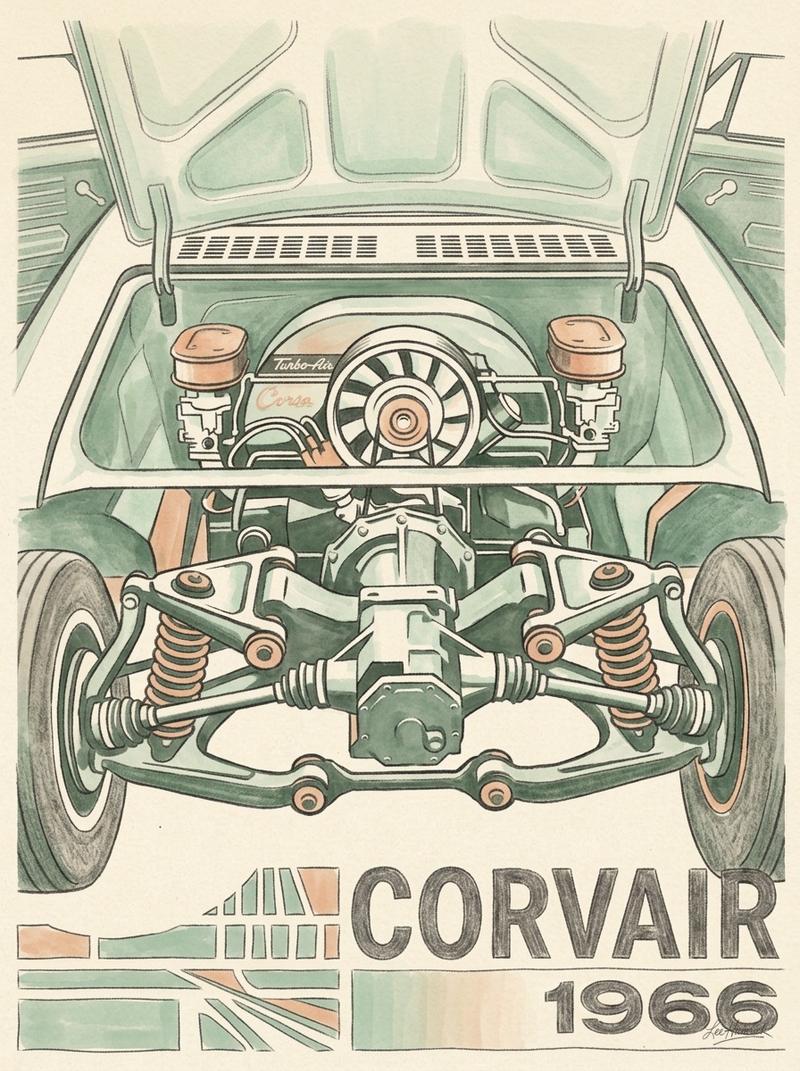
Twenty-five years in the making means this wasn't a weekend shop project or a quick restomod flip. It means someone bought a car, probably in rough shape, and spent the better part of three decades sourcing parts, solving problems, and making decisions about what the car should become. That process tends to produce something more coherent than a fast build. The choices accumulate into a point of view.
What Cruise Above the Clouds in Woodland Park offers as a backdrop matters too. Colorado's Front Range has a genuine car culture that doesn't get the coverage of the coasts, and an event like that draws owners who actually drive their cars up mountain roads, not people who truck them in for display. A Corvair at altitude, with an air-cooled engine sorting through its own thermal management while the road pitches upward, is a very different experience than the same car on a flat show lawn in August. The fact that "Just For Kicks" showed up there, rather than at a concours event, says something about what it was built for.
The Corvair story is ultimately about a company that built something genuinely interesting and then walked away from it rather than defend and develop it. The 1965 and 1966 cars especially, the Corsa trims with the turbocharged flat-six and the four-carb options, were real driver's machines by the standards of their moment. A well-sorted one with modern rubber and suspension work will surprise people who expect it to be a novelty. It actually goes around corners.
What "Just For Kicks" represents, whatever is in that trunk, is the logical extension of that argument: take the platform GM gave up on, give it the development time the factory never allocated, and find out what it actually could have been. Twenty-five years is more development time than the entire Corvair production run got. That's the car GM should have built, and somebody in Colorado went ahead and built it anyway.

Written by
Christian Kiesz