C6 Z06: An American Icon

The C6 Z06 ran from 2006 to 2013 with a 505-hp LS7, dry-sump oiling, and aluminum chassis built for ALMS homologation. Here is why it still matters.
Few production cars sold for under $70,000 have ever embarrassed exotics costing twice as much at a racetrack. The C6 Z06 is one of them. Built from 2006 to 2013 as the performance flagship of Chevrolet's sixth-generation Corvette lineup, the C6 Z06 combined race-derived engineering with road-car practicality in a package that redefined what American performance could look like, and what it could cost.
The Engine: 7.0 Liters of Serious Intent
The heart of the C6 Z06 is the LS7, a 7.0-liter naturally aspirated V8 producing 505 horsepower and 470 lb-ft of torque. Those numbers were extraordinary for a production car in 2006, particularly one without forced induction. The LS7 revs to 7,000 rpm, which is unusual territory for a pushrod V8 of this displacement, and that high-rev capability is largely down to the internal components.
Titanium connecting rods are one of the LS7's signature features. Connecting rods link the pistons to the crankshaft, and in a high-revving engine, their weight matters enormously. Heavier rods create more reciprocating mass, which limits how quickly the engine can spin up and down. Titanium is approximately 40 to 43 percent lower in density than steel at comparable strength, allowing the LS7 to reach its lofty redline without the internal stresses that would destroy a heavier assembly. The result is an engine that pulls hard all the way to the top of the rev range, not just in the mid-range where most large-displacement V8s live.
Motor Trend's test put the 0-60 mph run at 3.5 seconds.

Built for the Track: Homologation and Racing Heritage
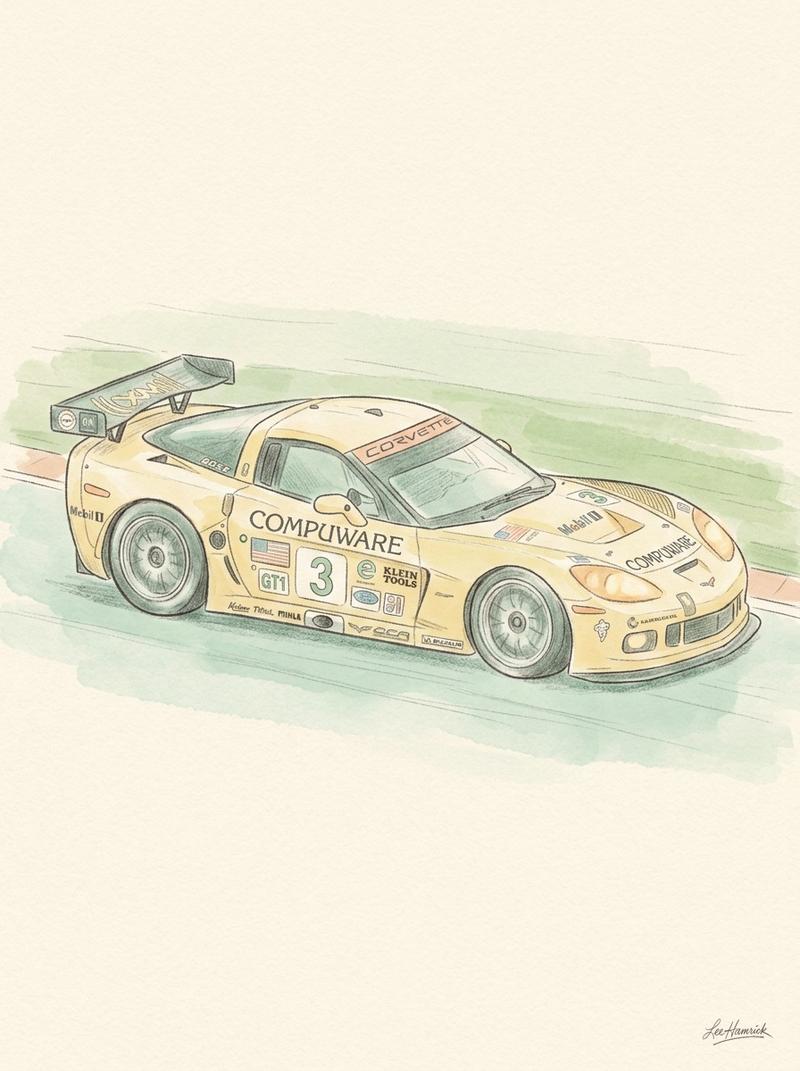
The C6 Z06 was not simply a tuned Corvette. It was a homologation vehicle, built to satisfy the technical regulations of the American Le Mans Series GT1 class. Homologation rules require that a manufacturer produce a minimum number of road-legal examples before a race-spec derivative can compete. By building the Z06 for public sale, Chevrolet created a legal pathway for the Corvette C6.R to race in GT1, arguably the most competitive GT class in North American motorsport at the time.
This lineage is not cosmetic. The production Z06 shares its basic architecture, dry-sump lubrication system, and aluminum frame with the racing version, rather than being a street car with a racing sticker on the door.
Dry-Sump Lubrication: Why It Matters
A conventional wet-sump engine stores oil in a pan beneath the crankshaft. Under hard cornering or braking, that oil sloshes to one side, temporarily uncovering the pickup tube and starving the engine of lubrication. At high RPM, that is a catastrophic failure waiting to happen.
The C6 Z06 uses a dry-sump system, which eliminates this problem entirely. Oil is stored in a separate reservoir and delivered to the engine via a dedicated pump, maintaining consistent oil pressure regardless of lateral or longitudinal g-forces. This is standard equipment on endurance racing cars for good reason, and its presence in a production Corvette underlines how seriously GM approached the Z06's track credentials. The dry-sump setup also allows the LS7 to be mounted lower in the chassis, dropping the center of gravity and improving handling balance.
Aerodynamics and Structure
The C6 Z06's bodywork is functional, not decorative. A front splitter, side skirts, and a rear spoiler work together to manage airflow, reduce lift, and generate downforce at speed. The chassis itself is constructed from an aluminum spaceframe rather than the steel structure used in the base C6 Corvette, saving approximately 136 pounds compared to a standard Corvette coupe. Carbon fiber body panels, hood, front fenders, and roof, trim weight further. The Z06 weighs in at around 3,130 pounds, which is genuinely lean for a car making 505 horsepower.
Suspension is track-tuned, with a wider front and rear track than the base C6, Brembo brakes at all four corners, and available Michelin Pilot Sport Cup tires for those who want maximum grip over comfort.
Interior and Daily Usability
For a car with this much mechanical aggression underneath, the C6 Z06's cabin is surprisingly livable. Seating is snug but supportive, and the standard equipment list includes a touchscreen infotainment system, a premium audio setup, and a suite of driver assistance features that were competitive for the mid-2000s. This dual nature, brutal on track, manageable on a daily commute, was a deliberate part of the Corvette's identity, and the Z06 upheld it.
Key Takeaways
The C6 Z06's 7.0-liter LS7 V8 produces 505 hp and 470 lb-ft of torque naturally aspirated, with a 7,000 rpm redline enabled by titanium connecting rods and careful internal engineering.
It was built as a homologation vehicle for the ALMS GT1 class, meaning its race-spec features, dry-sump oiling, aluminum spaceframe, wide track, are road-car standard equipment, not add-ons.
The dry-sump lubrication system prevents oil starvation under hard cornering and allows a lower engine mounting position, directly improving handling.
At approximately 3,130 pounds with an aluminum chassis and carbon fiber body panels, the Z06 achieves a power-to-weight ratio that competed with Ferrari and Porsche at a fraction of the price.

Written by
Lee Hamrick