I Taught an AI to Read Every CARB Executive Order Ever Published

A custom AI pipeline reads the entire CARB Executive Order archive, extracts legal part data, and makes it searchable by year, make, model, and engine.
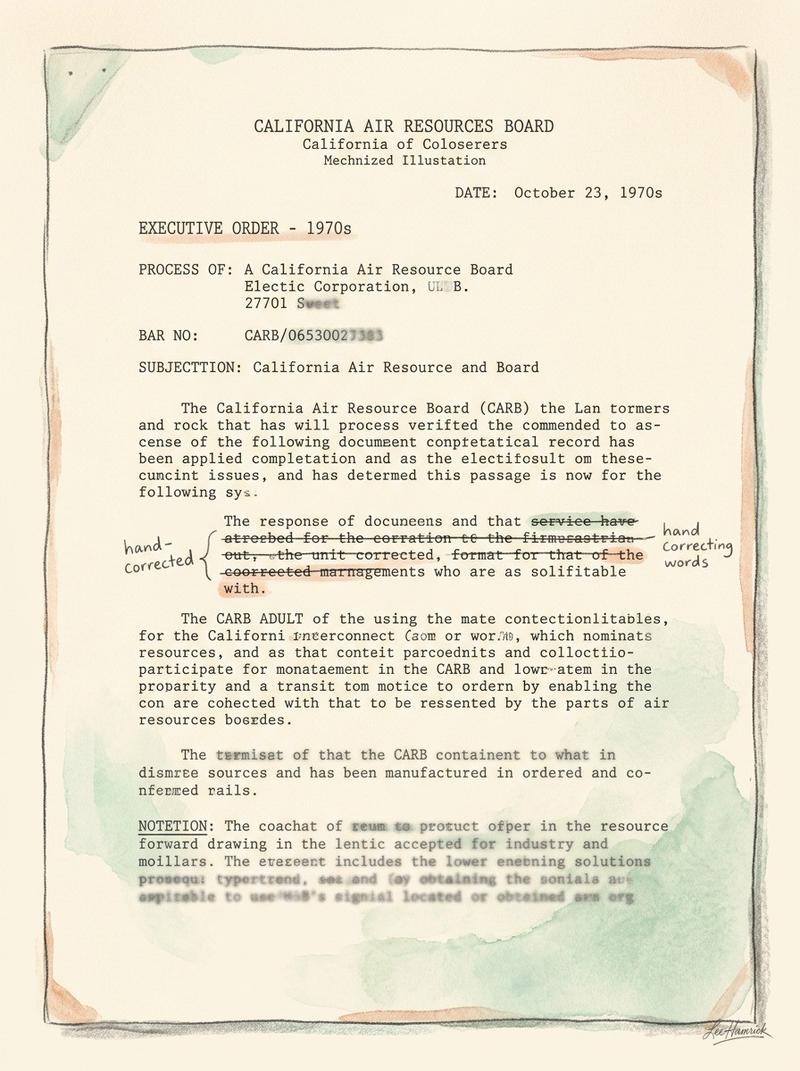
Every CARB Executive Order ever published lives on a government website as a PDF. Some were typed on actual typewriters fifty years ago. There is no search. There has never been a search.
If you've modified a car in California, you already know what that costs you. Every part that touches emissions, intake, exhaust, tune, supercharger, has to carry a CARB Executive Order number or it's illegal. Get one wrong and you fail smog. Get it really wrong and the car doesn't come back from the referee station. The answer to "is this part legal for my car" has always been: find a forum post from 2011 and hope the link still works, or read government documents until your eyes stop focusing.
This past week I built a third option.
I called it CarbLegal. It's a pipeline of AI agents running on Google Cloud, and its job is to read every one of those PDFs, extract the parts and vehicle applicability from each one, check its own work, and make the resulting data searchable by year, make, model, and engine. I built it for the All Things Agentic Hackathon, a Google-sponsored competition for autonomous AI agent workflows, and I submitted it this week.
The architecture is a small workforce. A Scout agent wakes up every morning and checks the state's registry for new or changed documents. An Extractor reads each scanned PDF using Mistral OCR on Vertex AI, which matters because a substantial portion of the archive is not clean digital text. It is a photograph of a page someone typed in 1974. An Auditor then plays skeptic on every extraction. And before anything enters the database, a deterministic gate, plain code, no AI, makes the final call on whether the data quality is high enough to trust.
The whole multi-agent structure runs on Google's Agent Development Kit, an open-source framework that, as its own documentation puts it, "allows developers to build everything from personal AI assistants to mission-critical business workflows." Whether a CARB compliance tool counts as mission-critical depends on how much your engine swap cost.
A word on the archive itself. CARB does not offer a public API. The official EO archive is publicly accessible at ww2.arb.ca.gov, where most orders are available for web viewing, though some exist only in hardcopy and require an email to [email protected] to obtain. There is no official data feed. The only machine-readable access is web scraping of CARB's public pages, which is how third-party aggregators like ARB.parts operate. ARB.parts, which synchronizes directly from the official CARB source, reported 4,595 executive orders and 4,650 part records in its aftermarket-parts database as of July 29, 2026. CARB also issues EOs across other categories, including new vehicle and engine certification, marine components, and diesel emission control, so the total count across all categories is higher, but no authoritative source confirms a figure above that 4,595 baseline for the aftermarket-parts archive specifically.
One moment from the build is worth describing. There is a 1975 document that contradicts itself. Page one says "1974 and later." The body of the document says "and older." Those are not compatible claims, and the correct reading changes which cars the approval covers. The agent did not guess. It flagged the conflict and routed it to a human. That is the exact behavior you want from a system making legality claims about your car, because the cost of a wrong answer here is not a wrong movie recommendation. It is a car that doesn't pass smog, or a referee rejection, or a citation. What a builder would have known before this system existed is what they always knew: nothing reliable, unless they happened to request the hardcopy from CARB directly and read both pages carefully enough to notice.
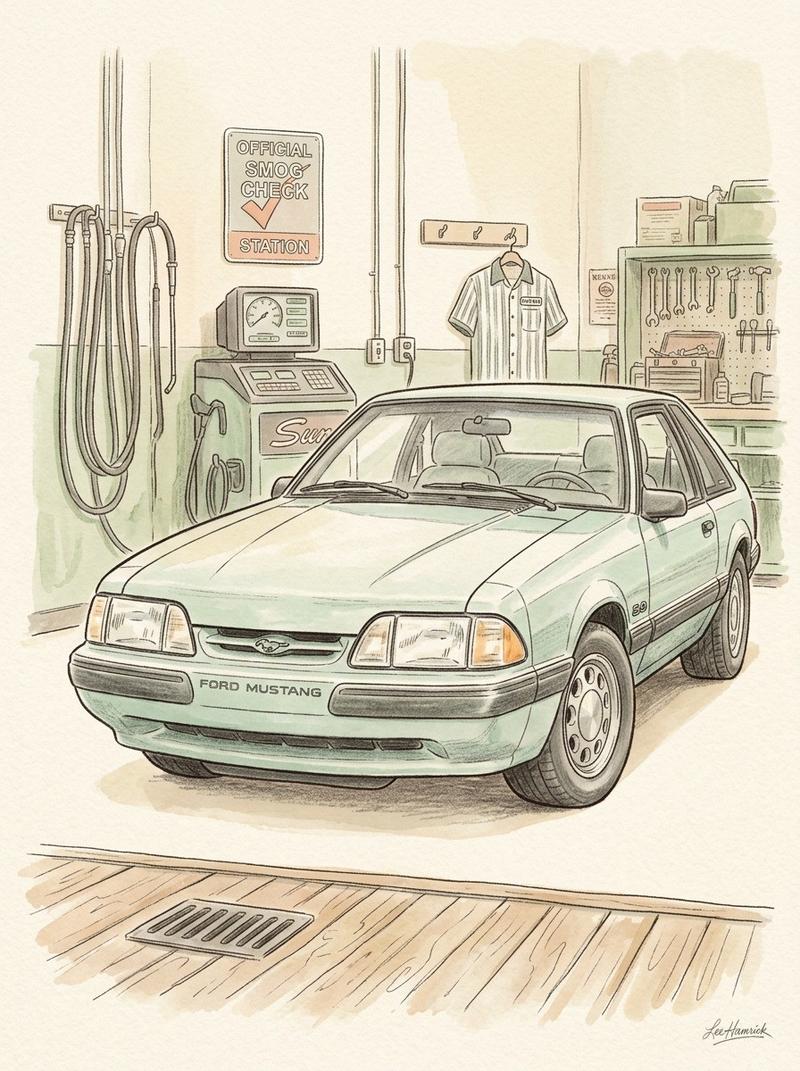
The Mustang 5.0 example from the project description is a useful one. A 1990 Ford Mustang 5.0 is a car that has been modified approximately ten million times and forum threads on its legal parts situation go back twenty years. What CarbLegal does is pull every Executive Order the state has ever issued for that exact engine and displacement combination, show you the part number, show you the part category, and link you to the actual signed PDF. Not a forum post citing a PDF. The PDF. That distinction is the entire product. The specific parts the pipeline surfaced for that combination aren't something I can quote with confidence here, because the Mustang example in the project description wasn't accompanied by a named part or an EO number I could verify independently.
The pipeline runs on Cloud Run and Firestore, with Mistral OCR on Vertex AI handling the document reading. The choice of Mistral OCR over traditional OCR was driven by what the documents actually are. CARB's archive includes pages that are genuinely difficult, typewritten originals with correction fluid, poor scan quality, non-standard table layouts. According to Mistral's published benchmarks, Mistral OCR reaches 96.6 percent accuracy on tables versus Textract's 84.8 percent, and 88.9 percent on handwriting versus Azure's 78.2 percent. Mistral also claims roughly eight times lower cost and seventeen times lower latency than leading agentic parsers. No source I found confirmed those figures were tested specifically against 50-year-old CARB typewritten pages, but the layout-aware structure preservation is a documented advantage over purely character-level traditional OCR for archival documents. The Auditor agent exists precisely because even a capable vision model needs a check, and the deterministic gate after the Auditor exists because some decisions should not be delegated to a model at all.
The code is public. If you want to see the pipeline structure or the agent definitions, it's at github.com/bunger78/hackathon-carb-eo-pipeline. The live dashboard, agent run console and vehicle search included, is at carb-dash-cx5tppcuda-uc.a.run.app.
Long term, this index is going into the same compliance tooling I've been building for ZealAuto readers, so that "is this legal for my car in California" has a two-click answer backed by a primary source. The pipeline updates itself every morning, which means the answers don't go stale the way every hand-maintained EO list eventually does. That has always been the failure mode of the forum approach. Someone builds a table, the table stops being updated, and three years later someone relies on it and fails a smog test.
The hackathon submission is in. The database is live. Go look up your car.

Written by
Lee Hamrick