Features We Laughed At, Then Loved: Why Tech Skeptics Became True Believers

Adaptive cruise control, heated seats, and other car tech features that drivers dismissed as gimmicks but now can't live without.
There's a particular brand of automotive skepticism that lives rent-free in the heads of car enthusiasts. It usually sounds like this: "Why would I need that when I have two hands and a brain?" The feature in question doesn't matter. Could be automatic climate control. Could be brake hold at a red light. Could be a heated steering wheel. The dismissal is reflexive, almost tribal.
Then something changes. You spend a week in heavy freeway traffic on a Wednesday morning. You drive through a brutal Canadian winter. You parallel park in a downtown garage for the hundredth time that month. And suddenly that "gimmick" doesn't feel like a gimmick anymore. It feels like someone understood your actual life.
Adaptive cruise control is the poster child for this redemption arc. The feature shows up on spec sheets all the time now, and plenty of drivers scroll past it without a second thought. Why would you want the car to brake and accelerate itself? Doesn't that make you a worse driver? Isn't the point of driving to, you know, drive?
Then you use it on your daily commute. Morning traffic on the 405. Bumper to bumper, stop and go, stop and go. Your left foot stops hurting after the first week. Your shoulders unknot sometime in week two. And by week three, you realize you've been genuinely relaxed during a drive that used to make you want to scream. That's not laziness talking. That's your nervous system telling you something real changed.

The forward-collision warning that comes bundled with most adaptive cruise systems adds another layer of credibility. Multiple owners report genuinely harrowing moments where the system caught something they missed. A car slamming on brakes three cars ahead. Someone drifting into your lane. The kind of split-second intervention that turns a potential accident into a heart-rate spike and nothing more. You can dismiss that as nanny-state driving all you want, but when it actually saves your car and your life, the ideology starts to feel like a luxury you can't quite afford.
Heated seats and heated steering wheels occupy a different kind of space in the skeptic-to-believer pipeline. These features feel almost comically redundant. Your car already has heat. Turn it up. Problem solved.
Except it doesn't work that way. Anyone who's spent a winter north of the 45th parallel knows the frustration of waiting for cabin heat to spread evenly across the interior. Your fingers are frozen on the steering wheel while the windshield slowly defrosts. Your butt is numb while hot air pours out of the dashboard vents aimed at your chest. It's uncomfortable and inefficient.
A heated seat changes this equation entirely. Targeted warmth means your car is comfortable in seconds instead of minutes. A heated steering wheel is the same deal. These aren't luxury features masquerading as necessities. They're solutions to actual problems that full cabin heating doesn't solve. Ask anyone in Minnesota or Ontario what changed their winter driving experience the most, and the answer usually isn't "turning the heat up higher." It's "finally being warm in the places I actually touch the car."
Tire pressure monitoring systems sit somewhere in the middle of this spectrum. They're not thrilling. No one gets excited about TPMS the way they get excited about a good turbo or a tight transmission. But the feature does exactly what it promises: it tells you when your tires are wrong, sometimes before you'd notice by feel. In a world where underinflated tires waste fuel, wear unevenly, and compromise handling, the early warning system pays for itself in peace of mind alone.
Brake hold and hill-start assist represent a category of features that feels almost comically small until you live with them daily. At a stoplight, brake hold keeps your foot from slipping when you're tired or distracted. On an uphill parking lot, hill-start assist prevents that awful roll-backward moment when you're transitioning from brake to accelerator. These aren't game-changers individually. But they accumulate into a car that feels less annoying to live with across hundreds of mundane interactions.
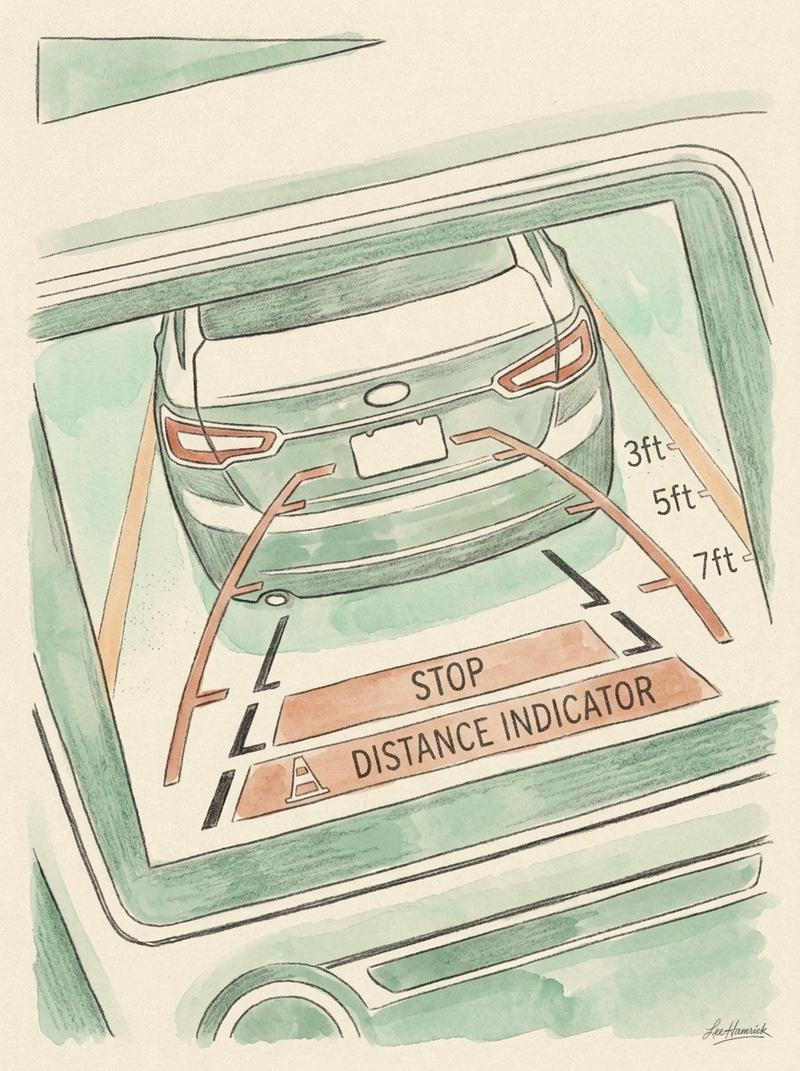
Parking cameras and 360-degree views deserve credit for actually improving visibility instead of just recording what you're backing into. The technology is good enough now that parallel parking in a tight urban spot feels less like gambling. You can see your curb distance. You know where your rear bumper is. The anxiety drops noticeably.
Automatic climate control is where the consensus starts to fracture. Some drivers genuinely love it. Set the temperature to 72 degrees and forget about it. The car figures out fan speed and airflow. No constant fiddling. No overshooting. Pure comfort on autopilot.
Other drivers hate it with the intensity of someone who's been betrayed. They want granular control over where the air goes and how much of it flows. Automatic systems are clumsy. They don't understand that you want airflow from the vents and not the face. They blast cold air when you only want a touch of coolness. For these drivers, giving up manual control feels like surrendering agency.
Both sides are right, which is why automatic climate control is one of the few modern conveniences that actually creates division. Your preference here tells you something true about how you relate to your car. Do you want it to anticipate your comfort, or do you want to manage every detail yourself?
The larger pattern emerging from all this is important for anyone building or speccing a car. The features that matter most aren't always the ones that sound impressive on a spec sheet. Horsepower is exciting. Carbon-ceramic brakes are cool. A digital cockpit is futuristic and interesting. But the features that change how you actually experience driving, day in and day out, are often the quiet ones. The ones that solve small problems so thoroughly that you stop thinking about them.
That's what skeptics get wrong. They assume these features are about driver improvement or assistance. And some of them are. But most of them are about driver life. They're about your back after a four-hour drive. Your hands in December. Your patience in bumper-to-bumper traffic. Your confidence when parking. The features don't replace driving. They make driving feel less like punishment.
Once you experience that shift, once you've felt genuine comfort and convenience delivered by a system you initially dismissed, the skepticism gets harder to maintain. You can still care about driving feel, mechanical sympathy, and the joy of direct control. But you might also grudgingly admit that your modern car is better in ways you didn't expect. That the people designing these systems understood something real about the actual human experience of owning and driving cars.
And that's the feature nobody predicted would work out.

Written by
Tabitha Corman