Jonathan Diuguid's Detroit Weekend: Running IMSA and IndyCar From the Same War Room
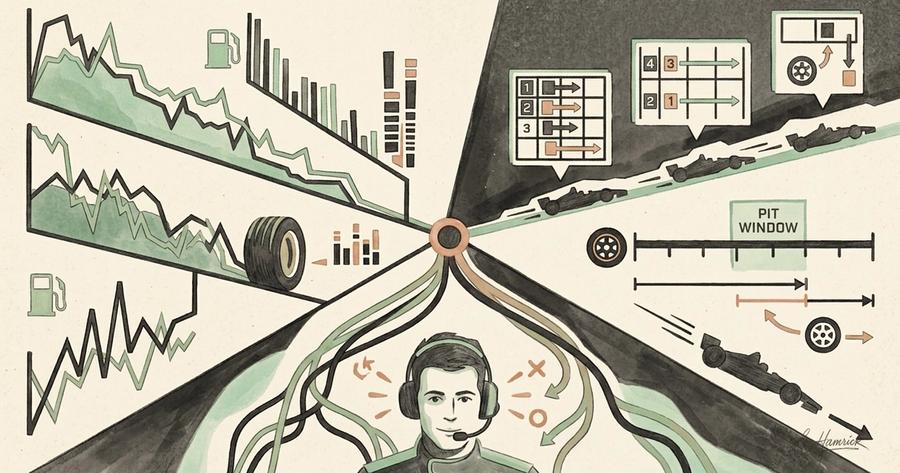
Team Penske's president manages simultaneous race strategies across two series at Detroit. Inside his dual-front chaos management.
Jonathan Diuguid spent Saturday at Detroit running two completely different wars at the same time, and he wasn't even breathing hard about it.
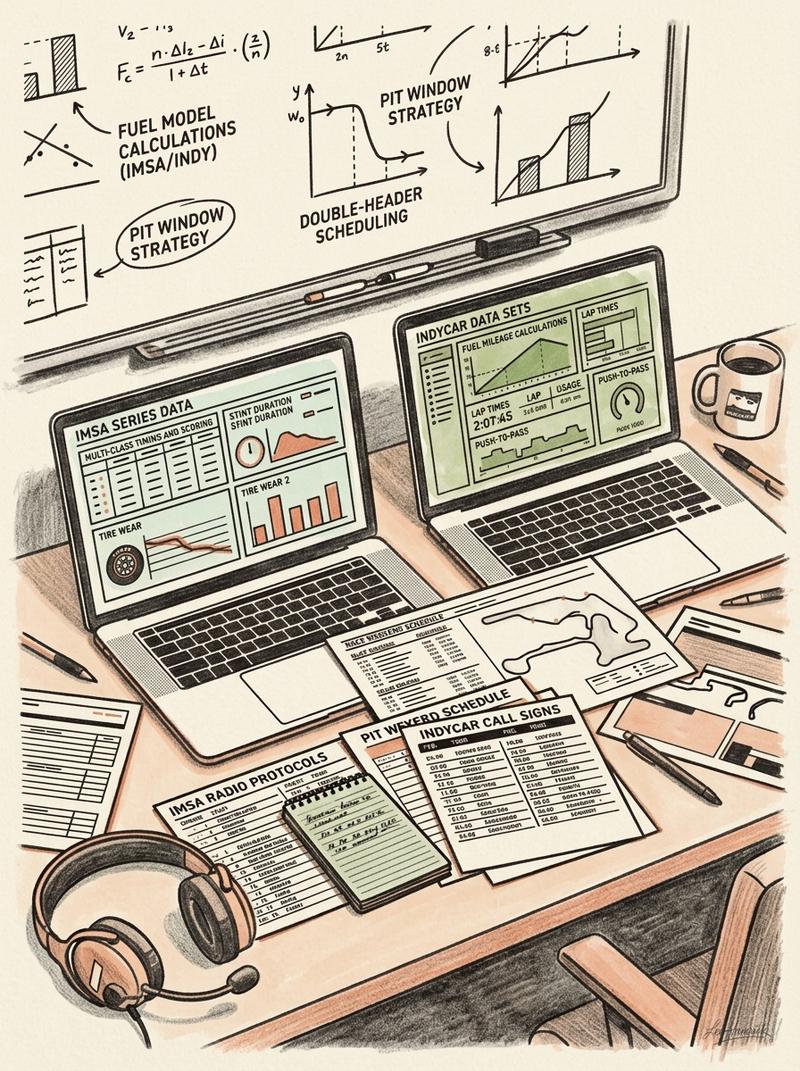
Most team presidents would have a nervous breakdown juggling IMSA and IndyCar logistics on the same weekend. Different tech stacks, different fuel windows, different tire degradation curves, different radio protocols. Diuguid? Less than a year into the role at Team Penske, he treated it like another data set to optimize.
The Detroit Grand Prix is exactly the kind of event that should break race operations. Two separate series, same track, overlapping schedules, shared personnel and garage space. You need strategists who can pivot between prototype thinking and single-seater tactics without losing the thread. You need pit crews who can mentally context-switch between DPI cars and open-wheel machines in the span of minutes. You need a leader who doesn't see it as chaos but as a solved equation with more variables.
That's Diuguid's actual superpower. Not the strategy calls themselves, though he makes those too. It's the systems thinking underneath.
The Real Work Happens Before the Drivers Ever Get in the Car
Watch any race weekend and you'll see pit stops, restarts, pit lane strategies. What you don't see is the Thursday night room where a guy like Diuguid builds the decision tree for Saturday. Which drivers will fuel strategy. Which cars will run aggressive tire wear profiles. How fuel mileage changes if a caution comes out in lap 47 versus lap 63. What happens if a prototype driver gets caught in traffic behind a GT car. How does that ripple the entire strategic posture for the next 45 minutes.
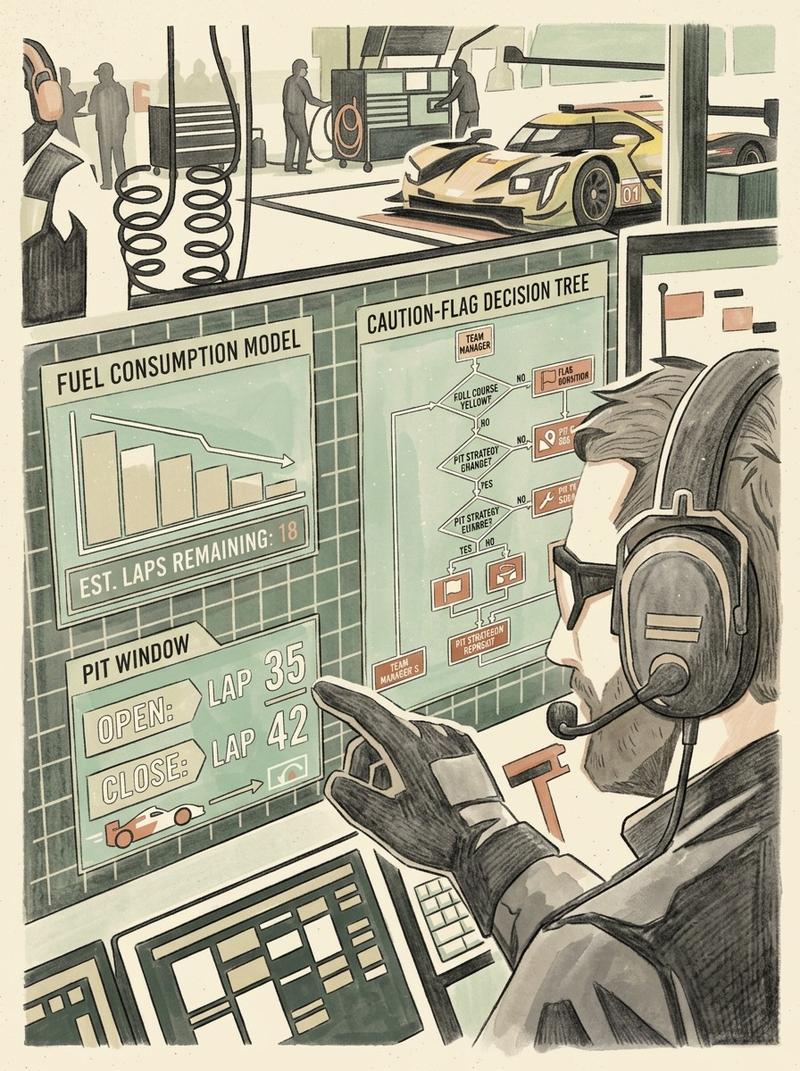
Now do that twice. Simultaneously. For two different series.
The engineering and strategic depth isn't impressive because it's complicated. It's impressive because Diuguid treats it like it's not. He came up as a strategist at Penske, not as a generalist, and strategists live in spreadsheets. They win on decimal points and information arbitrage. When everyone else is panicking about the second race start time conflicting with pit window timing, he's already mapped the optimal handoff sequence.
IMSA and IndyCar Aren't the Same Sport
Here's where people get lost in the weeds: IMSA endurance racing runs on completely different physics than IndyCar road racing.
IMSA cars are running stints that measure in fuel remaining and tire life in five to seven lap increments. It's a math problem. How much fuel can this prototype burn over 45 minutes? How much less does it burn if we dial the engine down two percent? Can we stretch the fuel window by one lap if the next caution comes before lap 34? It's combinatorial optimization with 47 moving parts.
IndyCar road course racing is different. Tighter fuel windows, higher speeds over shorter distances, tire life measured in minutes not fuel load. The strategy math still applies, but the constants change. A fuel save on the Indy road course isn't a fuel save on a prototype at Detroit. The ratios are inverted.
Diuguid has to think in both systems simultaneously. His brain isn't doing worse at either one, it's just... bigger.
The Chaos Was Just Noise
Saturday was messy. It always is at Detroit. Weather in the morning, track evolution in the afternoon, cautions at the worst possible moments. For most teams, that's catastrophe conditions. You lose your plan. You improvise. Things fall apart.
For Diuguid, cautions and track changes are just new inputs. The decision tree still works. It just takes a different branch. The fuel model still applies. The pit window timing still holds. The only difference is which spreadsheet column is now critical instead of the other one.
That's the mentality of someone who came up in high-level motorsports strategy. You don't see the chaos as a failure of planning. You see it as the entire point of planning. The plan doesn't win the race. The plan's ability to bend without breaking does.
Why This Matters for Team Penske
Penske has never been a team that just builds fast cars and lets drivers sort it out. The organizational structure is built on people who think in systems. Strategists who see the whole race 30 minutes before it happens. Engineers who optimize fuel consumption in thousandths of a percent. Mechanics who understand that a three-second pit stop and a seven-second pit stop aren't different versions of the same stop, they're completely different strategies with different trade-offs.
Diuguid running both IMSA and IndyCar operations simultaneously doesn't prove he's busy. It proves that Penske's organizational depth is deep enough to handle it without degradation. He's not a bottleneck. He's a node in a system that's already designed to scale.
Detroit Grand Prix on a Saturday in June with double-series racing and a rain chance? For most teams, that's a stress test. For Team Penske under Diuguid, it's a routine data collection exercise. The strategies will be slightly different tomorrow, but only because of what he learned from the data points today.
That's the difference between running one war and running two of them at the same time. One requires tactical brilliance. Two requires systems thinking that's so solid it doesn't feel like it's working until you're 200 laps in and realize the strategy got everything right.

Written by
Ben Eckels