The Mazda 3 is Proof Cars Don't Have to Be Ridiculous
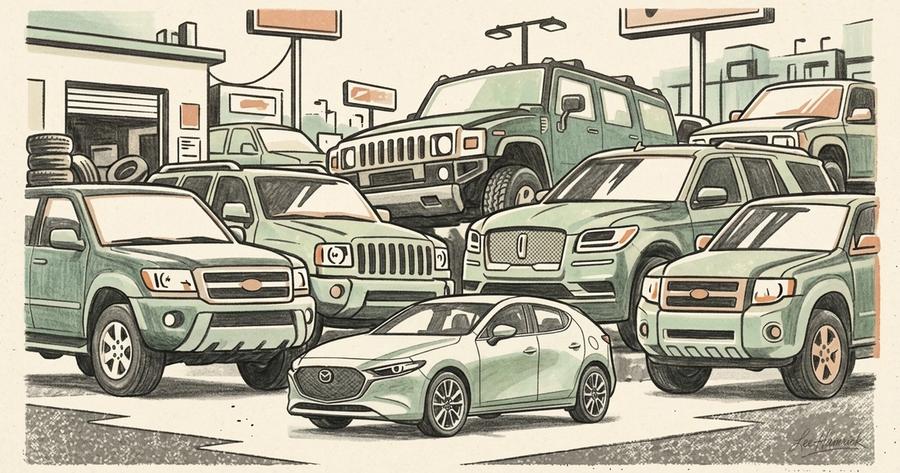
In a sea of bloated crossovers, the Mazda 3 proves a small car can still feel like a real car. Here's why that matters.
I've spent the last few years watching the automotive industry collectively lose its mind. Everything has gotten bigger, taller, angrier, and somehow less useful. Crossovers that drive like minivans. Sedans that weigh as much as trucks. Infotainment screens the size of iPad Pro tablets controlling everything from the headlights to the coffee maker. It's exhausting.
Then I spent a week with a Mazda 3, and I remembered what a car is supposed to feel like.
The Mazda 3 isn't trendy. It won't dominate your Instagram feed. It has no gimmicks, no retractable cladding, no "adventure" messaging slathered across the marketing materials. What it does have is proportions that make sense, a footprint you can actually park without prayer, and a driving experience that doesn't require a manual the size of a phone book to decode. That alone puts it in increasingly rare company.
Here's the thing about the modern automotive landscape that drives me nuts: somewhere along the way, we decided that bigger automatically meant better. Crossovers cannibalized hatchbacks. SUVs cannibalized sedans. Everything got taller, beltlines climbed higher, and suddenly the driver sits so far above the road you might as well be piloting a transit bus. Visibility went to hell. Cargo space became this obsessive feature creep that nobody really asked for. And the cars stopped *feeling* like cars.
The Mazda 3 does not participate in that arms race.
You can actually see out of it. The windows aren't slits. The hood isn't a mile long. The proportions suggest, you know, a human being might want to drive it on an actual road instead of just sitting in it while it delivers you places. The steering has weight. The brake pedal responds like there's a hydraulic connection between your foot and the wheels, not some electronic middleman making a judgment call about your input. The manual transmission (if you spec it, and you should) is a joy because Mazda hasn't buried it under layers of software wondering if you *really* mean to downshift right now. If you're curious about the broader manual revival, our piece on the resurgence of the manual transmission covers exactly why that matters.
This is radical in 2024. I'm not exaggerating. The fact that a 3 looks like what a hatchback is supposed to look like and drives like one too is almost an act of rebellion.
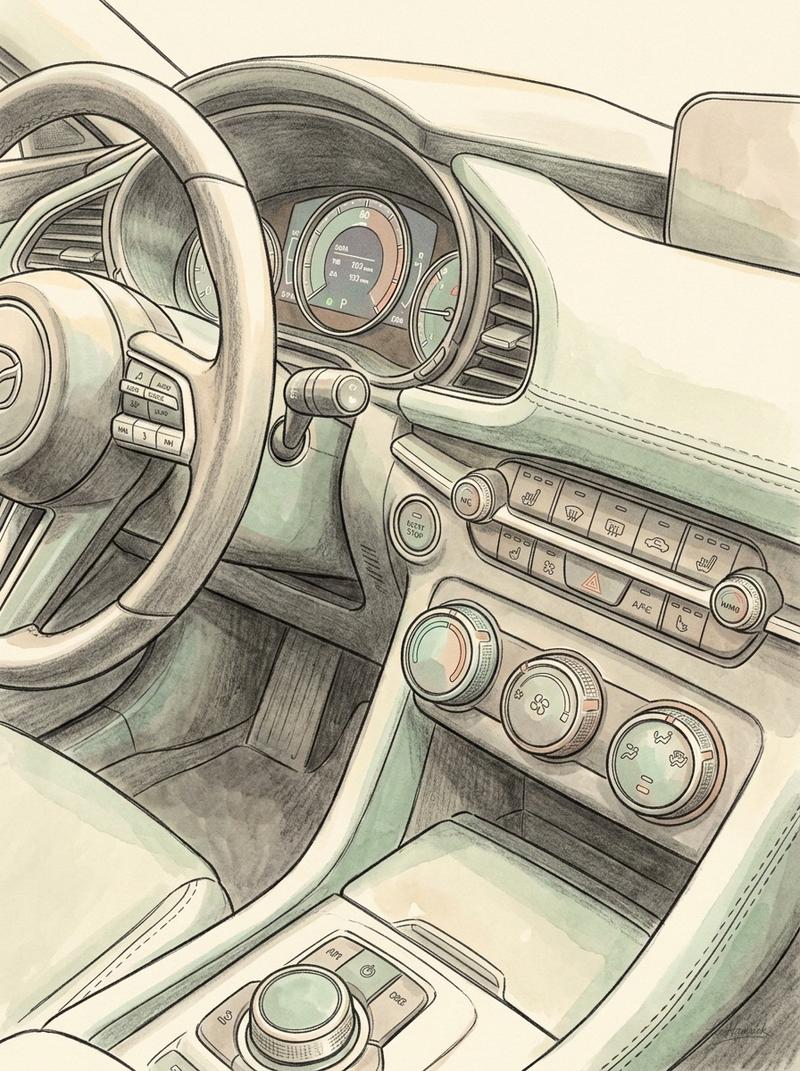
The interior is straightforward. Physical buttons. Dials for the climate control that you can adjust without taking your eyes off the road for three seconds. An infotainment system that doesn't require a USB-C cable and a signed waiver to make it do basic functions. It's almost quaint, except it's not. It's just competent design. It's what we've been asking for.
On the back roads around Grass Valley, which is genuinely my happy place in a car, the Mazda 3 disappears. You stop thinking about it and start thinking about the curves ahead, the quality of light coming through the pines, the music, the coffee cooling in the cup holder. That's the test that matters to me. A car isn't good because of what it has. It's good because of what it lets you do. The 3 gets out of your way.
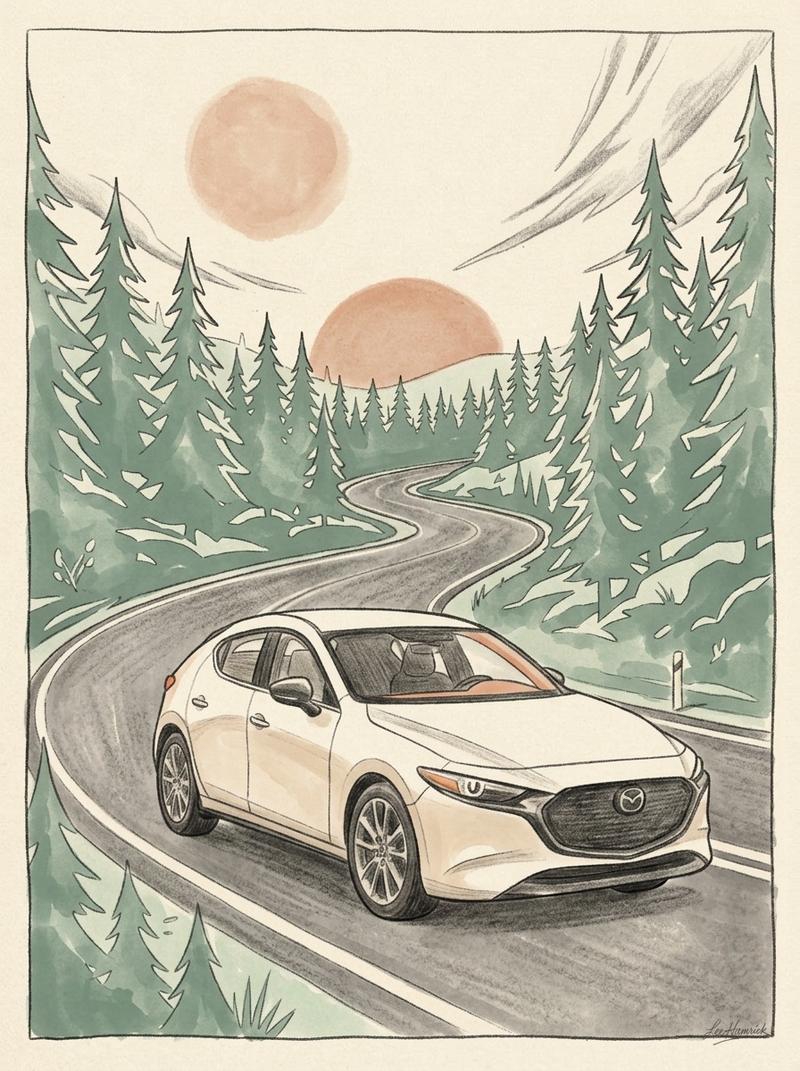
I'm not going to pretend it's a sports car. It's not a weekend warrior or a canyon carver. But it's honest. It doesn't pretend to be something it's not. It doesn't have fake vents or plastic cladding trying to convince you it's tougher than it is. It's a small, well-proportioned, usable hatchback that you can park, that you can see out of, that you can actually feel connected to when you're driving it.
The market is telling us that nobody wants these anymore. Everyone wants a crossover. Everyone wants more ground clearance they'll never use. Everyone wants the tallest possible seating position even though it destroys visibility and makes the vehicle less stable. The data says hatchbacks are dying. The data says sedans are finished. We looked at exactly that dynamic in our piece on teen sedan preference and what it actually means for the segment.
But the Mazda 3 exists. And it exists because Mazda apparently still believes that a car should feel like a car. That proportions matter. That you shouldn't need to be a software engineer to adjust the temperature. That there's value in a steering rack that actually communicates what the front wheels are doing. If you want more of that feeling taken to its logical extreme, read our take on the 2026 Mazda MX-5 Grand Touring.
In a world that's gotten ridiculous, the Mazda 3 is still normal. And that's its greatest strength.
Written by
Kathlien "Kat" Mangino