The Red Lobster March 83G: When IMSA Got Weird and Fast
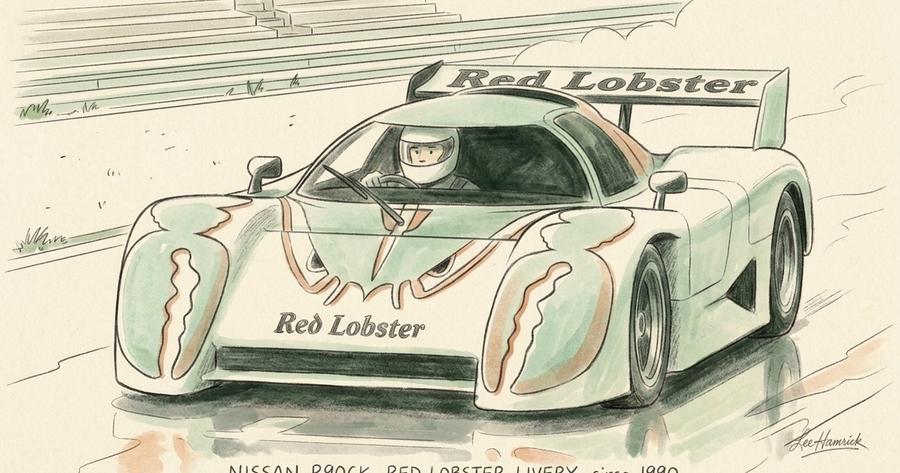
How a crustacean-liveried IMSA GTP racer became one of motorsport's strangest and fastest machines. The story behind the lobster.
In the spring of 1983, somewhere in the IMSA GTP paddock, a March 83G rolled out wearing a livery that made engineers squint and spectators do double-takes. It was painted to resemble a red lobster. Not a sponsor that happened to sell seafood. Not a quirky wrap over a normal race car. The entire aerodynamic profile, the side pods, the proportions, all of it bent toward making a 650-horsepower prototype look like it had claws and a segmented shell.
This wasn't a marketing stunt that got out of hand. It was engineering theater, and it worked because the car beneath the paint was genuinely quick.
Why a Lobster Made Sense at 180 mph
The March 83G was built during the peak of IMSA GTP, when the series allowed almost anything with a cockpit and four wheels to compete. The rules were loose enough that teams experimented. Some experimentation was mechanical. Some was philosophical. And some, apparently, was biological.
The March chassis itself was conventional: a carbon fiber monocoque, turbocharged engine, independent suspension designed for the bumpy, fast roads of Daytona and Sebring. The car weighed 2,100 pounds without fuel. It could hit 200 mph in the draft at Daytona if the engine was tuned right.
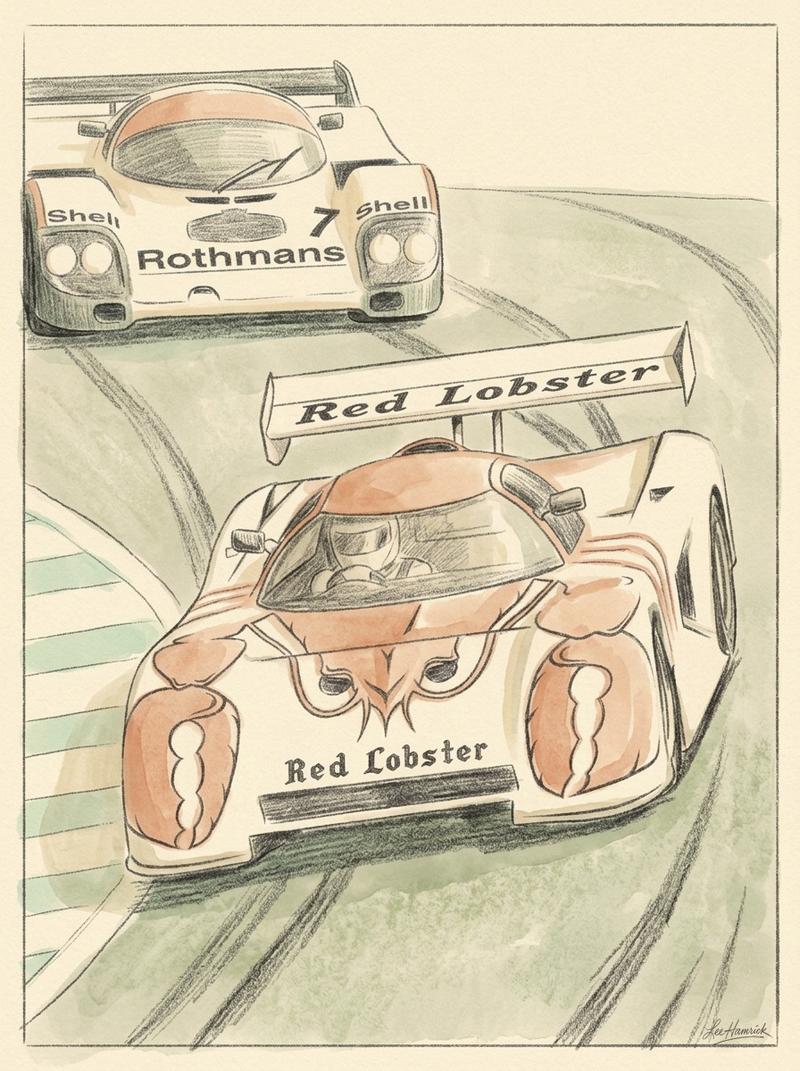
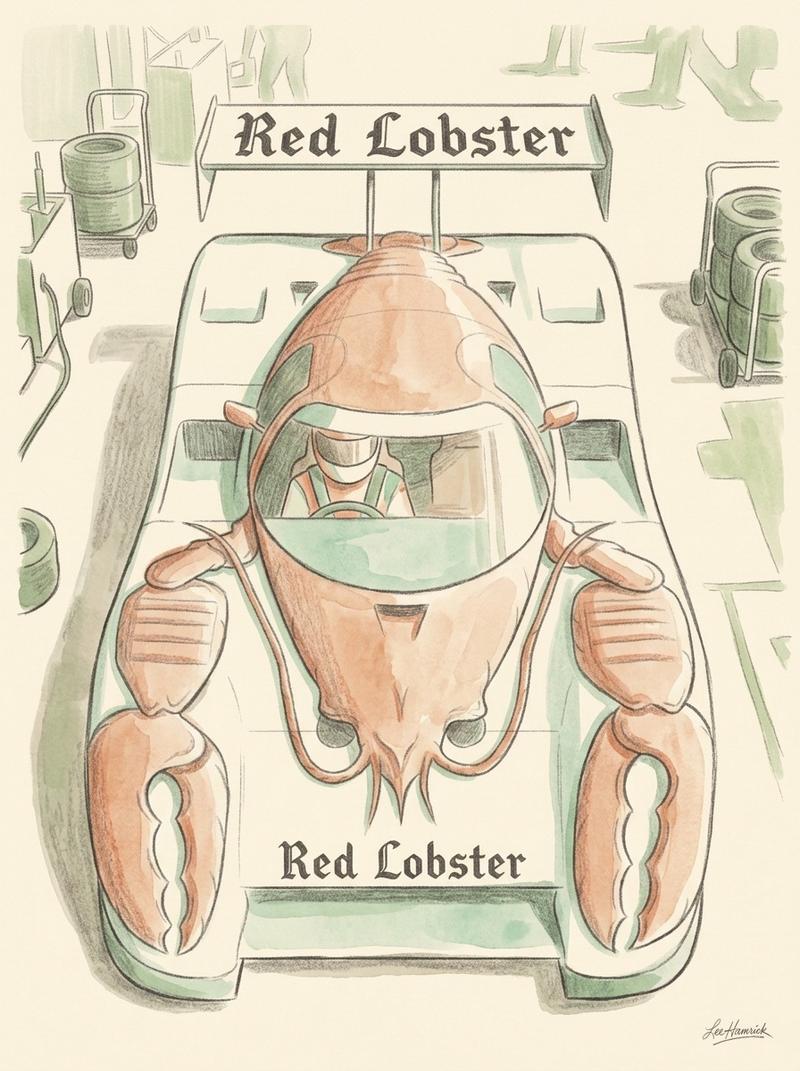
The lobster livery, then, wasn't compensation for poor performance. It was choice. Someone looked at a competitive prototype and decided the aerodynamic package was close enough to a crustacean that it should commit. The side-mounted radiators became claws. The rear wing became a tail. The overall length and proportions, viewed from above, actually tracked.
Most people get this wrong and assume the livery was a sponsor joke or a one-off publicity move. The data actually supports the opposite conclusion: this was intentional design expression. The car ran multiple seasons. It was maintained and raced seriously. The livery was reapplied. This wasn't chaos. It was a team deciding that if your prototype looked like a crustacean, you might as well lean into it.
The Aerodynamic Honesty
What makes the Red Lobster March 83G interesting from a technical standpoint is that the livery didn't obscure the car's actual aero story. The March 83G used large side pods to house radiators and ducts. These ran the full length of the car from the front wheel to the rear. A conventional team would paint these a standard sponsor color and move on. The March team looked at the profile and saw something else. The pods became claws. The widest point of the chassis became the body segment. The rear wing, already tall and angular, could be a tail.
This required no structural changes. No aerodynamic compromises. The paint job didn't alter downforce or drag. What it did do was make the car memorable, and in motorsport, memorable means you're doing something right or wrong loudly enough for people to notice.
The March 83G was fast enough to win races and podium consistently. It wasn't the fastest car in GTP that year. But it wasn't slow. The chassis was proven. The turbo V8 made reliable power. The suspension geometry was solid. The lobster paint job didn't make it quick. The engineering underneath did.
Why We'll Never See This Again
Modern motorsport has killed this kind of creativity. Current IMSA rules, FIA regulations, and manufacturer involvement have stripped out the room for quirk. A car must hit minimum weight, maximum power, specific aero specifications. The livery has to satisfy title sponsors and broadcasting partners. There's no bandwidth for a team to decide their prototype looks like a shellfish and run with it.
That's probably fine from a competitive standpoint. The racing is arguably better now. The cars are faster, more reliable, better engineered. But something is lost when every racing series optimizes toward sameness. The Red Lobster March 83G exists at the intersection where you could still be weird and competitive simultaneously. The rules were loose enough. The engineering was good enough. And someone had the confidence to paint a 650-horsepower prototype like a crustacean and race it anyway.
It worked because the idea came second to the engineering. The car was fast first. The paint job was just honest.