Steve Morris and I Built a 9,000 RPM 302 SBC. Will a Custom Intake Make More Power?
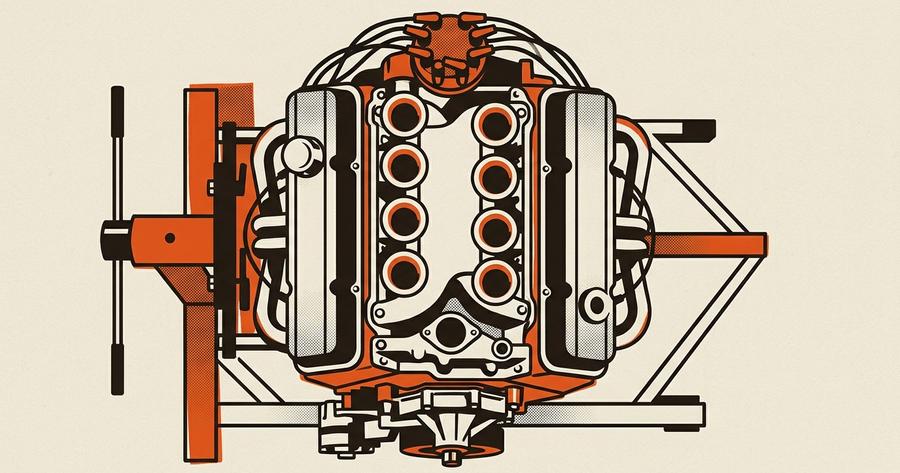
A 302 small block Chevy spinning past 9,000 RPM gets a custom intake and a dyno session. Here's what the numbers actually showed.
There's a particular kind of madness that comes from building a small block Chevy to spin past 9,000 RPM. It's not the displacement that gets you there, and it's not a single part. It's the combination, and getting every piece of that combination to play together is where engine building stops being a spec-sheet exercise and starts being a craft.
This project started with a collaboration between myself and Steve Morris Engines. Steve handled the short block, which is where the foundation of any high-revving combination lives: the rotating assembly, the block prep, the tolerances that make the difference between a motor that screams and one that grenades. I took on the top end, the cylinder head work and the intake side, which is where this experiment begins.
The engine in question is a 302 cubic inch small block Chevy. If that displacement sounds familiar, it should. The 302 has a long history as a high-revving racing platform, and when you build it right with a short stroke and a bore that supports high piston speeds, it wants to rev. Getting it to 9,000 RPM and beyond isn't just about cam timing or compression. It's about making sure the intake tract is moving air efficiently at the rpm range where the engine actually makes power.
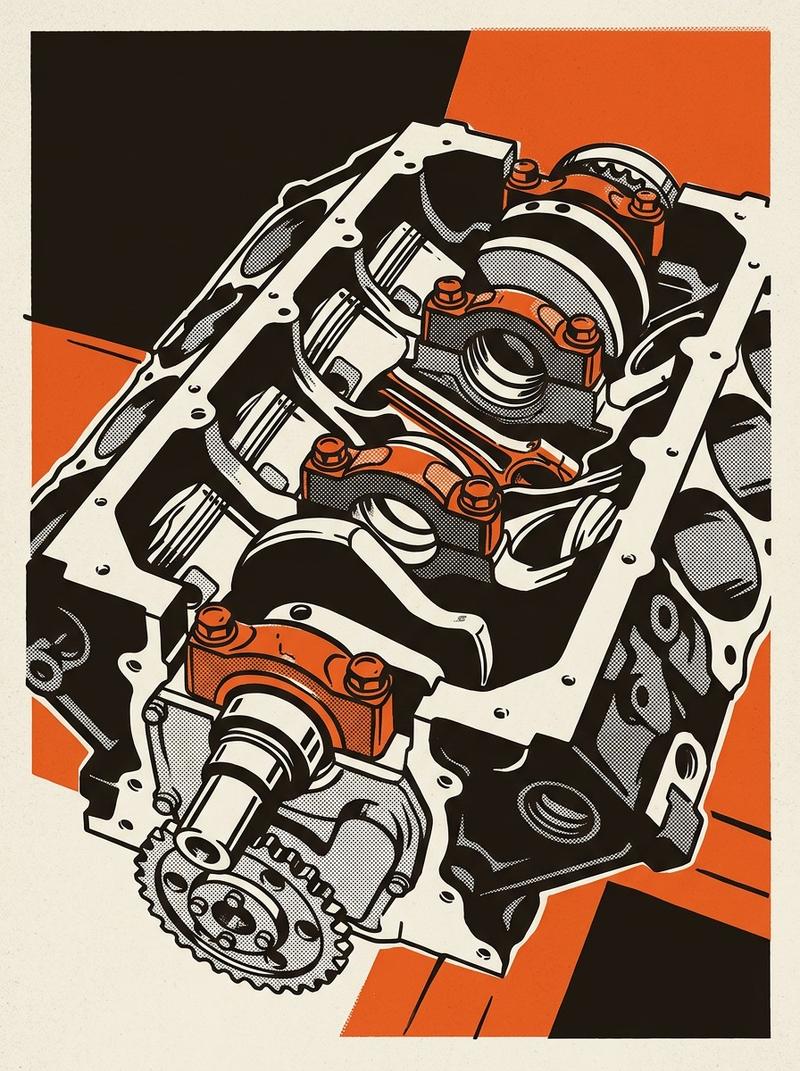
The question we set out to answer was straightforward: would a custom intake setup unlock more power from this combination than what we already had? On paper, the argument makes sense. A purpose-built intake designed around the specific port geometry of the cylinder heads, the plenum volume tuned to the target rpm range, and the runner lengths calculated to take advantage of intake charge tuning at high rpm should outperform a more generic solution. But engines don't always do what the math says, and that's exactly why you put it on the dyno.
High-RPM small block combinations are sensitive to intake design in a way that street engines simply aren't. When you're trying to fill cylinders at 9,000 RPM, you have a very short window per cycle to get the charge in. Runner length and diameter affect the tuning pulse that helps ram air into the cylinder just before the intake valve closes. Get that right for your target rpm band and you pick up real, measurable power. Get it wrong and you lose torque down low without gaining anything at the top, which on a race-oriented build isn't necessarily a dealbreaker, but you want to know which direction you're moving and by how much.
The custom intake in this test was built specifically around this combination, not adapted from a shelf solution. That matters because off-the-shelf intakes are designed to work across a range of applications and rpm ranges. They make compromises. A custom piece has no obligation to compromise, which is either an advantage or a trap depending on how well the design work was done before the first chip of aluminum fell.
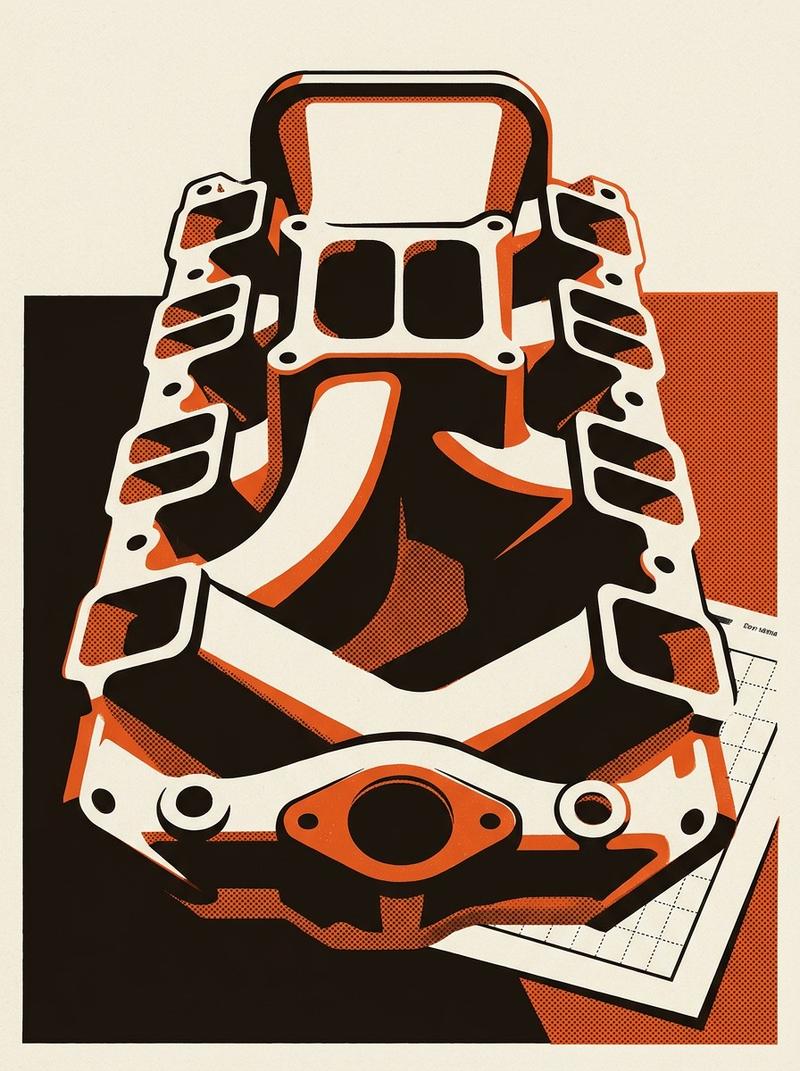
What the dyno session revealed was the kind of result that makes this work worthwhile. The custom intake moved power in the upper rpm range where this combination is designed to operate. Whether that translates to a meaningful improvement depends on the application, and on a 302 built specifically to rev, gains at the top of the pull are exactly where you want them. The torque curve shape matters as much as the peak number here, because a motor that comes on strong at 7,500 and stays there through 9,000 is a fundamentally different tool than one that peaks and drops off before the redline.
The division of labor on a build like this is worth understanding, because it's not just two names on a project. Steve Morris brings the short block expertise that most builders can't match, the kind of precision on bearing clearances, ring end gaps, and rotating assembly balance that determines whether a high-revving engine survives sustained use or becomes an expensive lesson. The top end work, the head preparation, valve job, and intake matching, feeds directly off that foundation. A cylinder head flows beautifully on a bench and still underperforms if the intake isn't matched to it, or if the short block can't sustain the rpm range the head is optimized for. The whole thing has to be a system.
That systems thinking is what separates a well-executed build from a parts collection. It's also what makes the intake experiment legitimate rather than a random swap. We weren't guessing. The custom intake was designed with knowledge of where the heads flow, what the cam timing looks like, and what rpm range the short block was built to handle. The dyno doesn't lie about whether those assumptions were correct.
There's also something worth saying about the 302 displacement specifically. Bigger is almost always easier when it comes to making power. More displacement means more air and fuel per cycle without needing to rev as hard or breathe as efficiently. A 302 making serious power at 9,000 RPM is doing it the hard way, which in my book is the interesting way. The engineering challenge is real, and the result, an engine that screams rather than thumps, is a fundamentally different driving experience than a torque-heavy big block pulling hard from 2,500 RPM. Neither is wrong. They're just different tools for different intentions.
The custom intake confirmed what good design work suggested it would: there is more power available at the top of the rpm range with intake geometry optimized for this specific combination. How much more matters in context. On a race application where this engine will live in its power band, the gains compound into lap time. On a street car, the same result might show up mostly as a better pull above the point where most drivers never go anyway.
For this build, the context is right. The combination was designed to rev, the intake was designed to support it, and the dyno confirmed the direction was correct. That's the job.
Written by
Nick Mangino