This Porsche Flat-Six Goes to 11

Tuthill's 911K takes a 1970 Porsche 911 shell and builds a 3.1-liter air-cooled flat-six that screams to 11,000 rpm inside a 1,900-pound carbon fiber body.
Eleven thousand rpm. From an air-cooled flat-six. In a car that looks, at first glance, like a stock 1970 Porsche 911 that somebody kept in very good shape. That is the headline on Tuthill's 911K, and it is enough to stop most enthusiasts mid-scroll.
Restomods have been around long enough that the concept barely raises an eyebrow anymore. Drop a modern drivetrain into a classic body, sort the suspension geometry, add some carbon here and there, and you have a recipe that dozens of shops now execute competently. What Tuthill has done with the 911K is not that. It is a more obsessive project, one where every material choice loops back to a single governing idea: strip weight until the car barely exists, then build an engine that makes the most of what is left.
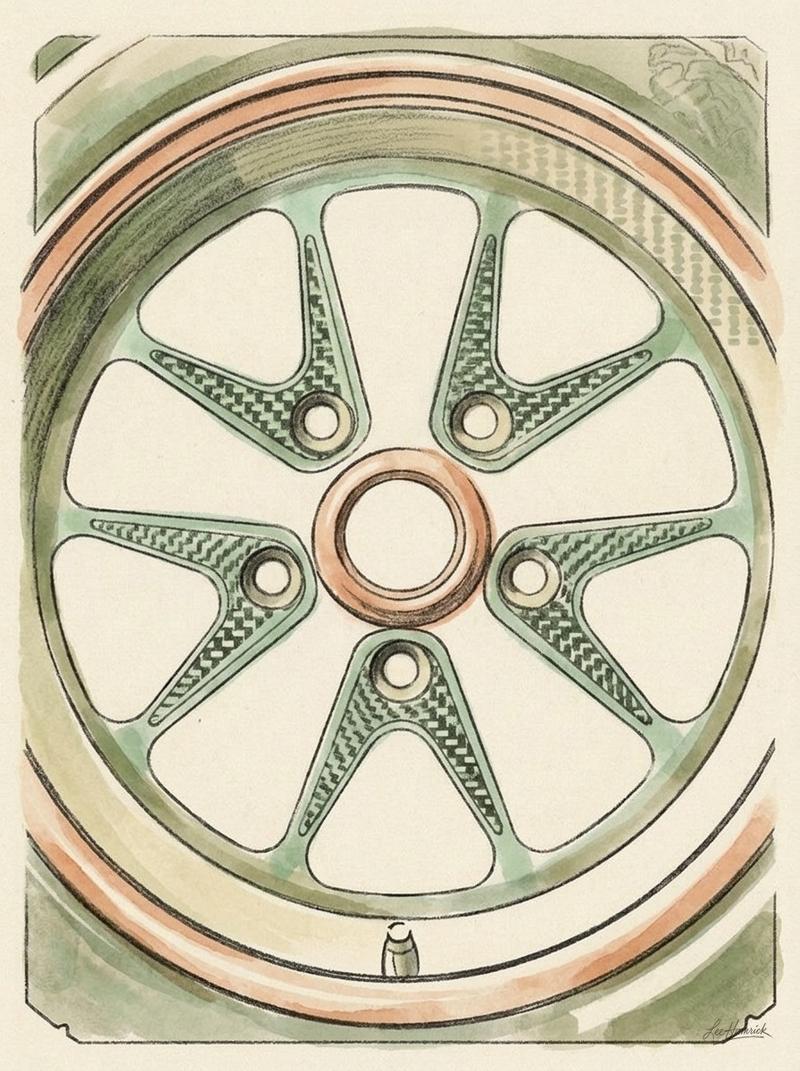
The number that anchors everything is 1,900 pounds. Getting a 911-shaped car to that figure required treating carbon fiber the way a stock car treats sheet steel. The bodywork is mostly carbon. Those Fuchs-style wheels that look period-correct from twenty feet away? Also carbon fiber, not the actual forged aluminum Fuchs pieces. The roll cage is titanium. So are a large number of the fasteners. Every decision on this car was made by someone asking whether there was a lighter way to do the same job.
The payoff from that kind of weight obsession is that you do not need a massive engine to have a fast car. Physics handles the arithmetic. A 1,900-pound car does not demand 500 horsepower to feel urgent. What it demands is an engine that is alive, responsive, and willing. The 3.1-liter air-cooled flat-six in the 911K qualifies on all three counts, mostly because of where it is willing to go on the tachometer.
Eleven thousand rpm is a number that belongs to motorcycle engines and Formula cars. Getting an air-cooled flat-six there required exotic materials throughout the build, and by all accounts from shop owner Michael Levitas at TPC Racing in Jessup, Maryland, the people behind the engine were chasing exactly that sensation: the feeling of a high-revving motorcycle engine, but wrapped in a Porsche. Levitas, who has plenty of race car experience, described the combination as the closest thing to a race car he has encountered in a road-going machine. That is a specific claim from someone with a useful reference point.
Watching Chris Harris drive the 911K on track in 2023 makes the engine's character concrete in a way that a spec sheet cannot. At one point Harris reaches for the shifter out of instinct, the way any experienced driver would in a performance car, and then catches himself and lets the engine keep pulling. That moment says everything. In a normal 911, even a very good one, you grab the next gear when the revs build because the engine has given you what it has. In the 911K, the engine is still building when your muscle memory says it should be done. That gap between expectation and reality is where the fun lives.
The PCA executive director Vu Nguyen visited TPC Racing to examine the car alongside Levitas, and what comes through in that conversation is how deliberately the 911K is built to look unremarkable to the untrained eye. The carbon bodywork is painted to match a period color. The fake Fuchs wheels read as authentic from any reasonable distance. Someone who did not know what to look for would walk past this car at a show and see a well-preserved vintage 911. That gap between appearance and reality is a choice, and it is a good one. Part of what makes a car like this work is that it does not announce itself.
Is 11,000 rpm necessary? No. A well-sorted 911 with a strong period-correct engine and serious suspension work is a deeply satisfying car to drive at eight or nine tenths on a back road or a track day. Plenty of fun exists well below five-figure rpm. But the 911K is not making an argument for necessity. It is making an argument for possibility, for what happens when skilled people pick a goal that sounds unreasonable and then execute it without compromising. The titanium fasteners, the carbon wheels, the screaming flat-six: none of it is strictly required. All of it is exactly right for what this car is trying to be.
The 60-year-old silhouette hiding a motorcycle-inspired engine that pulls past 10,000 rpm is a combination that should not work as well as it apparently does. Based on every account from people who have actually driven it, it works better than it should. That is usually the sign that someone built something true.

Written by
Tabitha Corman