How a Homemade Carb Spacer Beat Factory Teams: The Tommy Morrison Monte Carlo Story
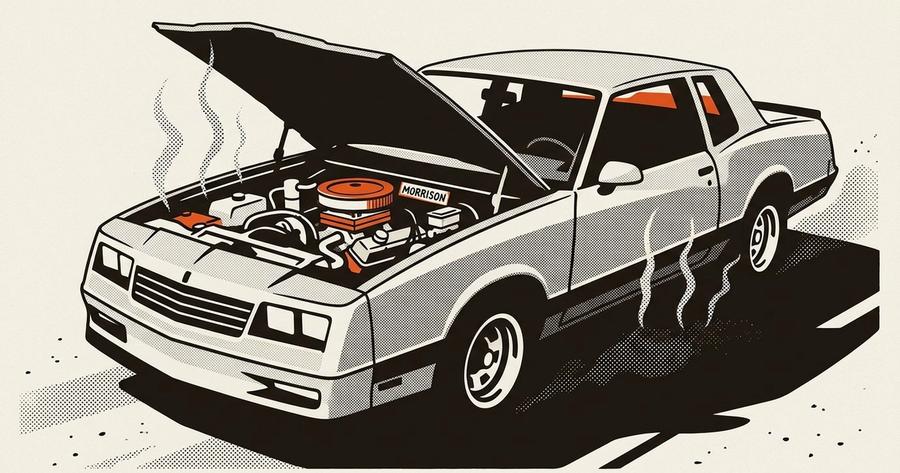
A primer-gray Chevrolet Monte Carlo and a DIY carb spacer proved that racing ingenuity beats big budgets. Tommy Morrison's 1987 breakthrough.
The garage isn't where innovation dies. Sometimes it's where it gets born, especially when you're broke and racing against teams with deep pockets and factory support. Tommy Morrison understood this better than most, and his 1987 Chevrolet Monte Carlo became a rolling argument against the idea that money alone wins races.
Morrison's Monte Carlo showed up in primer gray, the universal color of a car still being developed in someone's driveway. It wasn't exotic. It wasn't cutting edge. It was the kind of machine you'd see in a thousand working garages across America, except Morrison had figured out something his better-funded competitors hadn't.
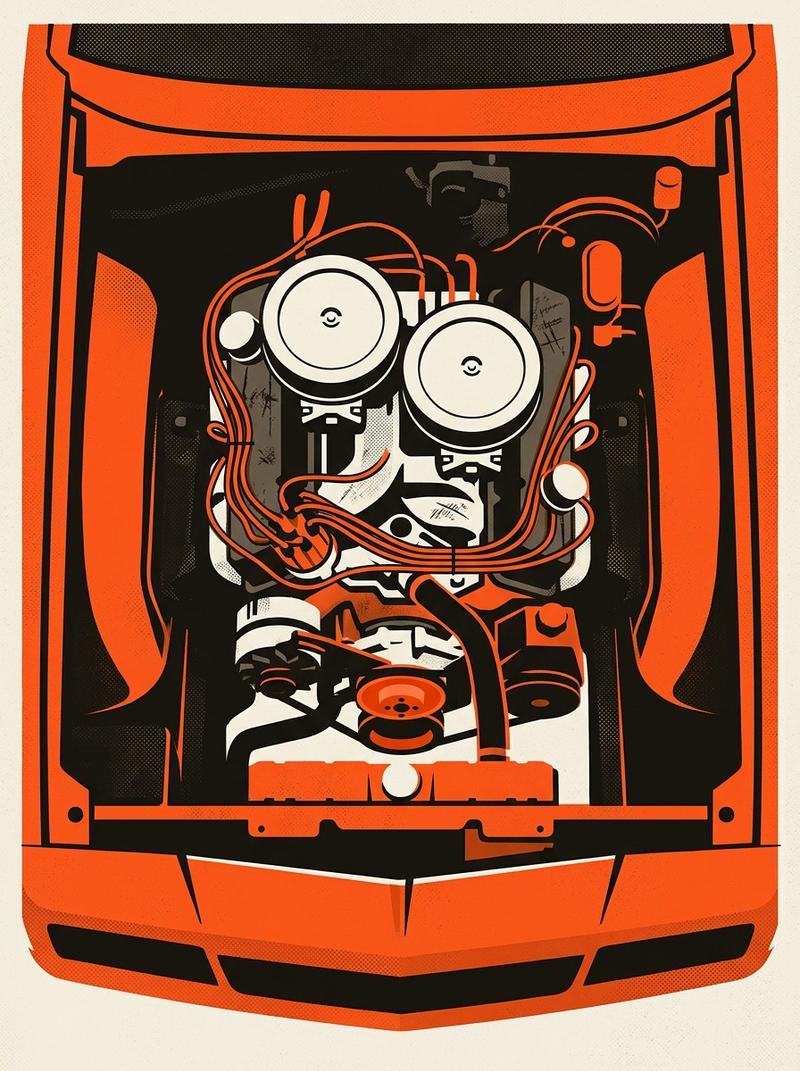
The problem started with the carburetor. Most racers accept what the factory gives them or they throw money at the problem, buying case after case of new parts until something sticks. Morrison went the other direction. He built a spacer, something simple enough that it could sit in a home shop and be machined with basic tools. The spacer wasn't flashy. It didn't come from a catalog. It addressed a dead spot in the engine's power delivery that nobody else seemed willing to fix with anything less than a complete rebuild.
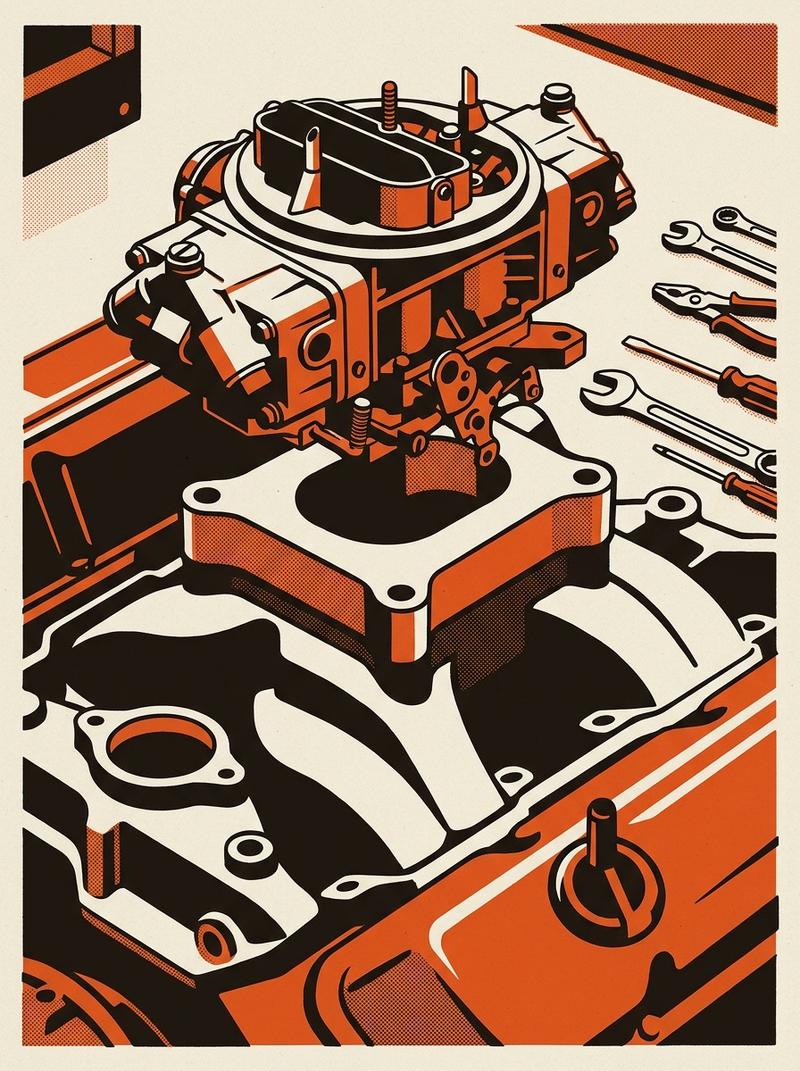
What the spacer actually did was elegant in its simplicity. It altered how the air and fuel mixed before it hit the cylinders, smoothing out the rough transition that was killing power in the mid-range. This is the kind of problem that, on paper, sounds like nothing. But on the track, it was the difference between losing and winning. Morrison had found the weak point and targeted it with surgical precision instead of sledgehammer spending.
The racing world in 1987 didn't move at the speed it does now. There were no data loggers on every weekend warrior's car, no social media forums breaking down power curves in real time. But word got around. A guy in a primer-gray Monte Carlo was consistently outrunning cars with newer engines, better suspensions, and real budgets. Some of it was Morrison himself, obviously. A driver who understands how to work on his own car usually understands how to drive it better too. But the bulk of it was that spacer.
The real takeaway wasn't that Morrison built something cool in his garage. Plenty of people do that. The story that matters is that he identified a real engineering problem and solved it without waiting for permission or funding. He didn't need a dyno or a team of engineers. He needed to understand his engine well enough to know something was broken, and then he needed the confidence to fix it his way.
This approach to racing has mostly vanished. Modern sanctioning bodies have gotten stricter about what you can modify, and modern engines are so computerized that you can't just machine a part and hope it works anymore. But the principle Morrison proved is still as valid now as it was then: the person who understands their machine wins, regardless of how much money the person next to them spent.
There's a reason the old-school racing guys still talk about cars like Morrison's Monte Carlo. Not because it was the fastest. Not because it won every race. But because it proved that ingenuity could overcome a funding gap, and that a driver willing to get his hands dirty in his own garage could outrun people who thought money was the only answer. That same spirit is alive in builds like the Vehicross V8 swap and the 10,000-RPM V8 Toyota Starlet — proof that the home-shop approach never really went away.
The primer paint faded. The Monte Carlo eventually moved on to someone else. But the lesson stuck around. Racing is, at its core, about problem solving. And the best problem solvers aren't always the ones with the biggest checkbooks. Sometimes they're the ones willing to grab a wrench and figure it out themselves.

Written by
Christian Kiesz