This 10,000-RPM V8 Toyota Starlet Is the Absolute Madness Your Garage Secretly Wants

A custom V8 Starlet revving to 10k RPM on Hayabusa architecture proves that the best builds start with crazy ideas and a welder.
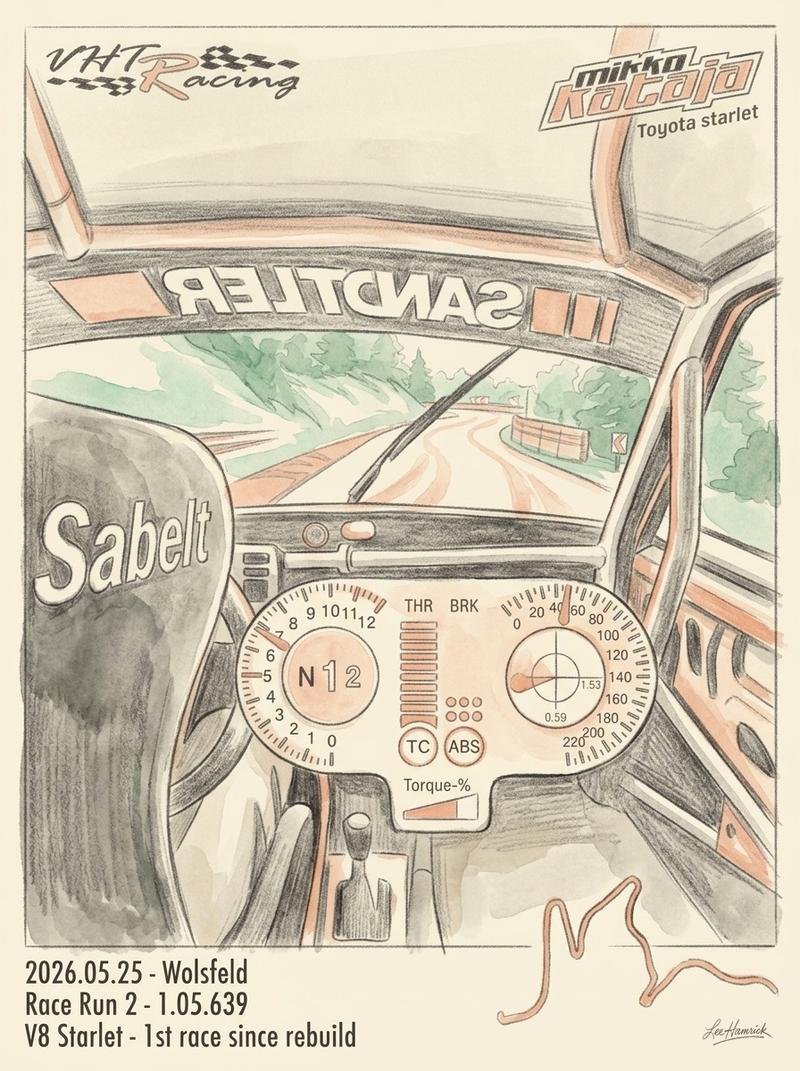
Somewhere in the automotive universe, a builder looked at a Toyota Starlet, a motorcycle engine, and a blank workbench and asked the only question that matters: why not? The answer is sitting in front of us now, and it's a 10,000-RPM V8 that will make you genuinely question your life priorities in the best possible way.
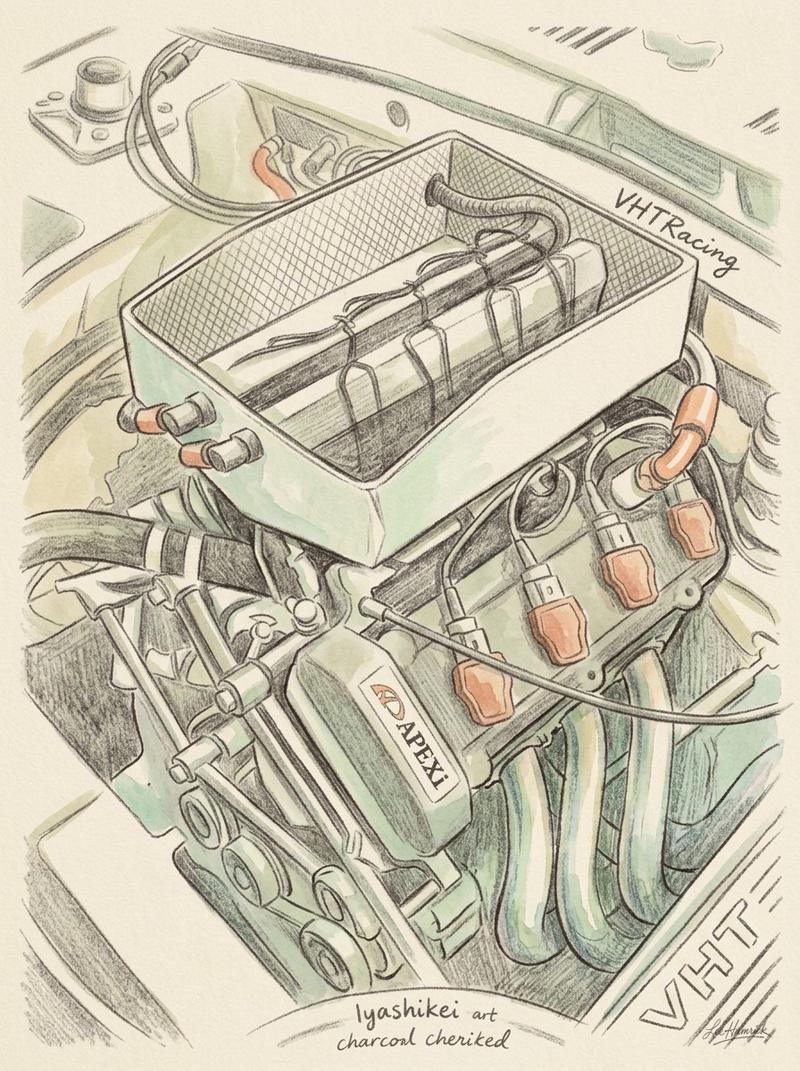
Let's talk about what this actually is. The engine architecture comes from Suzuki Hayabusa internals, which means we're talking about a platform designed to scream at insane RPMs in a motorcycle. Someone took that foundation, scaled it intelligently, and stuffed it into a Starlet's engine bay. For context, the original Starlet was never meant to house anything angrier than a four-cylinder that would be considered quaint by today's standards. This is the automotive equivalent of bolting a jet turbine to a golf cart, except it actually works.
The V8 configuration itself is the real flex here. You've got eight cylinders firing at 10,000 RPM. That's not some fuel-injected superbike screaming at 13,000 like a YZF-R1. This is proper reciprocating pistons, eight throws of the crankshaft, and a rev ceiling that would make a naturally aspirated LS engineer weep. At that RPM, you're looking at power figures that completely embarrass what came from the factory, while keeping the whole package small enough to actually live in a car that weighs about as much as a modern Civic.
What makes this build hit different is that it's not just crazy for crazy's sake. Someone engineered this. You don't accidentally wake up with a Hayabusa-based V8 bolted into a Starlet's bay. This took understanding motorcycle engine architecture, scaling principles, fabrication skills that most of us will never touch, and the kind of patience that only shows up when you're genuinely obsessed with the problem.
The real test is whether this thing is anything more than a novelty. A 10,000-RPM engine in a chassis that weighs less than two tons? That's not a rolling gimmick. That's a power-to-weight conversation that makes modern supercars sit down and think about their life choices. A Starlet probably tips the scales somewhere in the neighborhood of 1,800 pounds stock. Fit this engine with meaningful power output, and you're looking at acceleration numbers that would require you to actually prepare yourself mentally before punching the throttle.
The sound factor cannot be undersold. A naturally aspirated V8 screaming past 10,000 RPM doesn't sound like a normal car engine. It sounds like something is actively trying to escape from under the hood. There's a reason why high-revving mills are becoming rarer in the modern era. They're expensive to engineer, they demand premium fuel, they don't play well with emissions regulations, and they terrify people who think a car should just push power in a linear fashion. But they also sound like freedom, which is worth at least three beers' worth of garage time to talk about.
Here's where the build philosophy really shows through. The fact that someone chose a Starlet as the platform is intentional. There are plenty of lightweight Japanese cars sitting in junkyards right now that would accept an engine swap. But the Starlet is tiny, period-correct charming, and came from an era when cars were simple enough that a dedicated builder could actually make them better with hand tools and welding skills. Dropping a custom V8 into a Starlet isn't about creating a statement car that costs two hundred grand. It's about proving that you can take something overlooked and make it sing in a way the factory never intended — not unlike the thinking behind the Vehicross V8 swap or the obsessive craft of what a modern-day hotrod actually is.
The engineering challenge of fitting motorcycle-derived V8 architecture into automotive packaging isn't trivial. You're dealing with different mounting systems, cooling requirements that weren't designed for a car's bay, and the reality that motorcycle engines are built for different RPM ranges and torque curves than most automotive installations demand. The fact that this engine made it to 10,000 RPM in a street-able package suggests serious fabrication and tuning work. That's not a kit job. That's someone's life's work sitting in the engine bay of a forty-year-old economy car.
What gets me about builds like this is that they prove the fundamentals are still accessible. You don't need a million-dollar shop to do genuinely creative engine work. You need a welder, an understanding of how engines actually function, parts sourcing skills that live in forums and group chats now, and the psychological fortitude to keep working on something when people tell you it's impossible. The Starlet builder didn't wait for permission or a corporate partnership. They just started cutting and welding and figuring it out.
The 10,000-RPM ceiling is worth its own paragraph because it represents a meaningful engineering achievement in the custom car world. Most V8 swaps into small cars sit comfortably in the 6,000-7,000 RPM range for the rev limiter. Going to 10,000 means you've sorted out balance, piston speeds, fuel curve, ignition timing, and all the cascading systems that prevent an engine from destroying itself. At that RPM in an eight-cylinder, the piston speeds are genuinely extreme. Your engine has to be built like it means it.
The reality is that this Starlet represents something that's getting harder to find: someone building something purely because they had the skill, access to parts, and genuine love for the problem. Not for a social media moment. Not for a sponsorship deal. Just because a ten-thousand-RPM V8 Starlet needed to exist, and they were the person to make it happen. That's the kind of work that makes the automotive world actually interesting.

Written by
John Castro