The VW Up GTI with Traction Control Coded Out: A Decade Later at the Nurburgring

Misha Charoudin returns to the Nurburgring in his VW Up GTI a decade later, this time with the traction control finally coded out. Here's what changed.
Ten years is a long time in the car hobby. Long enough to go through a dozen platforms, accumulate a few regrets, and occasionally circle back to something you thought you understood the first time around. Misha Charoudin started that circle at the Nurburgring, the same track, the same basic car, one critical difference.
The original VW Up made a compelling case as a first Ring tool a decade ago, and Misha was one of the people who recognized it early. Lightweight, cheap to run, honest in its responses, and small enough to thread through traffic without holding anyone up. If you've never thought of a city car as a track tool, you've probably never driven something this light on a circuit. Weight is everything at the Nordschleife. It forgives mistakes, it rewards commitment, and it keeps the tire and fuel bills from becoming painful. The Up made sense.
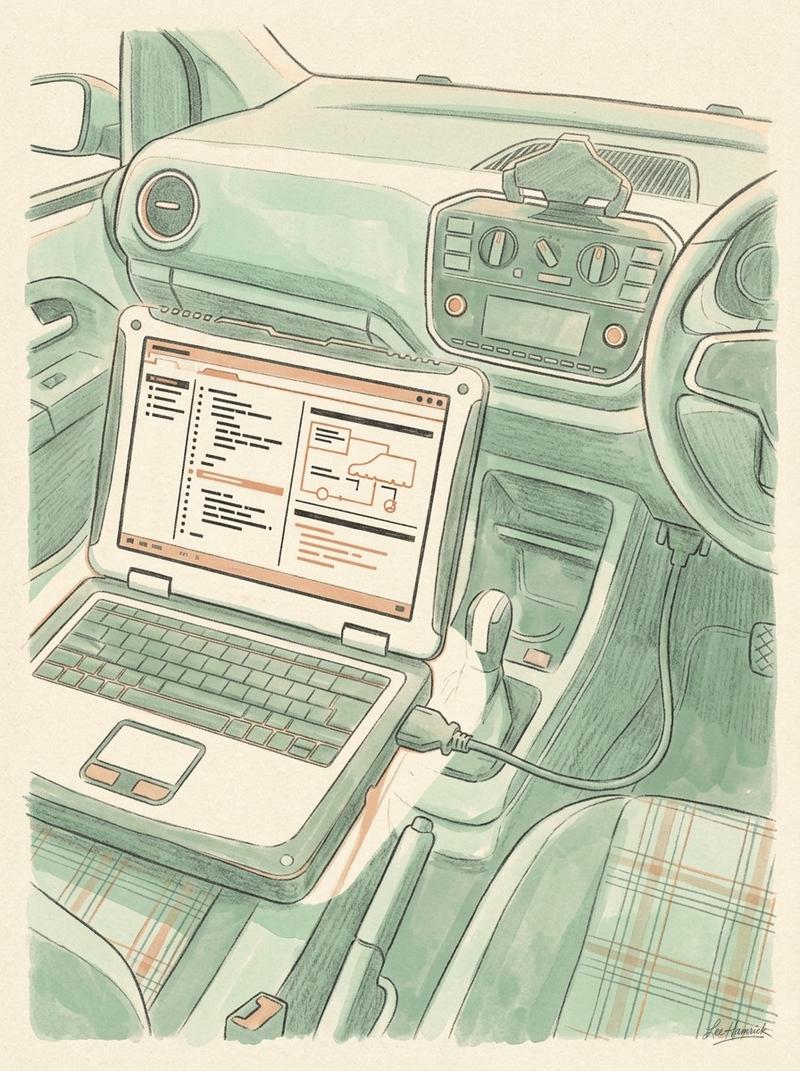
Except for one thing. The Up comes standard with both a traction control system and an Electronic Stabilisation Programme. Whether the GTI-spec variant offered a factory disable option for either system isn't something the research here can confirm. What Misha found, after that first session a decade ago, is that at a track day the system was intervening constantly at the limit. Managing the electronics instead of driving the car. The moment you ask for anything beyond tidy, conservative cornering, the system steps in and clips your inputs. That's not a safety net on a closed course. It's a leash.
So Misha finally coded it out. He worked with a tuner to remove that intervention from the equation, and the result is a car that drives the way the original should have. The specific tool, module, and parameters used in that coding process weren't available for this piece, and Misha hasn't shared a cost figure publicly. What is clear is that the modification was software-based and left the car's street behavior unchanged, at least according to his account of it.
It's worth being direct about one thing before going further. Disabling stability and traction control on a public-road-legal car carries real implications. On a closed circuit like the Nordschleife, where the driver accepts personal responsibility for their inputs, removing electronic intervention is a choice that experienced track drivers make deliberately. On public roads, those systems exist because physics doesn't grade on effort. Misha uses the car at the track, not as a daily street weapon, which is a meaningful distinction. If you're curious how traction control can actually help even experienced drivers, this piece on faster lap times is worth reading alongside this one.
The Up itself, produced from 2011 through 2023, is already the right starting point for what Misha was after. The top petrol option in the range was a 66 kW (90 hp) TSI OPF. That's not a monster number. It doesn't need to be. With a car this small, you can actually use the rev range, which is something you rarely get to say in a modern turbocharged car without immediately triggering a license-threatening situation on public roads. The Up's body measures just 3,600 mm long. It threads through traffic at the Ring the way larger cars simply cannot.
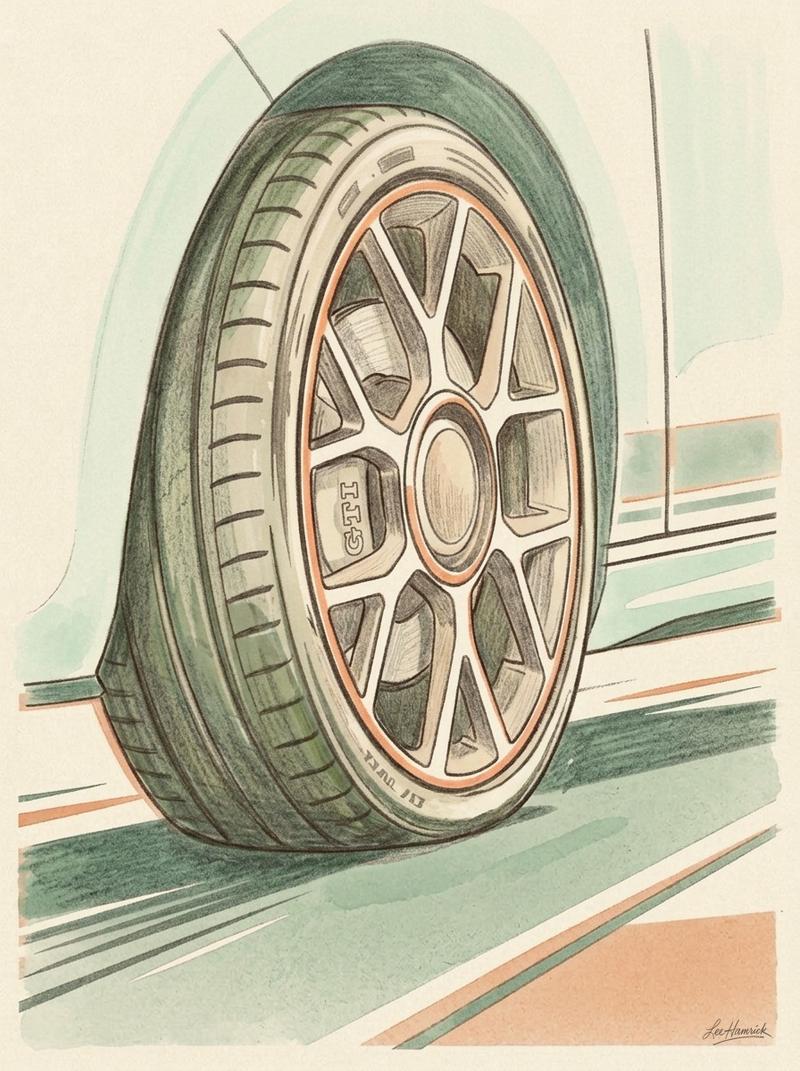
At the Nurburgring, that combination of low weight and usable power puts you in a sweet spot that's genuinely hard to replicate with something more powerful. You're not managing a car that's faster than the road. You're matching the car's pace to what the road will actually allow, corner after corner, without ever lifting out of boredom. That's the feeling most people are chasing when they talk about driver engagement, and it doesn't require a six-figure price tag to find it. For another perspective on what a budget track tool can genuinely teach you, this account of a first lap at the Ring in a 992 Carrera S covers the same track from a very different financial angle.
What the traction control delete actually changes is subtle in one way and enormous in another. At parking-lot speeds, the car doesn't feel dramatically different. At the limit, the front end communicates instead of just correcting. You can feel the grip loading up through a fast corner, sense when you're approaching the edge, and make real-time adjustments based on what the car is telling you. The stock system was answering those questions before you finished asking them, and in doing so it was removing the most valuable part of the experience.
The grip levels themselves deserve a mention. This is a car that looks like it should understeer politely around a track and call it a day. It doesn't. There's enough mechanical grip and enough chassis balance to reward a driver who's actually paying attention, which is about as good as it gets for a budget track tool. It's not a race car. It's not trying to be.
The interesting thing about Misha's build is that the modification path, whatever it cost specifically, didn't involve a big power number or an aggressive suspension setup that makes the car miserable on the highway. Just the removal of an electronic limitation. That's the kind of change that doesn't get enough attention from the people writing budget track-build guides.
There's a real lesson buried in here for anyone chasing a track platform on a budget. The Up was already a good answer. Misha just asked the right question. A decade of availability, a small footprint that the Nordschleife rewards, and a software modification path that leaves the street car intact. That's a combination worth taking seriously.
A decade ago, the Up was a compelling first Ring car with one frustrating flaw. Today, with that flaw coded out by someone willing to dig into the software, it's just a compelling first Ring car.

Written by
Lee Hamrick