The Tire You Don't Change Is Teaching You to Outsource Your Car

When changing a tire stops being necessary, something deeper disappears: the confidence that comes from knowing you can fix your own car.
I watched a guy in his early twenties stare at a flat tire like it was summoning a professional. The jack was there. The lug wrench was there. The spare was right in the trunk. He pulled out his phone and started scrolling for roadside assistance instead of using what was literally arm's reach away.
What bothered me wasn't that he couldn't change a tire. He could have. The manual was in the glove box. YouTube exists. What bothered me was understanding why "could" and "will" had become two completely different countries, and what that gap actually costs.
The numbers point to the problem. Around a third of drivers under 35 won't change a tire without calling for help. For drivers over 55, that number drops to about 15 percent. This isn't about intelligence or capability. It's about infrastructure. Modern cars have tires that last longer, maintenance schedules that funnel you toward dealerships, and spare tires that are little temporary donuts meant to limp to a shop. Add touchscreen-first interiors, subscription services for features that used to just exist, and the general outsourcing of car ownership into something you pay someone else to manage, and the friction that forces you to learn evaporates.
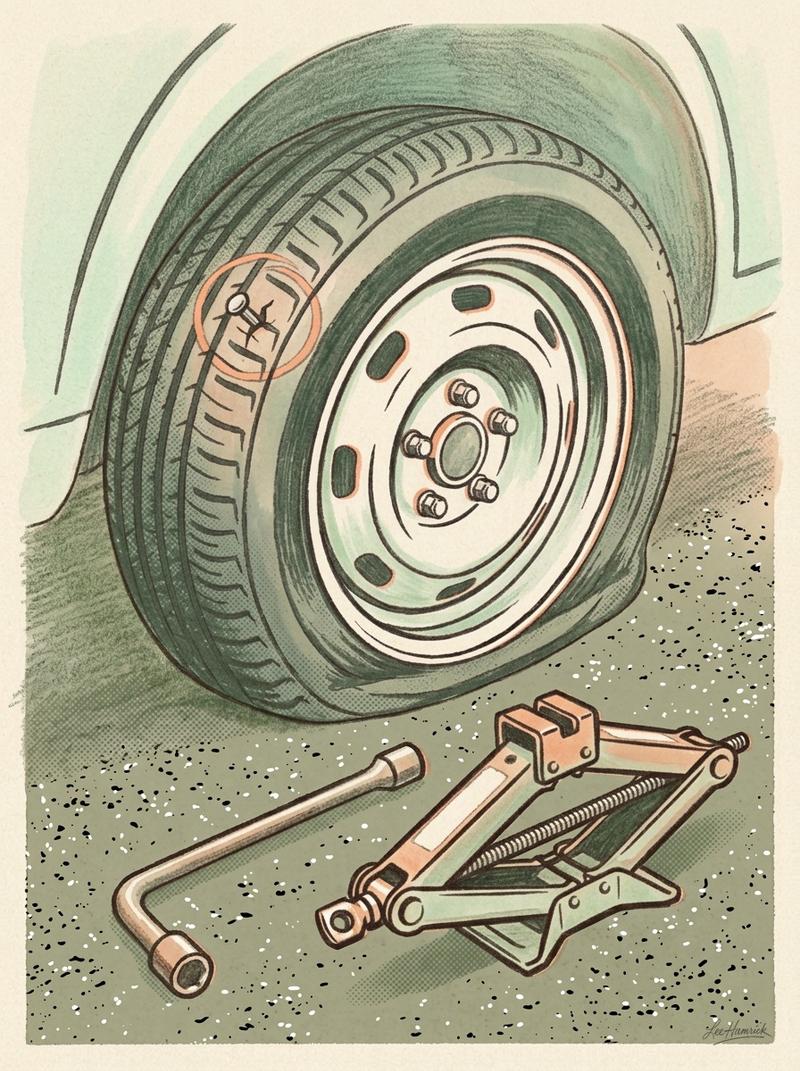
Friction is where learning actually happens. You change a tire because you're 47 miles into a 200-mile desert drive with no service in range and sitting still is the only other option. You do it because the alternative is time passing while you watch it. You get your hands dirty. You probably do it wrong the first time. You learn. And once you've done it, you know you can do it again. That knowledge sticks differently than knowing you could call someone.
Younger drivers grew up in a world where that friction got engineered out before they could feel it. There's no failure state. There's no moment where you choose between learning and accepting a real consequence. The skill doesn't atrophy from inability. It never forms in the first place because the conditions that force growth have been smoothed away from the system entirely.
But here's what actually matters: when you change a tire, your car stops being a black box. You understand, in a very physical way, how it comes apart and goes back together. You know where the suspension lives. You feel the actual weight you're lifting. You realize that most of these systems are simpler than you thought, just held together by logical sequences that don't require a degree to understand.
That knowledge changes how you drive. You start noticing changes because you actually know your car. You catch problems early because you can feel when something's different, not because a warning light told you so. You become the person who says "the brakes feel weird" before the dashboard illuminates, because you understand the machine well enough to sense deviation. You stop being a passenger in your own vehicle.
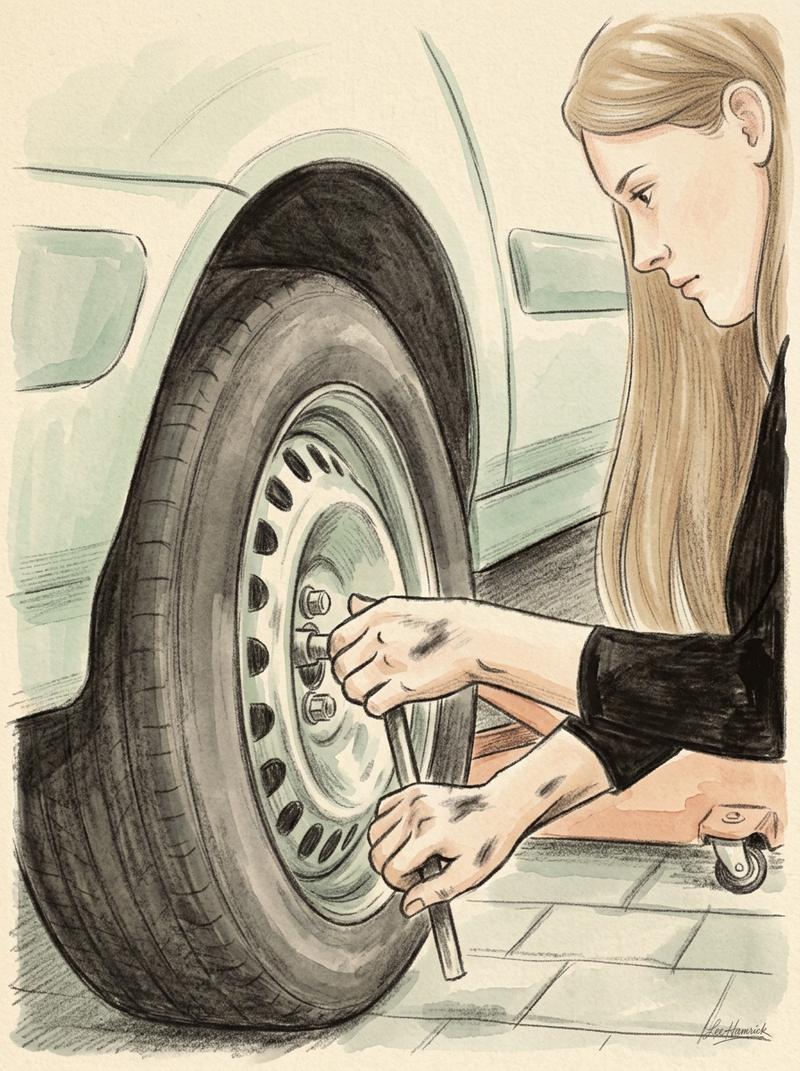
The bigger cost is what happens when that uncertainty replaces the skill. If you've never changed a tire, you don't actually know whether you could. That's not false modesty. It's a real gap. And the first time you're stranded with no service in range, standing in actual weather thinking about whether you could have handled this yourself ninety seconds after it happened, that gap feels tangible. The cost of not learning becomes visceral in a way it never is when help is always thirty minutes away.
When you've had to work on your own car, you know its quirks and its limits from direct experience. You're also probably more attuned to rattle and failure modes than people who've never opened the hood. There's a middle ground in there somewhere, and it's definitely not in the direction of complete outsourcing.
The younger drivers I know who can change tires aren't special. They're not wrenching enthusiasts or weekend mechanics. They just had a flat when nobody was immediately available to fix it for them. And now, when something small breaks, they're more likely to try before they call. It's a small shift that compounds over time into a fundamentally different kind of driver. The same instinct shows up on track days or autocross: you learn to trust yourself first and call for backup second.
The real question isn't whether younger drivers can change a tire. It's whether we've engineered a world where the friction that builds confidence and competence has been designed out completely. And what else disappears along with it.
Written by
Nick Mangino