5 Iconic VeilSide Builds and the Base Cars Behind Them

From Han's RX-7 Fortune to the 4509 GTR, here are five of VeilSide's most iconic builds and the production cars they started from.
There's a moment at most cars-and-coffee events where someone rolls in with a wide-body kit so aggressive it stops conversations mid-sentence. I've seen it happen with a VeilSide car exactly once, and I stood there for probably twenty minutes longer than I'd planned, mentally tracing every panel gap. VeilSide has that effect. The Japanese tuner, operating out of Ibaraki Prefecture, built its reputation on body kits that weren't just wide for the sake of it but structured, almost architectural in the way surfaces were composed. What makes them interesting to pick apart isn't the drama (though there's plenty of that), it's understanding what the donor car brought to the relationship and what VeilSide chose to do with it.
So here are five of their most significant builds, matched with the production cars underneath.
1992 Mazda RX-7 FD3S, VeilSide Fortune
Start here, because almost everyone already has. The VeilSide Fortune body kit applied to the third-generation Mazda RX-7 is probably the single most recognized tuner build of the last three decades, almost entirely because of its appearance in The Fast and the Furious: Tokyo Drift on Han's car. The base car is worth understanding on its own terms first: the FD3S RX-7 was a genuinely special machine, a sequential twin-turbocharged rotary coupe with a 50/50 weight distribution and a curb weight low enough that the stock power felt more substantial than the numbers suggested. Mazda stopped selling the RX-7 in the US after 1995, which means the FD generation has spent decades becoming rarer and more expensive as a used proposition.
What VeilSide did to it with the Fortune kit is almost confrontational. The fenders flare out hard, the front bumper is redrawn entirely into something with an almost angular aggression that the stock car's smooth, almost organic nose didn't hint at. It's the kind of transformation where you have to remind yourself the roofline is still stock to orient yourself. The Fortune works partly because the FD's proportions, low and long with a short cabin, can absorb that kind of width without looking absurd. That's not a given. A lot of widebody attempts on cars with less resolved base proportions end up looking inflated rather than designed.
2003 Nissan 350Z, VeilSide Ver.III
The Z33 350Z arrived in the US for 2003 as a proper return-to-form sports car after the 300ZX had been gone for years. The stock car was heavier than some purists wanted but the 3.5-liter V6 was strong and the chassis gave you something real to work with. VeilSide's Ver.III treatment takes the already-muscular stock body and pushes the visual mass outward, extending the fenders and restructuring the front fascia. The 350Z's wide hips were a selling point from the factory, so the Ver.III kit is working with the car's character rather than against it. The result is a build that reads as an intensification rather than a departure, which is probably why it found a receptive audience both in the tuner community and at a certain tier of video game garage.
2001 Honda S2000 AP1, VeilSide Millennium
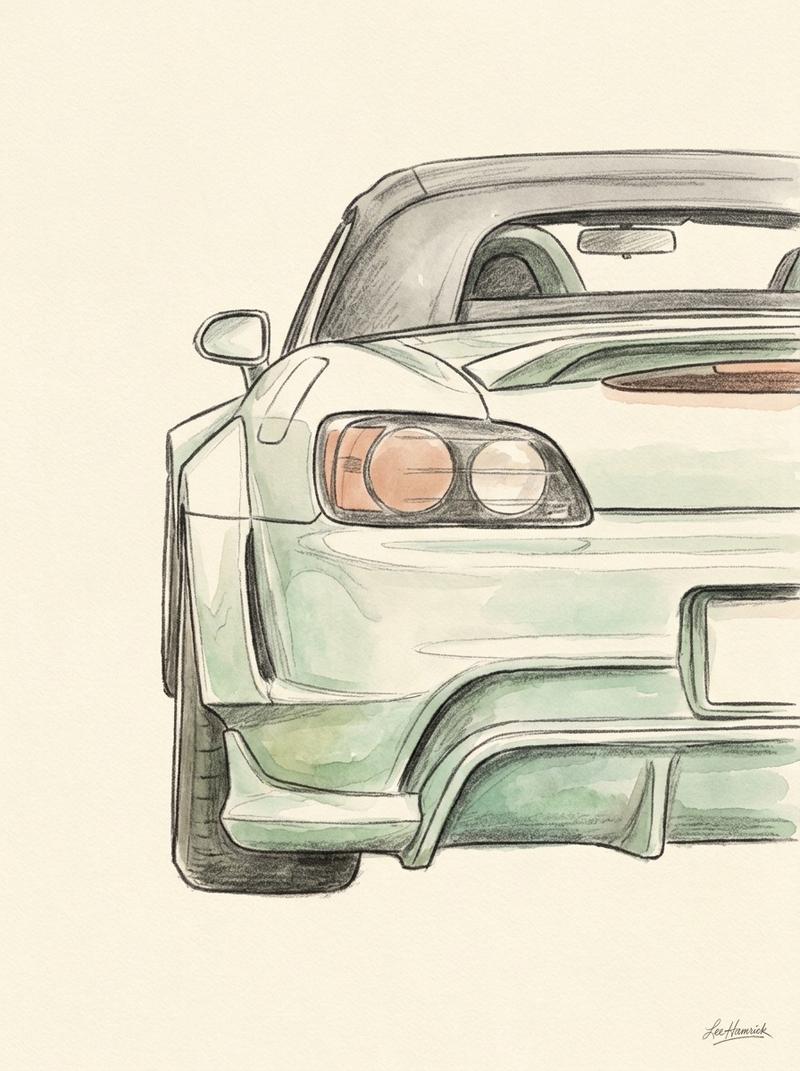
I'll be upfront that I have an obvious bias here. The AP1 S2000 is a hard car to improve on visually because Honda got the proportions right from the start: long hood, short tail, almost no body fat anywhere. The VTEC F20C in the AP1 revved to around 9,000 rpm and made its power near the top of the range, which means it asked something of the driver in a way not every roadster does. It was not the most forgiving car in the world, and it didn't pretend to be.
VeilSide's Millennium kit is one of the more restrained things they've put their name on, which relative to the Fortune is saying something. The front bumper is more pronounced, the side skirts and rear treatment are tightened up, but the fundamental silhouette is preserved. Whether that's a compliment to the base car's integrity or a mild disappointment depends on what you came looking for. I've spent probably too much time deciding how I feel about it, and I still don't have a clean answer.
Honda NSX, VeilSide NSX Fortune
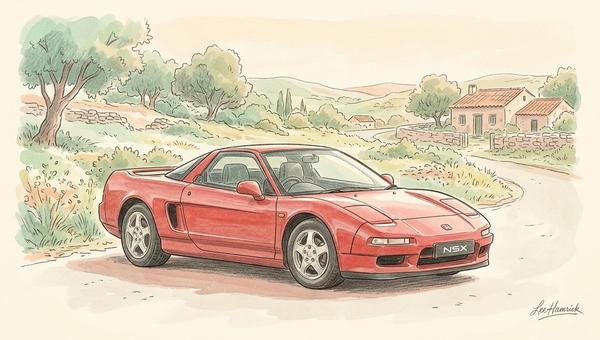
The NSX Fortune shares a name with the RX-7 version but the base car is a different proposition entirely. The original NSX was Honda's attempt to prove a Japanese manufacturer could build a genuine supercar, and by most accounts it succeeded: an all-aluminum mid-engine coupe with a naturally aspirated V6, designed with significant input from Ayrton Senna during development. The handling was precise without being punishing, which made it approachable in a way that Ferrari's offerings of the same era were not.
Applying the Fortune treatment to the NSX is a much bolder move than it might seem. The NSX's design language was restrained, intentional, almost understated for what it was. VeilSide's kit departs from all of that decisively. The flared body panels and restructured front end sit in a kind of productive tension with the NSX's original design philosophy: a car that was designed around subtlety getting a body that announces itself from across a parking lot. Whether you find that interesting or wrong probably tells you something about yourself.
1993 Toyota Supra JZA80, VeilSide 4509 GTR
The fourth-generation Supra is a car that has spent the last decade becoming almost mythological in the used market, partly because of genuine performance credentials and partly because of cultural weight accumulated through film appearances and gaming. The twin-turbocharged 2JZ-GTE engine underneath had a reputation for taking serious power levels in tuned form, which gave the JZA80 an aftermarket ecosystem that never really stopped growing even after production ended.
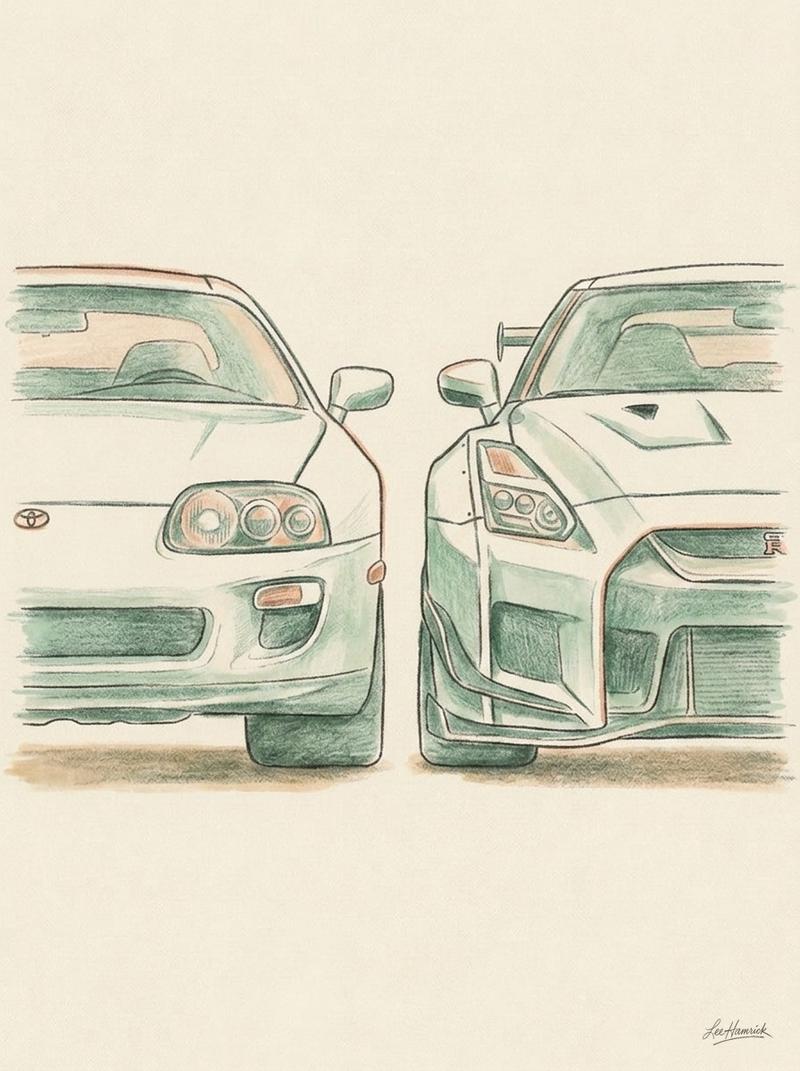
VeilSide's 4509 GTR build is their most dramatic departure from a donor car's original shape. Where some of their other kits work with the existing lines, the 4509 GTR introduces angles and geometries that feel like a ground-up design that happens to share a floorplan with the production car. The wide-body panels are aggressive even by VeilSide's own standards. The front bumper is restructured so completely that the stock car's face is essentially gone. It's a build that sits at the far end of the spectrum from resto-mod sensibility, which is either its greatest strength or a liability depending on your tolerance for that kind of maximalism.
What They Share
Putting these five next to each other, a few things become clear. VeilSide consistently chose base cars that already had something worth starting from: balanced proportions, some cultural weight, a chassis with enough substance to support the visual transformation without looking like a costume. The Fortune kit on a car with poor proportions wouldn't have become iconic. The 4509 GTR on a lesser platform would have read as excess without purpose.
There's also something worth noting about timing. All five of these builds draw from the late 1980s through early 2000s generation of Japanese performance cars, a period that produced some genuinely well-resolved platforms. VeilSide found the right canvas at the right moment, and the tuner scene, the films, and eventually the internet did the rest.
Which one is the definitive build? The Fortune on the FD RX-7 has the cultural footprint nothing else on this list can match, and that matters even if you think cultural footprint is a suspicious metric. But the 4509 GTR is probably the most complete argument for what VeilSide was actually doing at its most extreme. I'm not certain either answer is wrong, and I've thought about it longer than I'd like to admit.

Written by
Jeremy Dorando