Auto-X: Building Driving Skills and Confidence
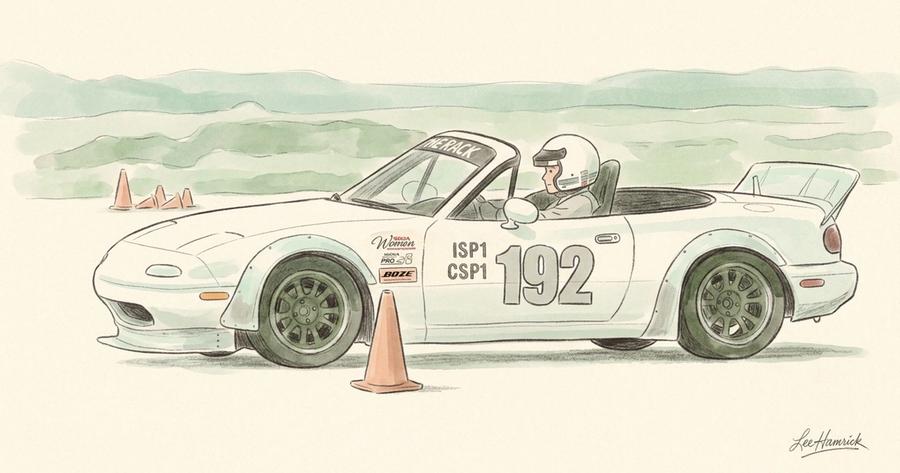
Auto-X, also known as autocross, is a form of motorsport that involves…
Autocross — commonly called Auto-X — is one of the most accessible and genuinely effective ways to become a better driver. Run on coned courses laid out in parking lots or airfields, these timed events strip away the complexity of circuit racing and put everything back on the driver: their inputs, their judgment, their feel for the car. Whether you've never turned a lap in competition or you're chasing tenths on a familiar course, Auto-X has something concrete to teach you.
What Is Autocross?
Autocross is a form of motorsport in which drivers complete individual timed runs through a temporary course marked by traffic cones, typically set up in a large parking lot or similar flat, open area. Courses are designed to be tight and technical, rewarding precision over raw power. Speeds rarely exceed 70–80 km/h, which makes the format accessible to drivers in everyday street cars and keeps insurance and venue costs low enough for clubs to run regular events.
Events are organised by clubs affiliated with national bodies — in New Zealand, that's MotorSport New Zealand — and they're open to a wide range of vehicles and skill levels. Entry costs are modest compared to circuit days, and because you're running one car at a time through a coned course, the risk of contact with other vehicles is essentially zero.
Car Control: Learning What Your Vehicle Actually Does
One of the most practical benefits of Auto-X is the concentrated opportunity to develop genuine car control. The tight, technical courses demand accurate placement through successive corners, chicanes, and slalom sections, often with less than a metre of margin between a clean run and a cone penalty.
In a single event day, a driver might complete six to eight timed runs. Each one provides immediate feedback: where the car pushed wide, where you braked too late, where you could have carried more speed. Over the course of a season, that repetition builds an intuitive sense of vehicle behaviour — understeer, oversteer, weight transfer — that simply doesn't develop in ordinary road driving. Drivers frequently find that the sensitivity they develop in Auto-X makes them measurably smoother and more composed in everyday situations.
Speed Management: The Balance Between Fast and In Control
Because every run is timed, Auto-X creates constant pressure to go faster. But the tight courses quickly reveal the cost of going too fast too early: missed apexes, wide exits, and cone penalties that add seconds to your time. The format teaches drivers to find the limit progressively rather than stumbling across it unexpectedly.
This balance between speed and control is particularly valuable for drivers who want to improve on-track performance or simply become more confident at higher road speeds. Learning to judge braking points, carry appropriate corner speed, and accelerate cleanly off an apex are skills that transfer directly to any driving context, from a track day at Hampton Downs to merging on a motorway.
Decision Making: Reacting Under Pressure
A well-designed autocross course is never entirely straightforward. Drivers must read the layout ahead, commit to a line, and adapt if they've misjudged an entry — all within a run that may last only 45 to 60 seconds. That compressed timeframe sharpens decision making in a way that slower-paced driving never does.
Repeated exposure to these quick, consequential choices builds the kind of instinctive reactions that matter most in high-pressure driving situations. Experienced Auto-X competitors often describe an increased calmness when driving quickly on track or responding to unexpected hazards on the road — a direct result of having rehearsed fast decisions in a controlled environment hundreds of times.
Reading a Course: The Walk That Pays Off
Most clubs allow competitors to walk the course on foot before timed runs begin. This pre-run course walk is itself a skill worth developing: mapping the optimal line, identifying key reference points, and mentally rehearsing each section. Drivers who invest time in the walk consistently perform better than those who improvise, and the habit of reading the road ahead translates directly to safer, more anticipatory driving in all conditions.
Community and Competition: The Human Side of the Sport
Beyond the skill development, Auto-X is genuinely enjoyable. The competitive structure — each driver chasing their own best time — creates a friendly atmosphere where competitors freely share advice, discuss setup changes, and celebrate each other's improvements. There's no overtaking, no wheel-to-wheel contact, and no pressure to be the fastest in the paddock. Many drivers start in Auto-X for the competition and stay for the community.
That social dimension adds up over time. Knowing experienced drivers who will offer a coaching tip or point out a line you've been missing is an informal but real accelerant to improvement.
Key Takeaways
- Autocross uses timed, cone-marked courses in parking lots or open areas, making it accessible and low-risk for drivers of everyday street cars.
- Repeated short runs build genuine car control — understeer, oversteer, weight transfer — faster than almost any other driving exercise available at a comparable cost.
- The timed format teaches speed management by immediately penalising overdriving, helping drivers find the limit progressively and safely.
- Fast, consequential decisions made under the pressure of competition sharpen real-world reaction and hazard-response skills.
- The Auto-X community is welcoming to newcomers, and the low cost of entry makes it one of the most practical first steps into motorsport. For a closer look at the impact of women in autocross or philosophies behind crafting a championship-worthy CSP car, ZealAuto has you covered.

Written by
Vince Russell