Can You Build a Budget 911? One Builder Is Trying With a Miata Chassis

Caseys Customs is building a Porsche 911 body swap onto a Mazda Miata chassis on a real budget. Here's what the build shows so far and why it matters.
The first thing you have to get past is the instinct to say it's wrong. Not mechanically wrong, not wrong in principle, just wrong in the way that anything genuinely strange-looking feels wrong before you've had a minute to actually look at it. A 911 body on a Miata chassis is that kind of project. It violates a few unspoken rules about what counts as a Porsche, and that's exactly what makes it worth talking about.
The build belongs to Caseys Customs, documented on their YouTube channel through a series covering exactly this: a budget Porsche 911 body grafted onto a Mazda Miata chassis. No press cars, no manufacturer support, no carefully lit studio photography. Just Caseys Customs in a shop trying to make something exist that didn't exist before.
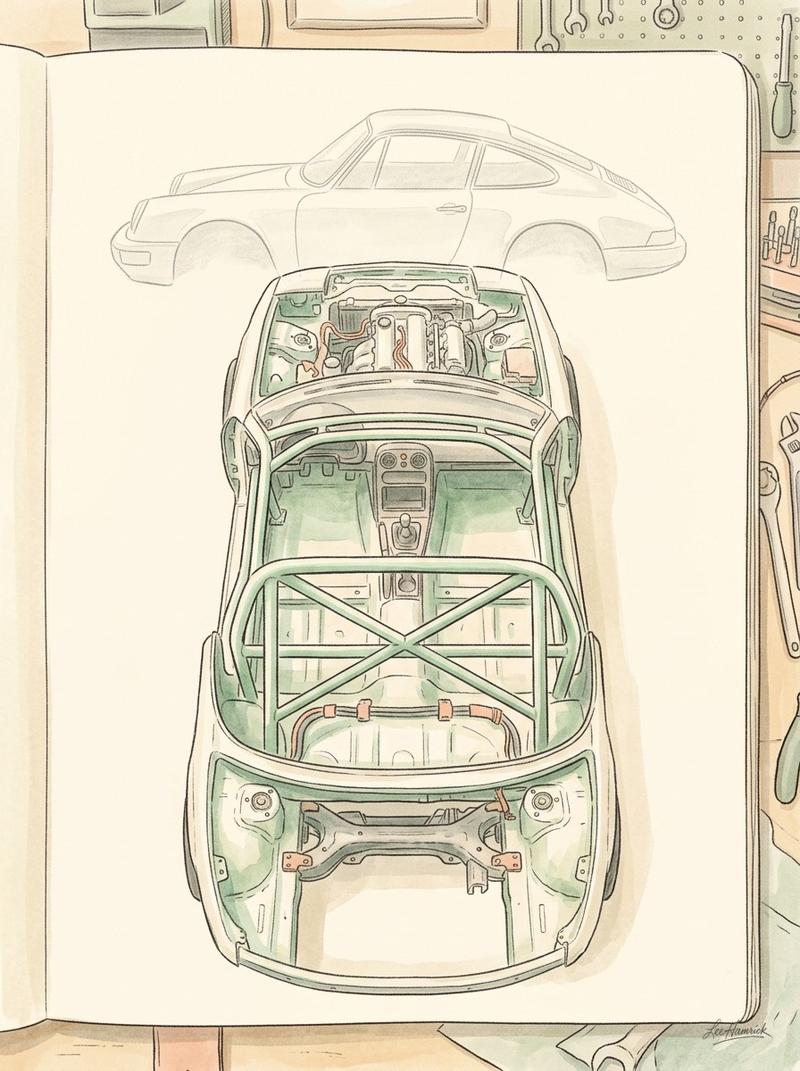
Let's talk about why the Miata is a defensible donor platform here, because it isn't purely a budget move. The NA and NB Miatas are rear-wheel drive, relatively lightweight, and two-seat roadsters, which gives a 911 body swap at least a plausible geometric starting point. That's not nothing. The Miata's chassis is also extraordinarily well understood at this point, with deep aftermarket and fabrication communities built up around it over decades. If you're going to improvise, you want to improvise on a foundation that other people have already mapped thoroughly.
Why the Miata specifically over other platforms, what the 911 body cost and where it came from, whether it was a complete shell or a salvage donor, what the total budget looks like and how much has been spent so far, what engine and drivetrain are going in and how it's expected to perform against a stock Miata or stock 911, the build documentation hasn't publicly answered those questions yet. If those details surface in later videos, they'll change the picture considerably. For now we're working with what's been shown.
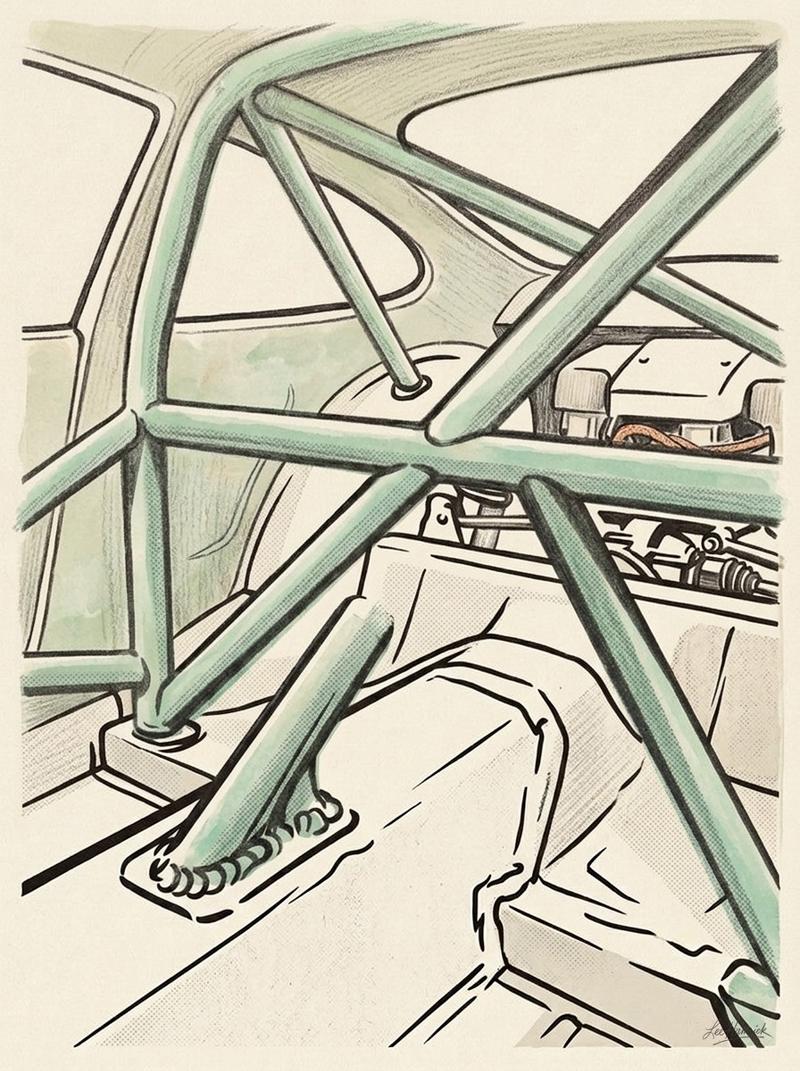
The latest documented addition is a roll cage. A cage on a chassis-swapped 911 body hints at where this project might actually end up. A pure show car doesn't necessarily need one. A car someone intends to drive, and maybe push into situations that reward a cage, does. Whether any safety certifications were considered, and who designed or fabricated it, hasn't come up in the published footage. What's clear is that Caseys Customs sourced and added a cage to a build that is explicitly trying to minimize cost, and that structural addition changes the conversation about intent.
The interesting question here isn't whether it's a "real" Porsche. That's the wrong question. The interesting question is whether the finished car drives well enough that the question stops mattering.
That's the thing about builds like this. A modified car built on decisions, sourced parts, and solved problems has a different kind of value than a stock car selected from a configurator. The stock car represents someone else's engineering, someone else's compromise set, someone else's conclusion about what the driver wants. The built car represents the builder's thinking, their priorities, their willingness to figure something out that wasn't figured out before. Those aren't the same thing, and the built car is more interesting to talk about even when the stock car is faster, more refined, and better sorted.
What this Miata-based build competes with is closer to the kit car and tribute car world, where the value proposition is the build process itself and the individuality of the result. If Caseys Customs finishes this thing and it drives well, tracks straight, and handles with any of the composure the Miata platform is genuinely known for, that's a success on its own terms. The fact that it wears 911 bodywork is flavor, not substance. The substance is whether someone built a car that's fun to drive on a budget that most people can actually relate to.
The cage is also a reminder that the builds with real staying power tend to be the ones where the builder is resourceful. Not just patient, not just skilled, but actually creative about where parts come from and how to make things work without spending at retail. Finding a cage and fitting it to a car that wasn't designed for it requires knowing what you're working with and some genuine problem-solving. It's unglamorous. It matters.
Whether this particular build ends up as a driver, a show piece, or something parked permanently is an open question. Caseys Customs hasn't said publicly which it is, and lots of ambitious projects don't cross the finish line. But the concept is sound in its own creative terms, the platform choice is defensible, and the documentation along the way teaches people something about fabrication, sourcing, and problem-solving. At least here you can see the work.

Written by
Lee Hamrick