The Track Car Buyer's Guide: Finding Your Speed on a Realistic Budget

A generation-by-generation breakdown of used Miatas, GR86 pricing, C6 Corvettes, and what it actually costs to track any of them regularly.
I spent most of a Saturday at Sonoma watching a driver in a twenty-year-old Miata absolutely demolish cars worth five times what he paid for his. He wasn't the fastest thing on track, but he was smooth, patient, and having more fun than anyone else in the paddock. That car probably cost him twelve grand. The education it gave him cost considerably more. That's the equation nobody gets right on their first track car.
The pressure to buy the "right" platform is real, and the advice is everywhere. But most of it misses the actual math: the car is maybe thirty percent of the equation. The other seventy percent is seat time, consumables, and accepting that your first track car is a learning tool, not a trophy. Once you understand that, the decision gets simpler.
The Philosophy That Actually Works
The Mazda Miata has dominated beginner track conversations since the NA generation launched in 1989. Not because it's the fastest car at the track. Because of what it doesn't cost and what it teaches.
The generation question matters here and almost nobody answers it directly. NB Miatas (1999-2005) average around $13,000 on the current market, which makes the math on a cheap track build work. ND Miatas (2016-present) average closer to $27,000, real money, closer to GR86 territory than bargain territory. If your honest budget is under fifteen grand, you're shopping NB. The NC (2006-2015) sits between them and draws less attention than either, but it's a solid, heavier car with a bigger engine and parts that are still affordable. The NA (1990-1997) is the lightest and the cheapest to buy, but rust and age are real variables at this point.
For pure value-to-performance ratio, the NB makes the clearest case. Prices are well-established, parts are everywhere, the chassis is tight enough to be genuinely rewarding, and you're not paying the premium that ND nostalgia hasn't quite earned yet. An NB in the 1999-2005 range bought right, inspected honestly, and prepared correctly will teach you more per dollar than anything else available.
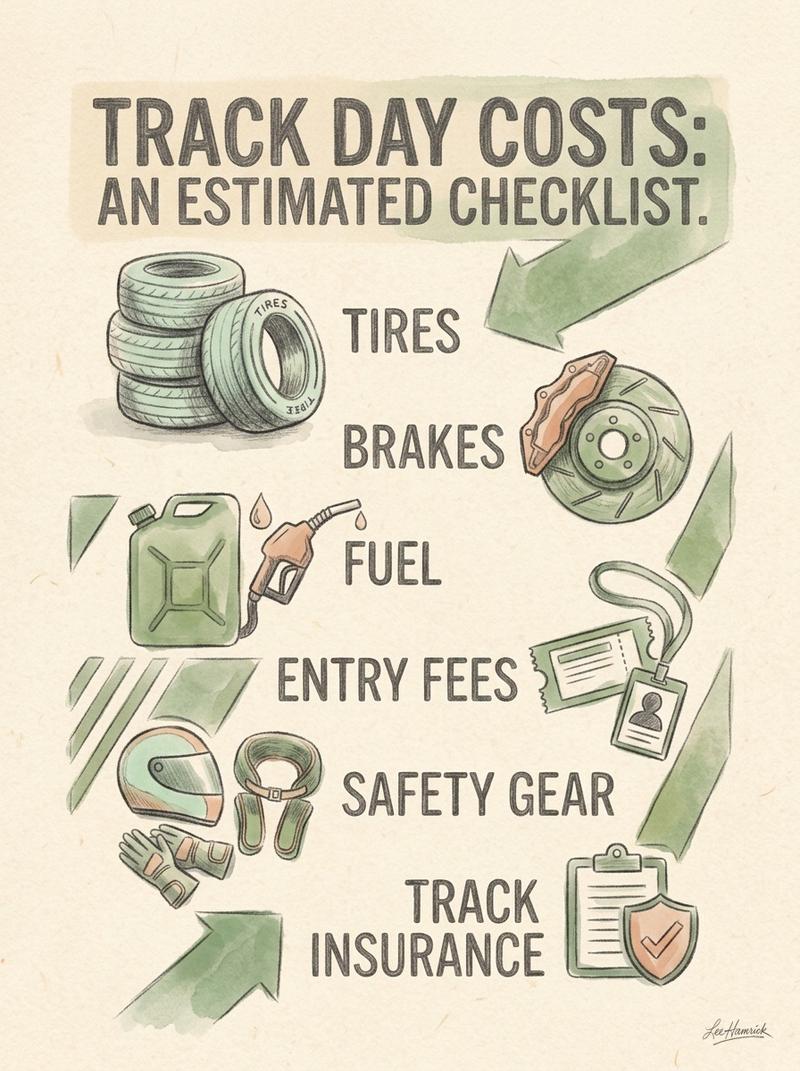
Consumables matter here more than anywhere else: brake fluid every season, pads every few events, tires every twenty or so track days if you're pushing. Miata tire costs vary by generation and size, the OEM 205/45R17 on the ND Club starts around $65 at the low end and runs $100 to $200 for anything with real grip. Budget $80 to $120 per corner as a working figure for mainstream performance options. Tires for a Corvette run $150 to $350 per corner depending on trim and generation, with high-performance options going higher. Over the course of a year, that spread funds a half-dozen extra track days, and extra track days are where drivers actually improve.
There's also an SCCA angle worth knowing. Spec Miata (SM) class approves four model year ranges for competition: 1990-93, 1994-97, 1999-2000, and 2001-05. Spec MX-5 (SMX) is built around the NC generation, 2006-2015. If organized competition is part of the plan, buying within those windows means the car you learn on is also the car you can race in a national class structure, which changes the long-term math considerably.
The Miata also teaches what nobody wants to hear but everyone needs to learn: that smooth is fast. A light, underpowered car won't forgive you for being aggressive on entry or carrying too much speed into a corner. It forces precision. Most drivers spend their first ten track days being too slow because they're fighting the car instead of flowing with it. The Miata makes that message clear in the first twenty minutes.
And the knowledge base is absurd. Every modification has been done. Every failure mode has been documented. Every setup question has been answered by someone in a forum thread from 2003. When something breaks, parts are everywhere and cheap. When you have a question, someone with a Miata has already solved it.
Before You Ever Leave the Paddock
Buying the car is step one. Getting it ready is the step most people underestimate. A used Miata headed to the track needs more than an oil change and optimism.
Start with a compression test and a leak-down test. Fresh coolant. A full brake system flush with DOT 4, not DOT 3, not whatever was already in there. Replace the brake pads with a proper performance compound; OEM-spec pads will fade badly under sustained heat. Inspect the brake lines for cracking or swelling and replace with stainless steel braided lines if they're original, because soft lines expand under pressure and the pedal feel difference is immediate. Check wheel bearing play. Check the condition of the rear subframe mounts on NB cars, which are a known weak point. Get a fresh alignment with values appropriate for track use, meaning more negative camber in front than stock.
Tires matter more than almost anything else you can do before your first event. A fresh set of Hankook RS4s or similar entry-level performance tires will teach you more than worn-out Pilot Sports will. If the car came with tires of unknown age, replace them regardless of tread depth, rubber hardens with age and track heat will find that out fast.
The minimum safety additions before a track day: a proper helmet rated to current Snell or SA standards, and, depending on the event and org, a fire extinguisher and tow hooks front and rear. A roll bar is not required for HPDE events at most organizations, but it's worth researching before you show up. Some events have specific requirements. Call the organizer, not a forum thread.
The Insurance Question
Most standard auto insurance policies exclude track use explicitly. Read your policy before you assume you're covered. Dedicated track day insurance is available through providers like Lockton Motorsports and others who specialize in HPDE coverage, it's purchased per-event and covers the car during on-track sessions. Prices vary by car value, coverage limits, and deductible. If the car is worth less than the deductible you'd choose, self-insuring may make more sense, but that's a calculation you run yourself with real numbers. What doesn't work is assuming your existing policy covers you and finding out otherwise in the paddock.
The Step Up
At some point, more budget becomes available. You've been to the track maybe thirty times. You're frustrated with being passed by a C5 Corvette. You want more engine. This is when the GR86 or BRZ enters the conversation, and it's the right one.
Current market data puts a 2022 GR86 at roughly $26,000 to $28,500 depending on mileage and condition, not the bargain it looked like eighteen months ago, but still competitive with what you'd spend building an NB properly. The GR86 and BRZ share a platform and the same FA24 engine, so the performance comparison between them is almost exactly a trim and branding question rather than a mechanical one. The GR86 gets slightly better weight distribution from the factory; the BRZ offers similar pricing. Either works. The real point is that both are newer, more reliable, and quick enough to surprise you with pace. The power delivery is linear and honest. Neither will overstress your tires or your brakes the way more powerful cars do. And both are still simple enough that a wrench in your hand and a YouTube video will solve ninety percent of what can go wrong.
The real advantage is durability. The Miata is teaching you. The GR86 or BRZ is a car you can keep for five years and grow into. It won't feel ancient two seasons in. It'll still compete at your local track without major modifications. And when you eventually move on, you've learned what matters to you in a platform, and you have a realistic sense of what real ownership costs.
The Budget Reality Check
Here's where the conversation usually breaks down. Someone shows up with a $7,000 E36 BMW and a vision of a track car for $15,000 total. The vision dies around month four when the cooling system decides it's done, or the subframe starts cracking, or the differential starts making noise that suggests bearing failure. Cheap platforms can be incredible, but they have a cost structure: you are betting that you can fix it yourself or absorb unexpected bills.
I've been around enough track cars to know the real lesson that gets repeated but never believed: spend half your budget on the car, the other half on consumables and track time. That $15,000 budget becomes $7,500 for the platform, $5,000 for tires, pads, fluid, and basic safety upgrades, and $2,500 for entry fees, travel, and seat time. Most people flip that upside down. They buy a $14,000 car and show up with bald tires wondering why the brake pedal feels squishy.
When You Have Real Money
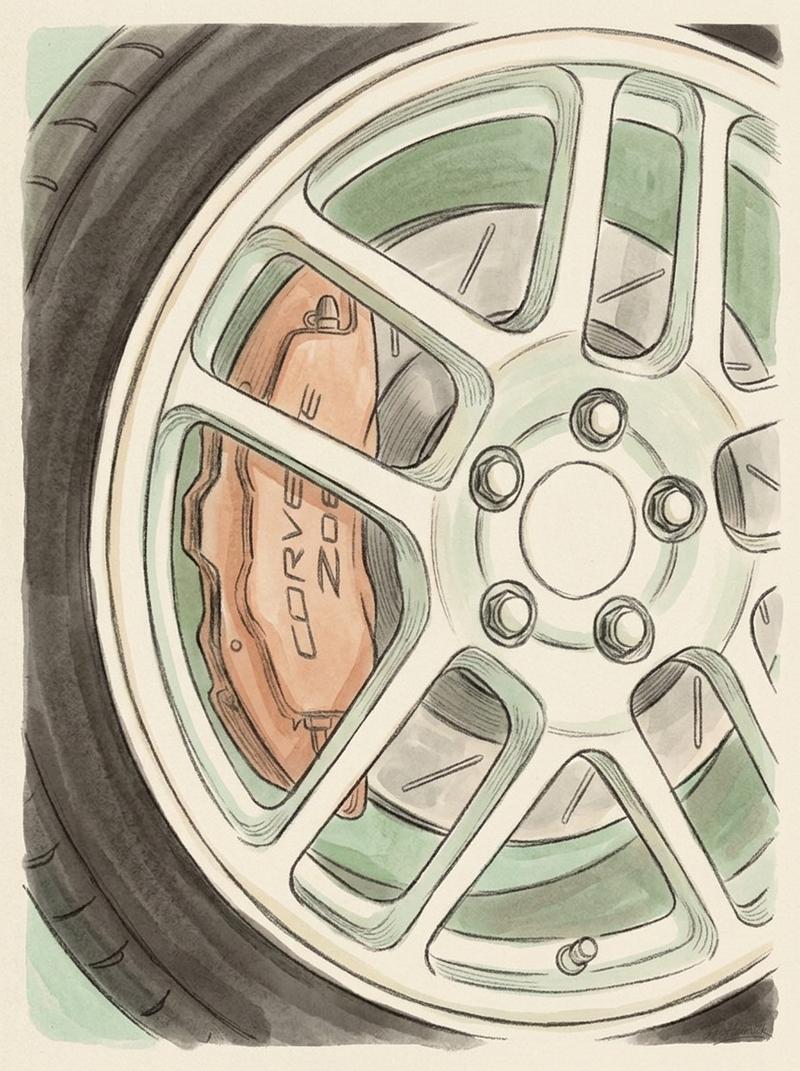
The conversation changes entirely above thirty-five grand. Now you're looking at C5 and C6 Corvettes, entry-level Porsches, or newer sports cars with actual warranty coverage. A 2005 C6 Corvette with decent service history falls in a wide range depending on condition and mileage, Edmunds appraises the low end around $12,000 and KBB listings show clean examples in the $21,000 to $29,000 range. Buy the well-documented car toward the upper end of that window rather than the cheap one that will spend your track budget in the shop. It will run hard all day. The cooling system actually works. The transmission won't surprise you. And Corvettes have the highest horsepower-per-dollar ratio in the market by a factor nobody can actually compete with.
Porsche platforms, particularly the Cayman and older 911 models, command respect for different reasons. They teach you something a Corvette won't about weight distribution and how a properly balanced car feels at the limit. A 987-generation Cayman (2005-2012) is the right reference point here, prices vary widely by year, mileage, and service history, so pull current listings rather than trusting any single figure. You'll pay more for maintenance. You'll pay more for tires. But the actual satisfaction of driving that car at full chat is hard to describe to someone who hasn't done it.
The Builder's Path
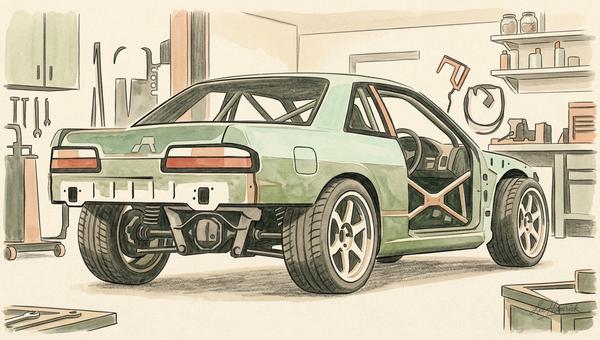
If your primary skill is wrench work and your primary hobby is hunting bargains, the cheap RWD platform game makes sense. An E30 BMW, an S13 Nissan, an AE86 Toyota, a first-gen Miata: all are community goldmines with huge parts support and proven modification paths. But this only works if the following is true: you actually enjoy building more than driving, you have a garage and tools, and you can absorb a failed investment if something expensive breaks during a project.
The modification rabbit hole is where most builders lose their minds. There is no bottom to what you can spend on a cheap platform if you're chasing a feeling or a specific power target. The interesting money is almost always in the modified car, not the stock one, but "interesting" and "sound financial decision" rarely overlap.
What Actually Matters
After enough track days to know what you're talking about, a few things become obvious. The car matters less than people think. Fifty drivers in Miatas will produce fifty different results, and the gap between the best and worst is almost entirely about who spent more time on track, not who has the better suspension setup. Consumables matter more than anyone budgets for. A calendar matters more than horsepower. And the question that decides everything is honest: do you want a car you drive, or a car you build?
If you want to drive, buy something sorted and reliable, even if it costs more. Direct the money you didn't spend building toward track time. If you want to build, accept that it's a separate hobby from actually racing, and budget accordingly. There's no hybrid path where you save money by doing both halfway.
The NB Miata will still teach you everything you need to know faster than anything else at its price point, and it'll do it inside an SCCA class structure if that's where you want to go. The GR86 or BRZ will let you keep growing. The Corvette will surprise you with what it can do for what it costs. The cheap platform will test your patience and your wallet. The Porsche will remind you that driving feel is worth something real.
Pick the one that matches what you actually want to do, not what someone on the internet told you was correct. Spend the money you didn't waste on the car on better tires and more seat time. Show up to the track more often than you feel like you can afford to. Everything else will follow.

Written by
Lee Hamrick