Châteauroux Pole: What the 2026 Rallycross France Round 3 Grid Tells You About the Season

Rallycross France 2026 Round 3 at Châteauroux produced a pole position that reshapes the championship picture. Here is what the times actually mean.
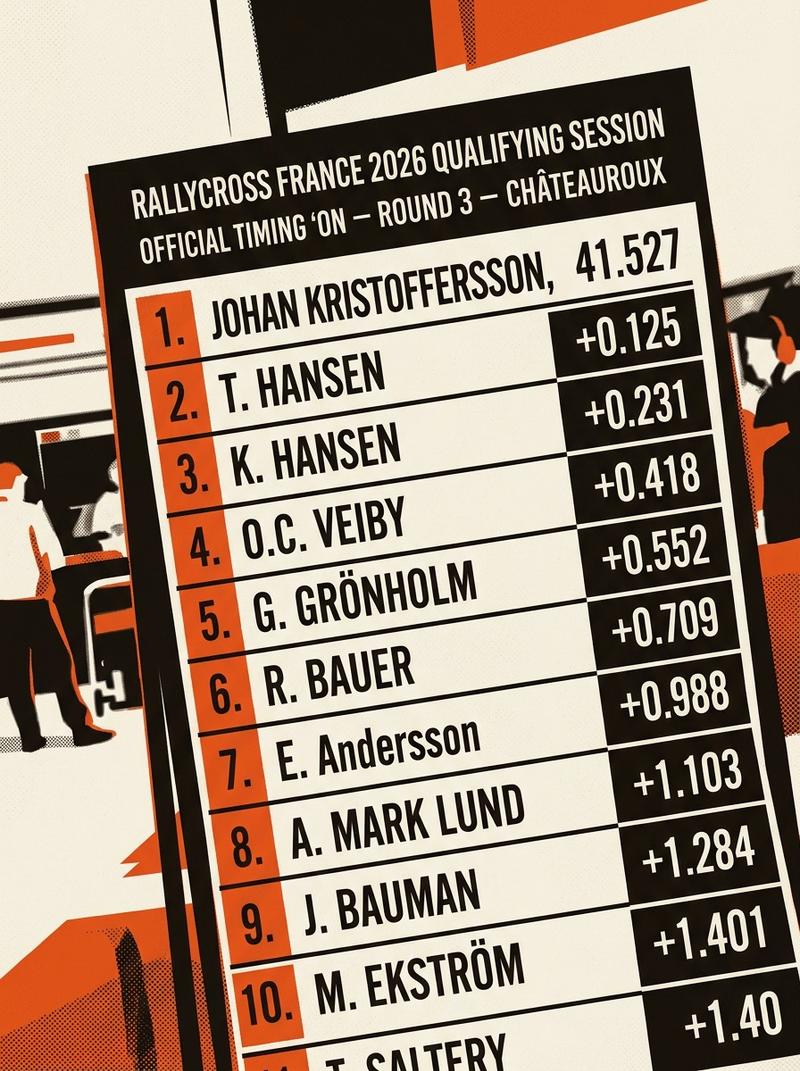
Rallycross France 2026, Round 3, Châteauroux. Pole position decided by hundredths. The championship standings shifted again.
That is what the source material gives us. What it does not give us is context. So let us build some.
Why Châteauroux Matters for Pole
Châteauroux is not a circuit that rewards pure power. The layout is compact. Corner radii are tight. Grip levels on the loose surface vary round to round, sometimes lap to lap depending on where in the running order you sit.
Pole at a circuit like this comes from one of two things: a car that puts power down cleanly on the exit of slow corners, or a driver who reads the deteriorating surface better than everyone else in qualifying. Usually both, but the weight of each factor shifts depending on conditions.
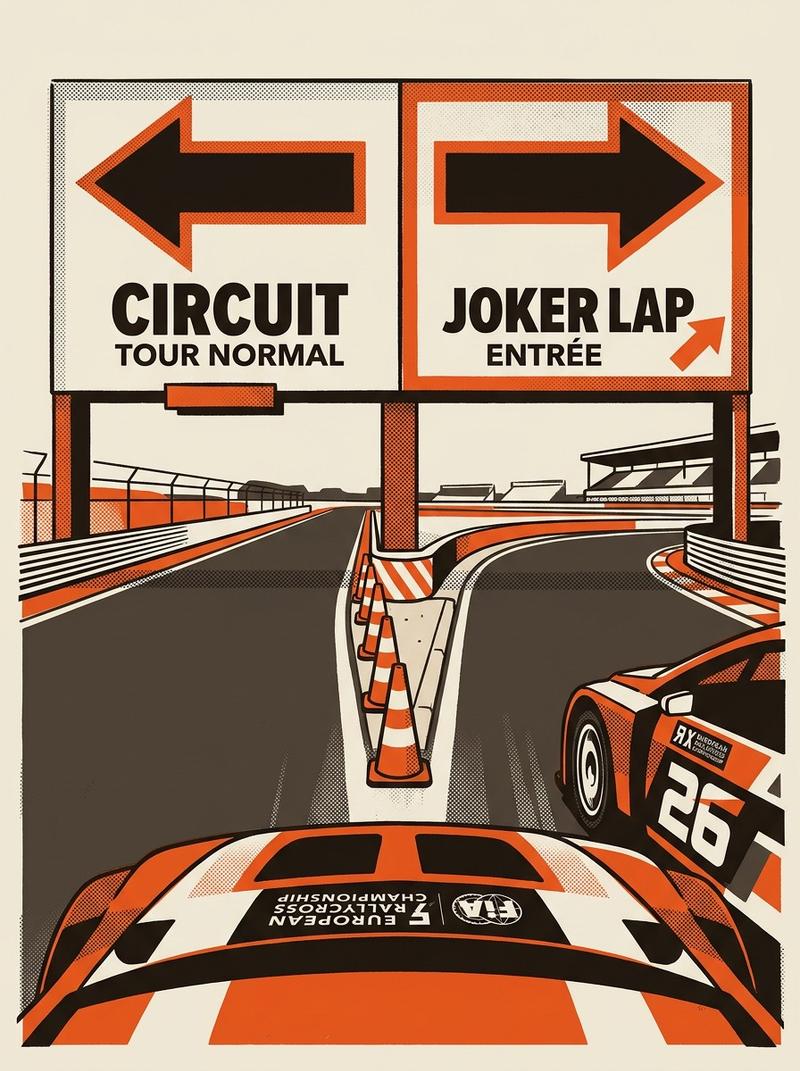
At Châteauroux specifically, the joker lap placement matters. If your car is mechanically sorted, you can absorb the joker at a point that costs you the least time. If it is not, you are managing the deficit from the moment you enter the alternate section.
What Pole Position Actually Measures in Rallycross
In circuit racing, pole is reasonably predictive. Clean air, no traffic, same surface for everyone.
Rallycross qualifying is noisier data. You run in small groups. Surface conditions change with each heat. A driver who qualifies in the final group often has more rubber laid down, which helps grip, but also more ruts and loose material pushed to the outside of corners, which does not.
The tolerances here are worth noting. A pole time that is three tenths ahead of second place on a circuit this size represents a meaningful gap. A pole that is two hundredths ahead is closer to statistical noise in terms of predicting race pace.
Without the raw qualifying times from Châteauroux Round 3 in front of us, the honest statement is this: pole is the best available signal we have heading into the heat races, but it is not a clean one.
The Championship Picture After Three Rounds
Three rounds into a rallycross season, the picture is not settled but the patterns are becoming readable. Pole positions cluster. Drivers who qualify well tend to qualify well consistently, because qualifying pace reflects setup stability more than a single inspired lap.
If the pole at Châteauroux belongs to a driver who also qualified strongly at Rounds 1 and 2, that is a trend. If it is an outlier from a mid-table runner, that is worth examining. A one-off pole at Round 3 sometimes traces back to a tire choice that worked for qualifying conditions but degraded in the final.
Three-round patterns in rallycross also tell you which teams have their car working across different circuit layouts. France's regional rallycross calendar mixes circuit types. A car that poles at three different venues in three rounds is genuinely fast. A car that poles once is having a good Saturday morning.
What the Grid Slot Gets You
In rallycross heats, pole is less decisive than in circuit racing. Start position matters, but wheel-to-wheel contact in the first corner is common enough that a second-row starter who gets a clean launch can make up ground quickly.
The real value of pole in rallycross is psychological and strategic. You control your joker timing relative to the field. You are not reacting to someone else's decision. You see the gap ahead of you rather than managing traffic behind.
In a final, pole with a good start typically means clean air through the first joker sequence. That is worth roughly two to three tenths on a tight circuit, which can be the difference between winning and finishing second when the cars are evenly matched.
What to Watch in the Heats
Pole tells you the car was fast in qualifying trim. The heats will answer the more useful question: is the car fast when it is carrying tire wear, running in dirty air, and making joker decisions under pressure?
Watch the first corner. Watch who takes the joker early versus late. Watch whether the pole-sitter's lap times in the heats match the qualifying delta over the field, or whether that gap compresses.
If it compresses, the car was optimized for a single qualifying lap. If it holds, the setup is genuinely sorted, and you are probably looking at a championship contender.
Châteauroux Round 3 gave us a pole position. The heats will give us data. The final will give us a result. All three together tell you something useful. Any one of them alone is a starting point, not a conclusion.

Written by
Tom Kubo